

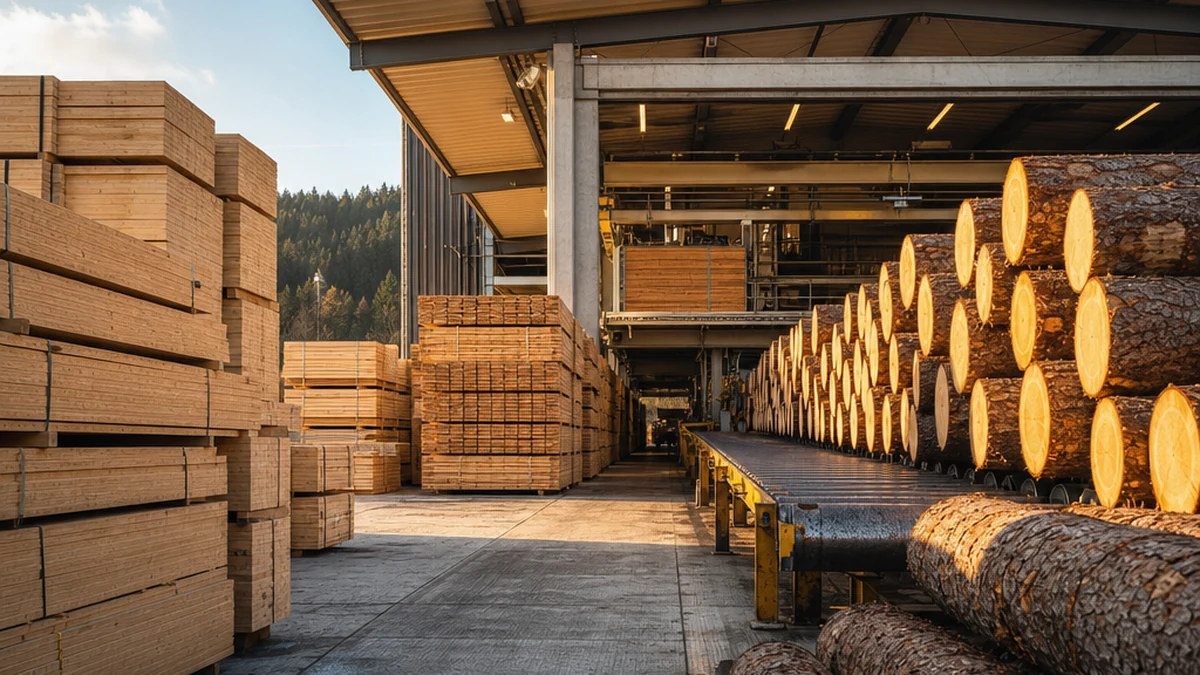
The global timber and lumber industry is navigating a pivotal transition into 2027. Amid fluctuating interest rates, deep capacity rationalization across Pacific Northwest sawmills, European green compliance mandates (EUDR), and evolving international trade duties, market participants require transparent, empirical price discovery. The TimberInsider Global Timber & Lumber Price Index [2026-2027] delivers an institutional-grade benchmark synthesized from verifiable customs trade flows, mill netbacks, and continental wholesale pricing benchmarks across North America, Europe, Asia-Pacific, and Latin America.
Executive Market Takeaway (Q4 2026 / 2027 Outlook)
Softwood lumber pricing is establishing a durable cyclical floor following two years of margin compression. Aggressive permanent mill curtailments in British Columbia and the US South have eliminated over 4.2 billion board feet of annual supply. While near-term residential construction demand remains tempered by mortgage headwinds, structural timber and mass timber (CLT) consumption is expanding at 14.5% CAGR, creating divergent market momentum across product segments.
1. Global Timber & Lumber Benchmark Price Matrix (2026-2027)
The following table outlines indicative spot prices, recent quarterly averages, and 2027 consensus baseline projections across primary global timber benchmarks. All data points reflect institutional wholesale transactions.
| Benchmark Commodity | Primary Region | Q3 2026 Avg | Current Spot | 2027 Baseline | Unit | Outlook |
|---|---|---|---|---|---|---|
| Western S-P-F 2×4 #2&Btr | North America (BC / PNW) | $425 | $445 | $485 | USD / MBF | ▲ Bullish |
| Southern Yellow Pine (SYP) West 2×4 | United States (South) | $372 | $388 | $425 | USD / MBF | ▲ Moderate Up |
| Nordic Spruce Sawnwood (KD 18%) | Scandinavia / Finland | €238 | €245 | €268 | EUR / m³ | ▲ Firm |
| Central European Spruce Sawlogs | Germany / Austria | €98 | €94 | €104 | EUR / m³ | ▬ Consolidating |
| Structural Cross-Laminated Timber (CLT) | Central Europe / Global | €545 | €570 | €625 | EUR / m³ | ▲ High Growth |
| Structural OSB 7/16″ | North America (East / Midwest) | $285 | $310 | $340 | USD / MSF | ▲ Bullish |
| Baltic Birch Plywood BB/BB | Northern Europe | €630 | €655 | €710 | EUR / m³ | ▲ Supply Deficit |
| Radiata Pine Industrial A-Grade Logs | New Zealand / Chile (FOB) | $116 | $122 | $134 | USD / JAS m³ | ▲ Export Gain |
2. Regional Market Drivers Shaping the 2026-2027 Price Trajectory
North America: Supply Rationalization Outweighs Sluggish Housing Starts
In North America, the persistent divergence between Western S-P-F (Spruce-Pine-Fir) and Southern Yellow Pine has tightened. British Columbia has experienced over 30% reduction in annual allowable cut (AAC) over the past five years due to beetle kill, wildfire devastation, and conservation land transfers. Primary producers including Canfor, West Fraser, and Interfor have idled high-cost sawmills, shifting capital toward modern, high-recovery facilities in the US Southeast. As mortgage rates normalize toward the mid-6% range, the accumulated structural housing deficit in the US is poised to absorb current sawmill capacity quickly.
Europe: German Building Recession vs. Scandinavian Export Stability
European softwood sawmills face contrasting regional dynamics. Central European output, particularly in Germany and Austria, has been constrained by a 15-year low in domestic building permits. However, raw material log costs remain firm due to tight roundwood supplies and competitive demand from biomass and wood pellet producers. Scandinavian mills in Sweden and Finland have redirected excess lumber volume toward Mediterranean, Middle Eastern, and North African export corridors, successfully defending FOB pricing.
Mass Timber & Cross-Laminated Timber (CLT): The Structural Outperformer
Industrial demand for Cross-Laminated Timber (CLT) and Glulam is decoupling from traditional single-family framing lumber. Commercial real estate developers seeking embodied carbon reductions and rapid construction schedules are adopting mass timber systems at unprecedented scale. Production lead times for architectural-grade CLT panels have stretched to 16-20 weeks across leading European and North American fabricators, supporting structural premiums over standard commodity lumber.
3. Macro Headwinds, Tariffs & Regulatory Shifts
Three overarching policy catalysts will govern timber price volatility into 2027:
- U.S.-Canada Softwood Lumber Duties: Recent increases in combined anti-dumping and countervailing duty (AD/CVD) rates to approximately 14.5% continue to artificially inflate delivered Canadian wood costs into the US market.
- EU Deforestation Regulation (EUDR) Implementation: The mandatory geolocation and supply-chain traceability requirements are shifting global timber flows. Importers are paying premiums for fully certified, low-risk verified fibre from North America and Scandinavia.
- Ocean Freight & Red Sea Surcharges: Extended transit times around the Cape of Good Hope have added $18-$32/m³ to containerized lumber routes between Europe and Asia.
4. Frequently Asked Questions (B2B Timber Pricing FAQ)
How often are global timber benchmark prices updated?
TimberInsider updates its institutional benchmark matrix weekly, tracking mill netbacks, futures settlement data from CME Group, and verified international customs trade reports across key maritime ports.
What is the expected spread between Western S-P-F and Southern Pine in 2027?
Historically, Western S-P-F commanded a $40-$70 premium over SYP due to superior workability and straightness for framing. While that spread compressed in 2025-2026, severe British Columbia harvest constraints are projected to widen the S-P-F premium back to $55-$75/MBF by mid-2027.
How does EUDR enforcement impact non-European timber prices?
Producers in South America, Southeast Asia, and Central Africa without end-to-end polygon GPS traceability face exclusion from EU ports, diverting surplus volumes to China and India while European-certified sawlogs command higher regional premiums.
Stay Ahead of Global Timber Markets
Access daily industrial intelligence, sawmill financial analysis, and trade flow monitors across 5 continents.

