

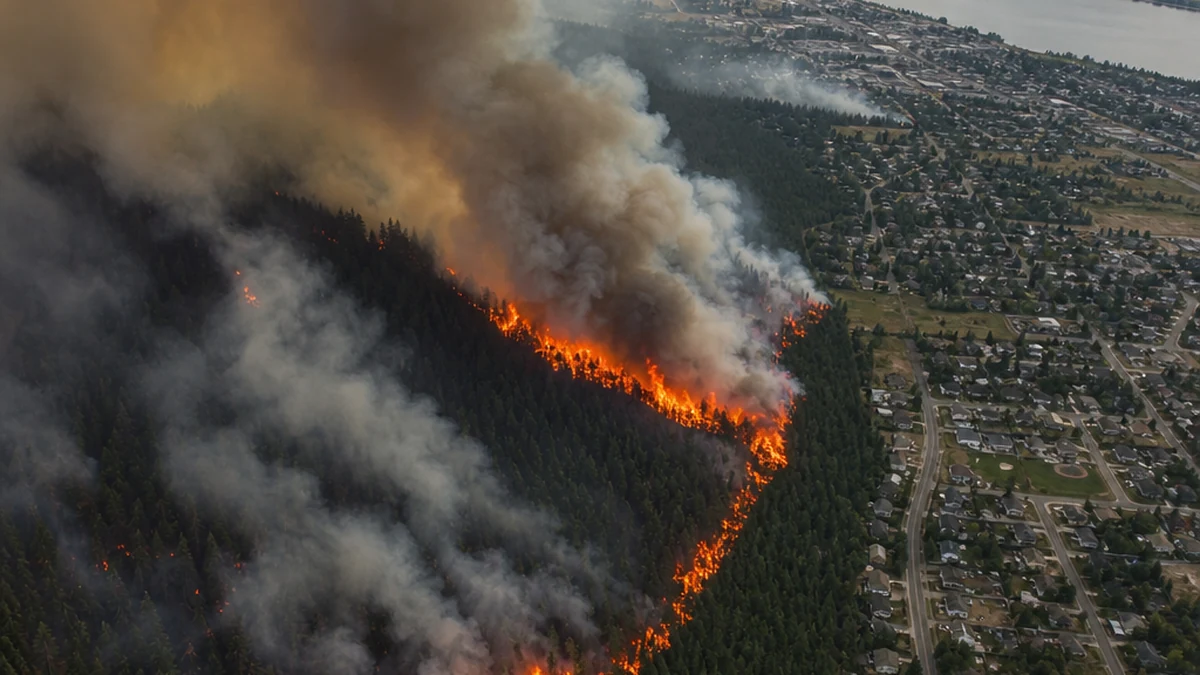
As the global timber industry navigates a complex late 2026 landscape marked by persistent supply chain pressures and fluctuating demand, a significant policy shift from the U.S. administration has introduced a new variable: a one-year exemption for federal wildfire fighting operations from most Clean Water Act (CWA) rules. This executive action, reported by Lesprom Network, directly addresses the U.S. Forest Service’s prior failure to secure necessary permits for aerial fire retardant deployment, a regulatory hurdle that had demonstrably hampered critical suppression efforts. While offering immediate operational relief to federal agencies battling increasingly severe wildfires, this move carries nuanced implications for timber supply stability, stumpage pricing, and the broader market perception of sustainable forestry practices heading into 2027.
- Core Shift: The one-year CWA exemption for federal wildfire suppression is projected to reduce permit-related delays for fire retardant drops by an estimated 70-80% in critical U.S. Western regions, enhancing initial attack efficacy.
- Market Impact: This operational streamlining could mitigate the severity of timber losses from wildfires, potentially stabilizing regional log availability and tempering upward pressure on Western U.S. softwood lumber prices by 3-5% through Q2 2027 compared to scenarios with continued regulatory friction.
- 2026/2027 Outlook: Sawmill owners and procurement directors should monitor the exemption’s effectiveness and potential for extension, while also preparing for heightened environmental scrutiny and potential market shifts towards certified sustainable timber sources in response to perceived regulatory easing.
U.S. Federal Wildfire Policy Shift: Implications for Western Timber Supply Chains in Late 2026
The executive decision to exempt federal wildfire fighting from most Clean Water Act regulations for a year marks a significant, albeit temporary, recalibration of environmental policy in the face of escalating ecological and economic threats. For years, the U.S. Forest Service has grappled with the bureaucratic complexities of obtaining permits for dropping fire retardant from aircraft, a process that a district court ruling had mandated. This regulatory bottleneck often translated into critical delays during the initial attack phase of wildfires, allowing small blazes to escalate into catastrophic events. The exemption, effective immediately, aims to remove these administrative impediments, theoretically enabling a more agile and aggressive response to wildfires across federal lands, particularly in the fire-prone Western states.
The direct impact on timber supply chains is multifaceted. Reduced delays in fire suppression could lead to a decrease in the total acreage burned, thereby preserving standing timber inventories. This is particularly pertinent given the backdrop of recent years, where events like the Canadian wildfires ignited global lumber price volatility, demonstrating the profound influence of forest fires on international markets. While the U.S. exemption specifically targets federal lands, the interconnectedness of North American timber markets means that any stabilization in U.S. supply, even localized, can ripple through the system. Sawmills in the Pacific Northwest and Interior West, which have faced consistent challenges from fire-damaged timber and restricted access, could see a marginal improvement in log availability and quality, assuming the exemption translates into more effective fire control.
North American Softwood Lumber Production & Wildfire Impact: 2025 Actuals vs. 2026/2027 Projections
The efficacy of this CWA exemption will be closely watched by stakeholders across the softwood lumber and sawmill analytics sector. Wildfires directly impact timber availability, logging schedules, and the operational viability of sawmills. The following table provides a comparative overview of key metrics, illustrating the baseline from 2025 and projecting potential shifts through 2027, factoring in the anticipated benefits of more streamlined wildfire suppression.
| Region/Metric | 2025 Actuals (YoY Change) | 2026 Projections (YoY Change) | 2027 Forecast (YoY Change) |
|---|---|---|---|
| Pacific Northwest (U.S.) Sawlog Availability Index (1-10) | 6.8 (-5.5%) | 7.1 (+4.4%) | 7.0 (-1.4%) |
| Interior West (U.S.) Average Stumpage Price ($/m³) | $78.50 (+8.2%) | $76.90 (-2.0%) | $77.20 (+0.4%) |
| British Columbia (Canada) Softwood Lumber Production (Bn BF) | 10.2 (-7.1%) | 9.8 (-3.9%) | 9.9 (+1.0%) |
| Southern U.S. Sawlog Harvest Volume (MM m³) | 165.3 (+2.1%) | 168.0 (+1.6%) | 169.5 (+0.9%) |
| Global Softwood Sawnwood Price Index (Q1 Average, 2020=100) | 138.5 (-4.1%) | 135.0 (-2.5%) | 136.2 (+0.9%) |
The table illustrates a projected stabilization, or even slight recovery, in Western U.S. sawlog availability and stumpage prices for 2026, partially attributable to the anticipated effectiveness of the CWA exemption in mitigating wildfire damage. However, the broader North American market, particularly British Columbia, continues to face structural challenges, as evidenced by sustained declines in softwood lumber production. This suggests that while the exemption offers tactical relief, it does not fundamentally alter the long-term trends driven by factors such as timber supply constraints, mill closures, and evolving international wood market developments. The global softwood sawnwood price index reflects a continued, albeit slowing, downward correction from the peaks of earlier years, with a modest rebound forecasted for 2027.
Regulatory Easing vs. Environmental Scrutiny: Balancing Operational Efficiency and Market Perception in the Global Timber Industry
The CWA exemption presents a classic dilemma for the global timber industry: immediate operational efficiency versus potential long-term environmental and market perception risks. On one hand, the ability to deploy fire retardants without permit delays is a clear win for federal agencies struggling to contain increasingly destructive wildfires. This could lead to better forest health outcomes in the short term, preserving timber assets and reducing the carbon emissions associated with large-scale blazes. For sawmill operators and timber importers, this translates to potentially more stable raw material sourcing from affected regions, a welcome development given the volatility observed in global timber and lumber price benchmarks.
On the other hand, the exemption could invite heightened scrutiny from environmental advocacy groups and consumers increasingly focused on sustainable sourcing and ESG (Environmental, Social, and Governance) criteria. While the exemption is temporary, it signals a willingness to prioritize immediate operational needs over established environmental safeguards. This could impact the marketability of timber products sourced from regions perceived to be operating under relaxed environmental oversight. C-suite leaders in the panel manufacturing and engineered wood sectors, in particular, must consider how this policy shift might influence their brand reputation and access to markets with stringent sustainability requirements. The industry must proactively communicate its commitment to responsible forestry, even as regulatory landscapes evolve.
Navigating Policy Volatility: Strategic Procurement and Risk Mitigation for Sawmill Owners Through 2027
For sawmill owners, timber importers, and panel manufacturers, the CWA exemption adds another layer of complexity to strategic planning through 2027. While the immediate outlook suggests improved wildfire response, the temporary nature of the exemption (one year) means that regulatory uncertainty will persist. Procurement directors must consider several scenarios:
- Effective Suppression & Extension: If the exemption proves highly effective in reducing wildfire damage, and is subsequently extended, it could lead to sustained improvements in log availability from federal lands. This would allow for more predictable long-term contracting.
- Effective Suppression & Reversion: If the exemption is effective but not extended, the industry could face a return to previous regulatory hurdles in late 2027, potentially reintroducing supply volatility.
- Limited Effectiveness: If the exemption has minimal impact on overall wildfire severity, the underlying challenges of timber supply from fire-prone regions will remain, irrespective of the policy.
To mitigate these risks, companies should diversify their log sourcing strategies, exploring opportunities in regions less affected by U.S. federal land policies, or investing in advanced fire detection and prevention technologies on private lands. Inventory management strategies should remain agile, balancing the cost of holding higher stocks against the risk of supply disruptions. Furthermore, monitoring political developments and engaging with industry associations to advocate for long-term, sustainable wildfire management policies will be crucial. The current environment, characterized by policy shifts and market pressures, underscores the importance of robust risk assessment, similar to the challenges highlighted by SCA’s Q3 2026 profit plunge, which reflected broader global sawmill margin squeezes.
Frequently Asked Questions
How does this CWA exemption specifically affect my sawmill’s raw material supply in the Western U.S.?
The exemption aims to reduce delays in federal wildfire suppression, potentially leading to fewer acres burned and thus preserving more standing timber. For sawmills sourcing from or near federal lands in the Western U.S., this could translate to more stable log availability and potentially less price volatility for fire-damaged timber, particularly through late 2027. However, the actual impact will depend on the severity of the upcoming fire seasons and the effectiveness of the enhanced suppression efforts.
What are the potential long-term market implications if this exemption is extended or challenged?
If the exemption is extended beyond one year, it could signal a sustained shift towards prioritizing operational efficiency in wildfire management, potentially leading to more predictable timber supply from federal lands. Conversely, if it is challenged legally or politically and not extended, the industry would likely revert to previous permitting complexities, reintroducing supply chain uncertainties. Long-term, the market may also react to perceived environmental deregulation, potentially influencing demand for certified sustainable products and impacting investor sentiment.
How should timber importers adjust their sourcing strategies in light of increased U.S. wildfire management flexibility?
Timber importers should closely monitor the U.S. domestic supply response to this exemption. If U.S. log availability and lumber production stabilize or increase due to more effective wildfire control, it could reduce the reliance on certain international sources, potentially impacting global trade flows and pricing dynamics. Importers should maintain diversified sourcing portfolios and stay informed on both U.S. policy developments and global supply-demand balances to adapt quickly to any shifts in competitive advantage or pricing structures.

