

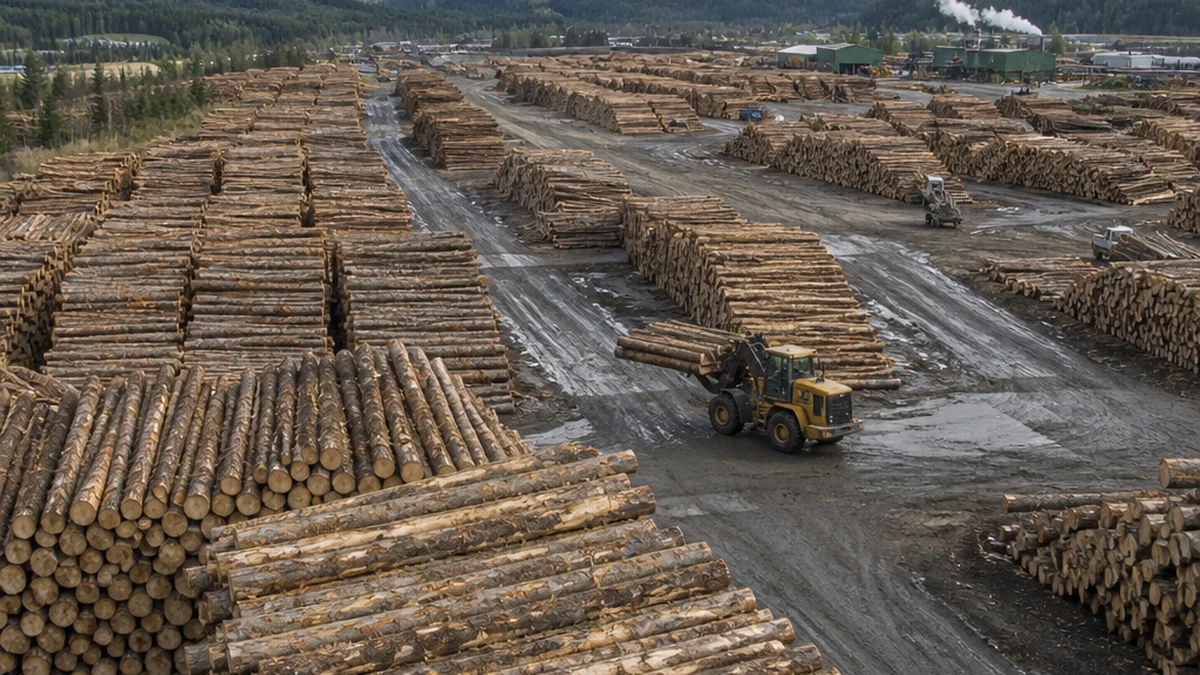
In a move set to reverberate through European and global timber markets, Germany has announced significant restrictions on subsidies for power plants utilizing industrial roundwood for energy generation. This policy adjustment, effective late 2026, signals a strategic re-prioritization of wood resources, shifting millions of cubic meters from biomass combustion towards higher-value industrial applications. The decision, initially reported by Lesprom Network, includes critical exceptions for maintaining energy supply stability and for wood deemed unsuitable for local industrial processing, yet its overarching impact on raw material availability and pricing within the international wood market developments is undeniable for C-suite leaders, sawmill owners, and panel manufacturers navigating the complexities of the global timber industry.
- Core Shift: Germany’s subsidy curtailment is projected to divert an estimated 1.8 to 2.5 million cubic meters of industrial roundwood annually from biomass energy to industrial processing by mid-2027.
- Market Impact: Expect a moderate downward pressure on industrial roundwood prices in Central Europe (forecasted -3% to -7% for specific grades) and increased availability for panel and pulp sectors, potentially influencing global timber and lumber price benchmarks.
- 2026/2027 Outlook: Sawmills and panel manufacturers in Germany and neighboring countries should anticipate enhanced raw material access, while biomass energy producers face significant operational cost increases and potential capacity reductions.
- Strategic Reallocation: This policy reinforces the trend towards optimizing wood fiber utilization, favoring material applications over energy, and will likely spur innovation in wood processing technologies.
Germany’s Bioenergy Policy Shift: Redirecting Industrial Roundwood from Kilowatts to Kilograms
The German government’s decision to scale back subsidies for biomass power plants burning industrial roundwood is a direct response to evolving energy policy, resource scarcity concerns, and the imperative to maximize the economic value of timber resources. Historically, biomass energy has played a crucial role in Germany’s renewable energy portfolio, with significant volumes of industrial roundwood, including lower-grade sawlogs, pulpwood, and forest thinnings, directed towards power generation. This practice, while contributing to decarbonization goals, has often placed biomass energy producers in direct competition with the processing industries for raw materials, particularly during periods of high demand or supply constraints.
The new policy aims to rebalance this competition. By removing financial incentives for burning industrial roundwood, the government intends to make these resources more accessible and economically viable for sectors like sawmilling, pulp and paper, and especially the panel manufacturing industry. The exceptions for energy supply security and for wood unusable by local mills are critical caveats, ensuring that genuinely low-grade or geographically isolated timber can still contribute to energy, and that grid stability is not compromised. However, the core thrust is clear: industrial roundwood, capable of being processed into durable goods, should be prioritized for material use. This shift aligns with broader European Union directives emphasizing the cascading use of wood, where timber is first used for products, then for recycling, and only finally for energy.
For the German industrial sector, which has seen robust growth, such as a 22.6% surge in German particleboard production in September 2026, this policy could unlock new supply avenues. It represents a significant policy intervention that will reshape raw material procurement strategies and potentially alter the competitive landscape for wood fiber across Central Europe.
Central European Industrial Roundwood Benchmarks: 2026-2027 Price Volatility and Sectoral Reallocation
The immediate economic impact of Germany’s subsidy restrictions will be felt most acutely in the Central European industrial roundwood market. Power plants that previously relied on subsidized industrial roundwood will either need to secure alternative, unsubsidized biomass sources (e.g., agricultural residues, waste wood) or face significantly higher operational costs, potentially leading to reduced output or closures. This will free up a substantial volume of industrial roundwood, estimated at 1.8 to 2.5 million cubic meters annually, which will then seek new markets within the processing industries.
This reallocation is expected to exert downward pressure on industrial roundwood prices in Germany and potentially in adjacent markets like Poland and the Czech Republic, where cross-border trade in timber is common. Conversely, the increased availability could provide a much-needed boost to panel manufacturers and pulp mills, which are constant consumers of these wood grades. Sawmills, particularly those processing smaller diameter logs, may also benefit from improved access and potentially more favorable pricing for their raw material inputs.
Central European Industrial Roundwood Price Benchmarks: 2025 Actuals vs. 2026/2027 Projections (€/m³)
| Region/Metric | 2025 Actual (Q4) | 2026 Forecast (Q4) | 2027 Projection (Q2) | Change 2025-2027 (%) |
|---|---|---|---|---|
| Germany: Industrial Roundwood (Spruce/Pine) | 78.50 | 74.00 | 72.50 | -7.6% |
| Poland: Industrial Roundwood (Pine) | 72.20 | 69.50 | 68.00 | -5.8% |
| Sweden: Pulpwood (Spruce/Pine) | 65.80 | 66.50 | 67.00 | +1.8% |
| Baltic States: Industrial Roundwood (Mixed) | 69.10 | 67.00 | 65.50 | -5.2% |
| North America: Southern Yellow Pine Pulpwood (US$/ton) | 32.10 | 32.50 | 33.00 | +2.8% |
Note: Prices are indicative, reflecting average market trends for industrial roundwood suitable for pulp or panel production. North American prices are converted for comparative context.
The table illustrates a projected softening of industrial roundwood prices in Germany and neighboring Central European markets, contrasting with more stable or slightly increasing trends in regions less directly impacted by this specific policy, such as Sweden and North America. This divergence highlights the localized yet significant influence of policy on raw material economics within the global timber industry.
Logistics and Procurement Realities: Navigating New Supply Dynamics for German Sawmills and Panel Producers
The redirection of industrial roundwood will not be without its logistical challenges. While the material becomes theoretically available, its physical movement from forest to mill requires efficient transport networks and robust procurement strategies. Sawmills and panel producers, particularly those in regions historically competing with biomass plants, must now optimize their sourcing channels to capitalize on this increased availability.
Procurement directors will need to reassess their supplier relationships, potentially engaging with forest owners and logging companies who previously prioritized biomass contracts. This could lead to a shift in stumpage agreements, with a greater emphasis on industrial processing grades. Investment in new log yards, improved handling equipment, and optimized transport routes may be necessary to efficiently absorb the additional volumes. Furthermore, the quality and specifications of the newly available industrial roundwood will be crucial. While some may be ideal for particleboard or fiberboard production, other grades might require specific processing adjustments.
The policy also underscores the importance of regional supply chain resilience. While Germany is the epicenter of this change, its ripple effects will be felt across Central Europe, influencing cross-border trade flows and potentially altering the competitive dynamics for raw materials in countries like Austria, France, and the Benelux region. Companies with agile procurement teams and diversified sourcing strategies will be best positioned to adapt to these evolving raw material dynamics.
Strategic Imperatives for C-Suite: Optimizing Raw Material Sourcing Amidst European Policy Flux
For C-suite executives in the global timber industry, Germany’s policy shift necessitates a proactive re-evaluation of long-term raw material strategies. The era of abundant, low-cost industrial roundwood for energy in Germany is drawing to a close, signaling a broader European trend towards prioritizing material over energy use for wood fiber. This demands a strategic pivot for both biomass operators and wood product manufacturers.
Biomass plant owners must explore alternative feedstocks, such as certified waste wood, agricultural byproducts, or dedicated energy crops, while simultaneously lobbying for new support mechanisms for genuinely non-industrial wood. For sawmills and panel manufacturers, the imperative is to secure long-term supply agreements that leverage the increased availability of industrial roundwood. This includes exploring new regional sourcing partnerships and potentially investing in processing technologies that can efficiently utilize a broader range of wood fiber qualities.
Furthermore, this development highlights the growing influence of environmental and resource policy on the global timber industry. Companies must integrate policy analysis into their strategic planning, anticipating future regulatory changes that could impact raw material access, carbon accounting, and market competitiveness. Diversification of supply, both geographically and by wood species, will become an even more critical component of risk mitigation. The German policy serves as a potent reminder that the interplay between energy policy, environmental goals, and industrial demand will continue to shape the future of wood fiber markets globally.
Frequently Asked Questions
What specific types of industrial roundwood are affected by the German subsidy changes?
The restrictions primarily target industrial roundwood that is suitable for processing into wood products, such as lower-grade sawlogs, pulpwood, and forest thinnings. The policy aims to prevent these valuable resources from being diverted to energy production when they could be used for higher-value material applications. Exceptions are made for wood that is genuinely unsuitable for local industrial use or necessary for maintaining energy supply stability.
How will this policy impact industrial roundwood prices in Central Europe through 2027?
Through 2027, the policy is expected to exert moderate downward pressure on industrial roundwood prices in Germany and potentially in neighboring Central European countries. Our projections indicate a potential decrease of 3% to 7% for specific grades in Germany by mid-2027, as increased supply from former biomass channels enters the industrial market. This will likely benefit panel manufacturers and pulp mills by improving raw material cost structures.
What strategic adjustments should German panel manufacturers consider in light of these changes?
German panel manufacturers should proactively review and adjust their procurement strategies to capitalize on the increased availability of industrial roundwood. This includes strengthening relationships with forest owners and logging companies, exploring new long-term supply contracts, and potentially optimizing logistics to efficiently source and transport these newly available volumes. Investing in flexible processing technologies that can handle a wider range of wood fiber qualities could also provide a competitive advantage.

