

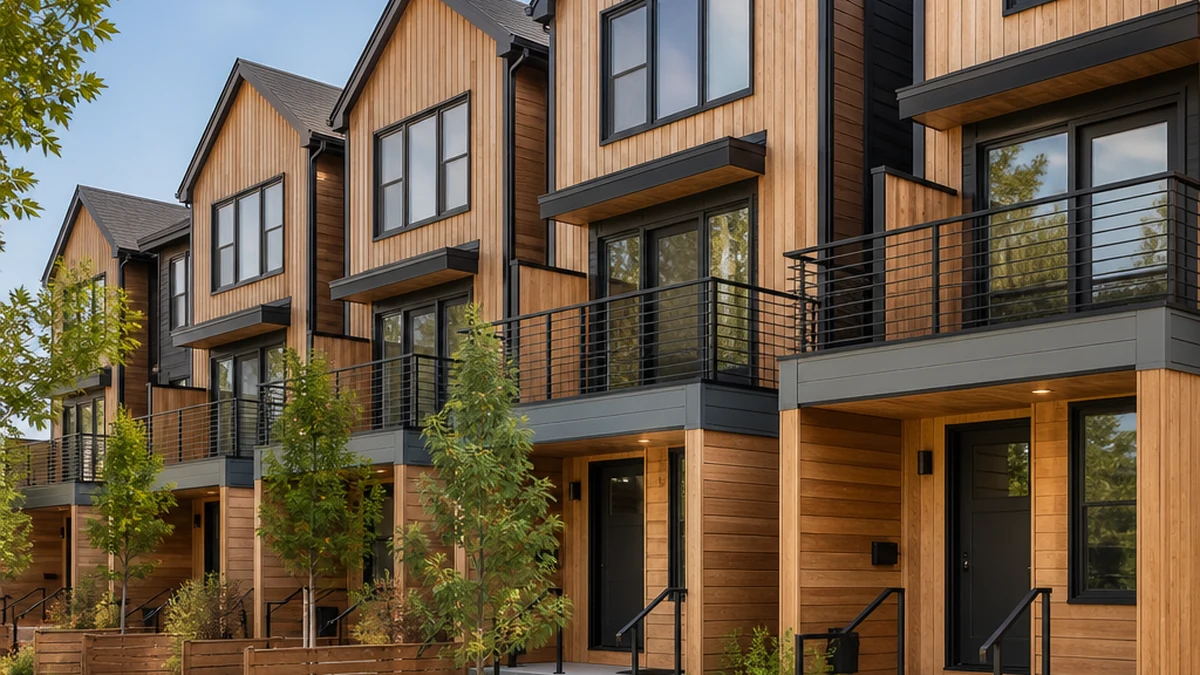
The global timber industry is bracing for significant shifts as new data from Lesprom Network reveals a sharp contraction in the critical U.S. housing market. Existing-home sales in the United States plummeted by 5.5% in the latest reporting period, reaching their lowest level since 2010. This decline represents an 8.8% year-over-year reduction, compounded by a 4.6% rise in unsold inventory over the same twelve months. For C-suite leaders, sawmill owners, timber importers, and panel manufacturers worldwide, this downturn in the largest single-country consumer market for wood products signals a period of recalibration and strategic re-evaluation as we transition from late 2026 into 2027.
- U.S. Demand Contraction: Existing-home sales fell 5.5% to a 16-year low, with an 8.8% year-over-year decline and a 4.6% increase in unsold inventory, signaling a significant demand shock for North American softwood.
- Softwood Price Pressure: Global softwood lumber price benchmarks are projected to experience a 5-8% downward pressure through Q2 2027, driven by reduced U.S. purchasing volume and increased regional inventory.
- Sawmill Operational Adjustments: North American sawmills are likely to implement production curtailments of 3-6% in early 2027 to manage rising inventories and align with softened demand, impacting log procurement strategies.
- Strategic Inventory Management: Importers and panel manufacturers must prioritize agile inventory management and explore diversified sourcing to mitigate price volatility and ensure supply chain resilience through mid-2027.
U.S. Existing-Home Sales Plunge to 2010 Levels: A 2026 Demand Shock for North American Softwood
The precipitous drop in U.S. existing-home sales, now at levels not seen since the post-financial crisis recovery, is a direct consequence of sustained high mortgage rates and persistent inflationary pressures eroding consumer purchasing power. As of late 2026, the average 30-year fixed mortgage rate has remained elevated, stifling transaction volumes and freezing potential buyers out of the market. This environment has led to a significant accumulation of unsold housing stock, with inventory levels rising by 4.6% year-over-year. For the North American softwood sector, which historically supplies a substantial portion of the lumber and panel products consumed in U.S. residential construction, this translates into an immediate and profound demand shock. Sawmills across the Pacific Northwest, the U.S. South, and British Columbia are already reporting slower order books and increasing pressure on pricing. The ripple effect extends beyond raw lumber, impacting demand for engineered wood products and various panel categories, necessitating a re-evaluation of production forecasts for 2027.
Global Softwood Sawnwood Benchmark: 2025-2027 Regional Price Trajectories Amidst U.S. Contraction
The U.S. housing downturn inevitably sends tremors through global timber and lumber price benchmarks. While regional markets exhibit varying degrees of resilience, the sheer volume of U.S. demand means that a significant reduction there creates a surplus that can depress prices internationally. European producers, for instance, may find increased competition in export markets as North American suppliers seek alternative destinations for their output. Asian markets, particularly China and Japan, which have their own complex demand dynamics, will also feel the indirect effects of this global rebalancing. Analyzing the trajectory of key softwood sawnwood benchmarks provides critical foresight for procurement and sales teams navigating this volatile period. The following table illustrates the shifts observed in 2025 actuals and projections for 2026 and 2027, highlighting the anticipated downward pressure.
| Metric/Region | 2025 Actual (USD/m³) | 2026 Est. (USD/m³) | 2027 Proj. (USD/m³) | YoY Change (2026-2027) |
|---|---|---|---|---|
| North American Softwood Composite (FOB Mill) | 485 | 450 | 420 | -6.7% |
| European Spruce/Pine (FOB Baltic) | 310 | 295 | 280 | -5.1% |
| Asian Import Price (CIF Shanghai, Mixed Softwood) | 360 | 345 | 330 | -4.3% |
| Global Sawlog Price Index (Weighted Average) | 105 | 100 | 96 | -4.0% |
| U.S. Southern Yellow Pine (FOB Mill) | 420 | 390 | 370 | -5.1% |
As illustrated, the projected declines for 2027 across major benchmarks underscore the broad impact of the U.S. housing slowdown. North American softwood, directly exposed to the U.S. market, is expected to see the most significant percentage drop. European and Asian markets, while somewhat insulated by their own domestic demand and diversified export portfolios, will still contend with a more competitive global landscape. For a deeper dive into these figures, our global timber and lumber price benchmarks provide ongoing analysis.
North American Sawmill Capacity & Global Log Logistics: Navigating Excess Inventory into Q1 2027
The immediate consequence of reduced demand and rising unsold inventory in the U.S. is a critical challenge for North American sawmills. Faced with diminishing order backlogs and the imperative to manage working capital

