



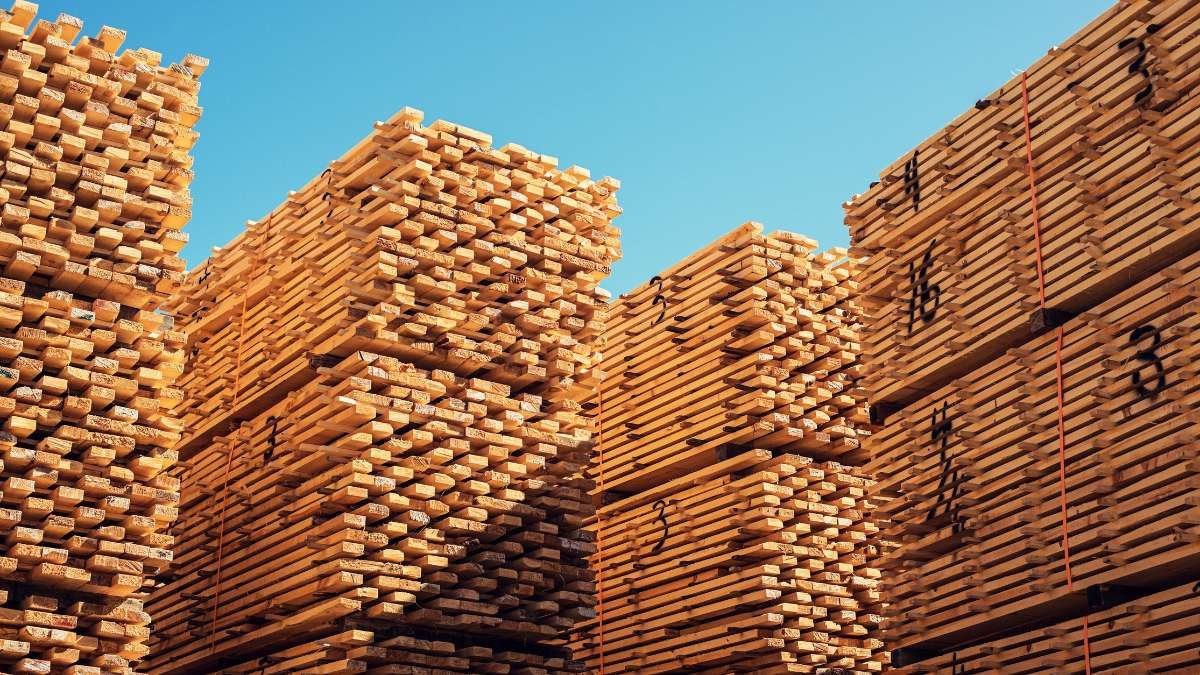


Lumber futures jumped past $550 per thousand board feet on Thursday, buoyed by a dovish policy shift from the U.S. Federal Reserve that improved sentiment across construction-linked markets. The move reflects growing expectations of increased building activity as borrowing costs fall, offering fresh momentum to a supply-constrained sector.
MarketsTraders responded positively to the Fed’s anticipated 25 basis point interest rate cut, with remarks from Chair Jerome Powell reinforcing bets on further monetary easing in the year ahead. With mortgage rates likely to soften, the prospect of revived homebuilding and renovation activity has sharpened, prompting renewed interest across lumber distribution channels.
Overview
The rally in lumber futures comes at a time when structural limitations persist across North American supply chains. Market participants now see improved conditions for inventory restocking as financial easing coincides with already constrained material flows. Builders and distributors alike are recalibrating procurement strategies amid rising price expectations and limited regional availability.
As monetary policy turns more accommodative, industry players anticipate increased demand in both residential construction and remodelling sectors. The policy signal from the Fed has been particularly impactful, realigning short-term outlooks for timber-related input markets.
Strategic and Economic Context
The Federal Reserve’s latest decision underscores a broader shift towards economic stimulus, with interest rate reductions poised to stimulate borrowing and investment. Lower mortgage rates are especially critical for the U.S. housing market, where high financing costs have recently curbed demand. The renewed dovish stance raises hopes for an acceleration in construction-related activity, in turn driving material demand for lumber and panel products.
Financial markets have already begun to price in additional rate cuts for the upcoming quarters, deepening optimism across commodity sectors tied to cyclical infrastructure and housing trends. As a result, speculative interest in lumber futures has grown in tandem with forward-looking construction indicators.
Impact on Wood and Timber Industry
Supply-side constraints are compounding the bullish tone in lumber futures markets. Log and lumber flow dynamics across North America remain distorted, with reduced Canadian log exports and higher inbound lumber shipments to the U.S. creating imbalances. Concurrently, Canadian sawmill output continues to weaken while U.S. lumber exports trend downward, cutting into overall feedstock availability.
These disruptions are intensifying procurement competition, especially among regional players with limited sourcing leverage. The resulting pressure is not only elevating futures prices but also squeezing real-world availability in certain local markets.
Supply, Materials or Cost Considerations
Inventory rebuilding is becoming increasingly strategic as mills and distributors brace for tighter supply conditions. The dual impact of monetary easing and persistent trade frictions is prompting more aggressive procurement behaviour, especially among larger operators seeking to hedge future cost increases.
However, the situation is less favourable for smaller distributors. Mounting margin compression and rising insolvency rates have impaired throughput, leading to reduced local inventories. As downstream pressure builds, regional supply chains are experiencing delays and tighter allocations, further complicating availability in price-sensitive segments.
Business and Industry Implications
Smaller regional operators appear most exposed in the current environment. The recent uptick in insolvency filings signals operational stress across fragmented distribution networks. Reduced liquidity and lower working capital availability are hampering their ability to stockpile material, putting them at a competitive disadvantage.
For upstream producers and large-scale distributors, the current rally in lumber futures provides a margin buffer. It also offers tactical opportunities for strategic inventory positioning. Nevertheless, elevated volatility and uneven access to raw inputs continue to present logistical and financial risks across the wood products value chain.
Outlook
With interest rates expected to decline further in 2026, conditions remain favourable for sustained support in lumber futures pricing. However, persistent constraints on North American supply and uneven distributor resilience suggest continued tightness in the physical market. Forward-looking participants are likely to prioritise inventory security, while smaller players face an increasingly challenging operating environment.
The coming months will test the balance between easing financial conditions and entrenched supply frictions, with lumber futures offering a key signal of broader industry momentum.


