



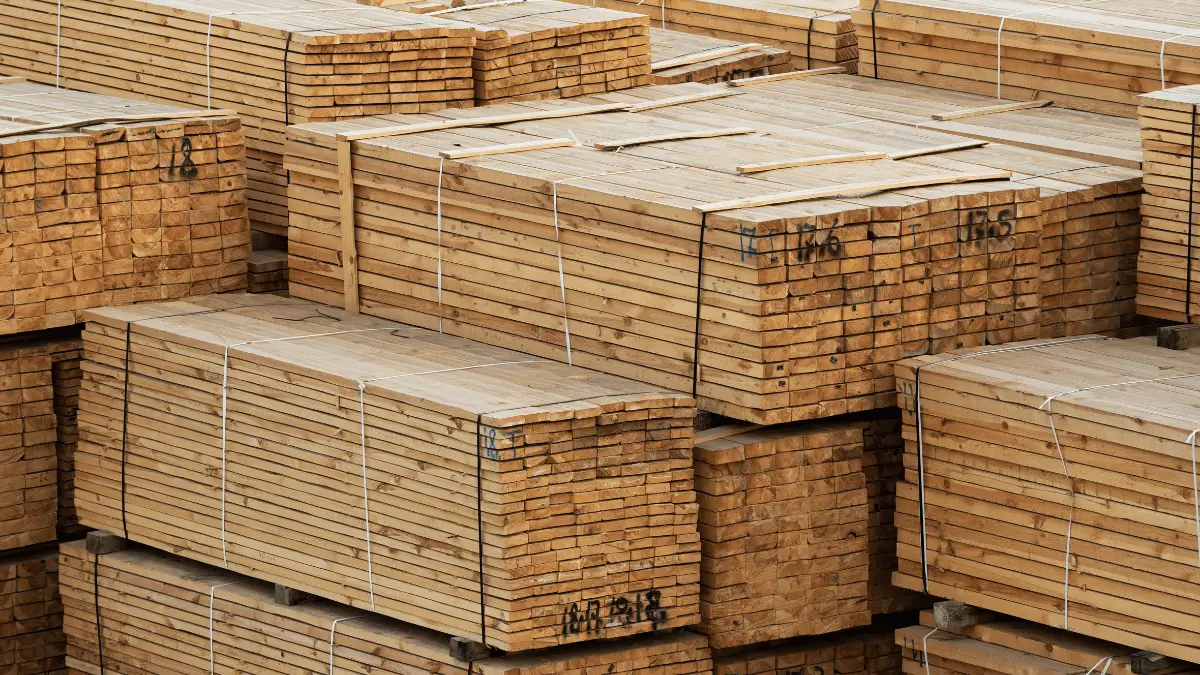


Updated July 13, 2026. Polish softwood lumber market indications opened 2026 close to late-2025 trading levels, according to a trade-market assessment covering spruce, pine, industrial and planed products. The reported ranges placed standard spruce construction lumber around €290–315/m³ and pine construction lumber around €260–290/m³. These figures are indicative assessments rather than an official price index: specifications, moisture, grade, volume, currency and delivery basis must be confirmed before comparing offers.
Early-2026 Poland softwood price indications
| Product | Reported range | Key specification caveat |
|---|---|---|
| Spruce construction lumber, standard | €290–315/m³ | Kiln drying, strength grade and dimensions affect the comparison |
| Selected or planed spruce | €315–320/m³ | Limited volumes and regular supply arrangements were reported |
| Pine construction lumber | €260–290/m³ | Grade and moisture specification can materially change value |
| Lower structural or mixed-grade pine | €250–270/m³ | Often associated with spot or less demanding applications |
| Fresh-sawn mixed softwood | €230–260/m³ | Not directly comparable with kiln-dried graded lumber |
| Industrial or pallet softwood | €230–250/m³ | Processing, dimensions and quality requirements vary |
| Planed, higher-finish softwood | €320–350/m³ | Section, finish, packaging and order size influence the premium |
The ranges above were published by Forest Brief as an early-2026 market snapshot. They should not be presented as a national transaction average or a guaranteed delivered price. The underlying assessment does not provide a complete transaction dataset, sample size or common Incoterm for every category. TimberInsider therefore retains the numbers as dated market indications and does not extrapolate them into a July price claim.
Why spruce carried a premium over pine
The reported spread reflected product positioning as much as species. Kiln-dried, strength-graded spruce in standard construction sections was assessed above lower-grade pine and fresh-sawn industrial material. Buyers comparing spruce and pine need the declared grade, moisture content, actual dimensions, visual requirements and certification. A higher price may represent additional drying, grading or planing rather than a pure species premium.
Planed products also carried a reported premium over rough or minimally processed lumber. That difference must be evaluated against machining, yield, packaging and usable dimensions. For a wider framework, see TimberInsider’s softwood product guide and timber price hub.
Construction demand started 2026 weak
Official data help explain why buyers remained cautious even when the quoted lumber brackets appeared stable. Statistics Poland reported that construction and assembly production in January 2026 was 12.8% lower than a year earlier in unadjusted terms. After seasonal adjustment, output was 10.8% lower year on year and 8.9% below December 2025. The agency noted exceptionally unfavourable weather as one influence on the January result.
Residential indicators also began the year weak. January dwelling completions fell 8.0% year on year, permits or registrations fell 12.3%, and housing starts fell 28.6%. Those data do not translate directly into lumber consumption, because Polish residential construction uses multiple structural systems and project timing creates lags. They nevertheless show that early-2026 construction did not provide a clear broad demand surge for structural softwood.
Spring data showed a mixed recovery
Conditions improved after the weak January comparison. Statistics Poland reported construction and assembly production up 4.5% year on year in April and 3.9% in May. For January–May, dwelling completions were 0.5% below the same period of 2025 and housing starts were 0.2% lower, while permits or registrations increased 16.3%. The combination points to a more balanced pipeline than the January figures alone suggested, but not proof that every softwood grade experienced stronger realized demand.
This is why the early price table should remain dated. Later construction data can change the demand context without validating a later transaction range. A current purchasing decision requires a fresh mill or distributor quotation.
Raw log supply and mill margins
Polish sawmills source a significant share of wood through the State Forests sales system as well as other suppliers. Local State Forest districts publish retail raw-wood schedules, but those lists are not finished-lumber prices and should not be compared directly with the euro-per-cubic-metre sawnwood ranges above. Sawlog assortment, quality, transport and auction or contract conditions affect the mill’s delivered fibre cost.
A stable lumber offer does not necessarily mean a stable sawmill margin. Log cost, recovery, kiln energy, labour, financing and residue revenue can move independently. Follow TimberInsider’s log price coverage and sawmilling analysis for the upstream side of the market.
How buyers should compare Polish offers
- Match species, strength or visual grade, dimensions, moisture and surface finish.
- Confirm whether the quotation is ex-works, delivered domestically or prepared for export.
- Record currency, VAT treatment, minimum volume, packaging and payment terms.
- Separate fresh-sawn, kiln-dried and planed products rather than averaging them together.
- Add freight, handling, insurance and currency exposure to calculate landed cost.
- Check the quotation date and validity instead of applying the January range to later 2026.
Market outlook
The available evidence supports a cautious interpretation. Early-2026 market assessments showed established price separation between spruce, pine and industrial grades, while official construction data moved from a sharp January decline to year-on-year growth in April and May. Near-term direction will depend on sawlog costs, mill utilization, the conversion of permits into active projects, export demand, freight and European construction conditions. TimberInsider will update the price assessment only when a newer, adequately specified market dataset is available.
Sources and methodology
The product ranges are attributed to the Forest Brief early-2026 Poland assessment. Demand context comes from Statistics Poland’s January construction release and its official release calendar and later 2026 updates. Raw-wood context is checked against the Polish State Forests district price documentation. Price ranges are indicative, specification-sensitive and not investment or procurement advice. Read TimberInsider’s full sources and methodology.


