

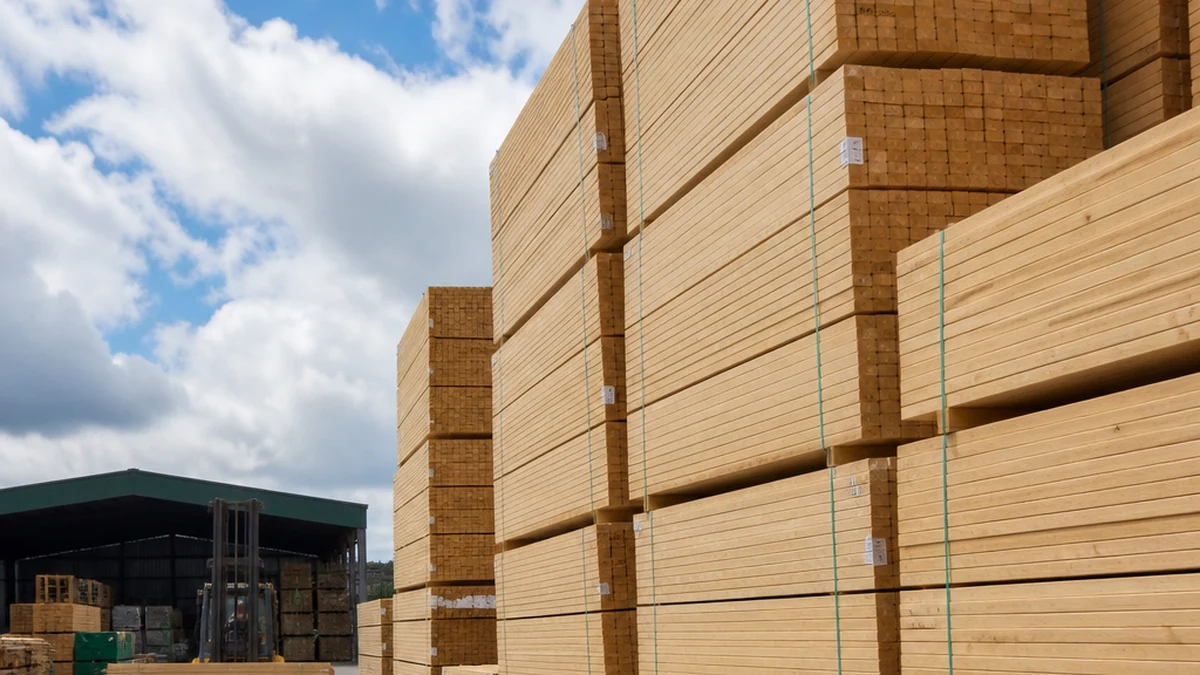
The indefinite suspension of operations at Sexton Lumber, Newfoundland’s largest sawmill, following a recent fire, represents a significant capacity shock to the Atlantic Canadian softwood market. With an annual production capability of approximately 65 million board feet, this operational halt, confirmed by Lesprom Network intelligence, immediately curtails regional log harvesting and purchasing activities. The incident, occurring in late 2026 as the industry prepares for 2027, underscores the inherent vulnerabilities within concentrated regional supply chains and necessitates a prompt re-evaluation of procurement strategies for C-suite leaders, timber importers, and panel manufacturers reliant on North American softwood inputs.
- Core Shift: Sexton Lumber’s 65 million board feet/year capacity loss removes approximately 15-20% of Newfoundland’s total softwood lumber output, creating an immediate supply deficit in Atlantic Canada.
- Market Impact: Expect upward price pressure on Eastern Canadian SPF (Spruce-Pine-Fir) lumber, with potential spillover effects on North American benchmark pricing, particularly for Q1-Q2 2027 deliveries.
- 2026/2027 Outlook: Procurement directors should re-evaluate Atlantic Canadian supply contracts, diversify sourcing to mitigate regional concentration risk, and monitor global timber and lumber price benchmarks closely for volatility.
Atlantic Canada’s Softwood Supply Shock: Sexton Lumber’s Indefinite Halt and Regional Repercussions
The operational cessation at Sexton Lumber, a cornerstone of Newfoundland’s forestry sector, sends immediate ripples through the Atlantic Canadian timber ecosystem. As the province’s largest sawmill, its annual output of 65 million board feet represents a substantial portion of regional softwood lumber production. The decision to suspend harvesting and log purchasing indefinitely signals a significant disruption not only to lumber supply but also to the entire upstream value chain, impacting independent logging contractors and forest management operations across the island.
This incident arrives at a precarious juncture for the North American softwood market. While overall demand has seen moderate stabilization through 2026, localized supply shocks, such as this fire, can rapidly destabilize regional pricing and availability. The loss of Sexton Lumber’s capacity will likely tighten the supply of Eastern Canadian SPF, a critical component for residential construction and industrial applications across North America and into select European markets. Other regional mills in Nova Scotia, New Brunswick, and Quebec may experience increased demand, but their ability to fully absorb Sexton’s lost volume without significant lead times or capital investment remains limited. This event underscores the fragility of relying on single large-scale operations within a geographically constrained market, prompting a broader discussion on resilience within the global sawmill landscape.
North American Softwood Sawnwood Benchmarks: 2026 Performance and 2027 Projections Amidst Capacity Contractions
The Sexton Lumber incident adds another layer of complexity to an already dynamic North American softwood market. Analyzing 2026 actuals against 2027 projections reveals a landscape shaped by fluctuating demand, persistent logistical challenges, and intermittent supply disruptions. The table below illustrates key regional softwood sawnwood price trends and operational margins, highlighting the anticipated shifts as the industry navigates the impact of such capacity losses.
| Metric / Region | 2025 Actual (USD/MBF) | 2026 Actual (USD/MBF) | 2027 Projection (USD/MBF) | 2026-2027 % Change (Projection) |
|---|---|---|---|---|
| Eastern Canadian SPF (2×4 #2&Btr) | 485 | 510 | 540-570 | +5.9% to +11.8% |
| Western Canadian SPF (2×4 #2&Btr) | 495 | 525 | 530-550 | +0.9% to +4.8% |
| US South Yellow Pine (SYP) (2×4 #2) | 470 | 490 | 500-520 | +2.0% to +6.1% |
| European Spruce (C24, delivered US East Coast) | 530 | 550 | 560-580 | +1.8% to +5.5% |
| Global Sawmill Operating Margin (Average) | 18% | 16% | 15-17% | -6.3% to +6.3% |
The projected increase in Eastern Canadian SPF pricing for 2027 directly reflects the anticipated supply tightness exacerbated by Sexton Lumber’s halt. While Western Canadian SPF and US South Yellow Pine are also expected to see modest gains, the percentage increase for Eastern Canadian products is notably higher, indicating a more pronounced regional impact. European spruce, already a significant import to the US East Coast, may see further demand as buyers seek alternatives, potentially pushing its delivered prices higher. The average global sawmill operating margin, which saw a slight contraction in 2026, is projected to remain relatively stable, albeit with regional disparities, as mills grapple with input costs and market demand. This data underscores the interconnectedness of international wood market developments and the immediate need for agile response mechanisms.
Log Procurement and Freight Dynamics: Eastern Canadian Fiber Squeeze and Transatlantic Trade Routes
The cessation of operations at Sexton Lumber creates an immediate and significant surplus of harvested logs in Newfoundland, simultaneously removing a major buyer from the market. This scenario presents a complex challenge for local logging contractors who now face an uncertain outlet for their timber. While some logs may be diverted to other, smaller regional mills, their capacity to absorb Sexton’s volume is limited, potentially leading to downward pressure on local stumpage prices or, conversely, an oversupply of unpurchased fiber.
Beyond the immediate regional impact, this disruption influences broader log procurement strategies. With a key Eastern Canadian processing facility offline, demand for alternative softwood log sources could subtly shift. For instance, while German spruce log prices ease in Europe due to oversupply, the logistical challenges and costs associated with transatlantic shipping mean they are unlikely to directly fill the void in Newfoundland. However, the overall tightening of North American lumber supply could indirectly bolster demand for US South logs or even increase pressure on Western Canadian fiber, impacting their respective price points and availability for other global sawmill operations.
Freight dynamics are also critical. The reduction in lumber output from Newfoundland means fewer outbound shipments, potentially affecting regional shipping rates and vessel availability. Conversely, if other Atlantic Canadian mills ramp up production to compensate, or if more lumber needs to be imported into the region, inbound freight costs could see an uptick. International importers must factor these evolving logistical complexities into their landed cost calculations for 2027.
Strategic Re-evaluation for C-Suite: Mitigating Supply Chain Volatility in the 2027 Global Sawmill Landscape
For C-suite executives, sawmill owners, timber importers, and panel manufacturers, the Sexton Lumber incident serves as a stark reminder of the imperative for robust supply chain resilience. The immediate task involves assessing exposure to Eastern Canadian SPF and identifying alternative sourcing options for Q1 and Q2 2027. This includes exploring increased volumes from other North American regions, such as the US South or Western Canada, or evaluating the viability of European imports, despite potentially higher freight costs.
Longer-term strategic considerations must focus on diversification and risk mitigation. Companies with concentrated procurement from single-point suppliers or specific geographic regions should initiate audits of their supply chain architecture. Implementing forward contracting strategies, where feasible, can help lock in pricing and supply, mitigating the impact of sudden market volatility. Furthermore, investing in advanced analytics for real-time market intelligence becomes paramount, enabling quicker responses to unforeseen disruptions. Panel manufacturers, in particular, must ensure their raw material supply of softwood lumber and chips remains stable, exploring alternative fiber sources or adjusting production schedules if necessary. The incident reinforces the need for a proactive, rather than reactive, approach to managing the inherent risks within the global sawmill and timber trade.
Frequently Asked Questions for Global Sawmill Stakeholders
How will the Sexton Lumber halt specifically impact Eastern Canadian lumber prices through Q2 2027?
The indefinite halt at Sexton Lumber is expected to create immediate upward price pressure on Eastern Canadian SPF lumber. Given the 65 million board feet annual capacity, a significant portion of regional supply has been removed. Buyers should anticipate price premiums for available volumes, potentially seeing increases of 5-10% above pre-fire levels for Q1-Q2 2027 deliveries, as other regional mills may struggle to fully compensate for the lost output.
What are the broader implications for North American softwood supply chain resilience?
This incident highlights the fragility of supply chains reliant on concentrated capacity. It underscores the need for greater diversification in sourcing and robust risk management protocols. While North America possesses vast timber resources, localized disruptions can still create significant bottlenecks, emphasizing the importance of regional redundancy and flexible logistics networks to maintain overall supply chain stability.
Should international importers adjust their procurement strategies for Atlantic Canadian SPF?
Yes, international importers with significant exposure to Atlantic Canadian SPF should immediately review their procurement strategies. This involves assessing current contract terms, exploring alternative suppliers in other North American regions (e.g., US South, Western Canada), and potentially evaluating European softwood imports as a supplementary source. Diversifying supplier portfolios and engaging in more flexible, shorter-term contracts or spot market purchases for a portion of demand can mitigate future regional supply shocks.

