

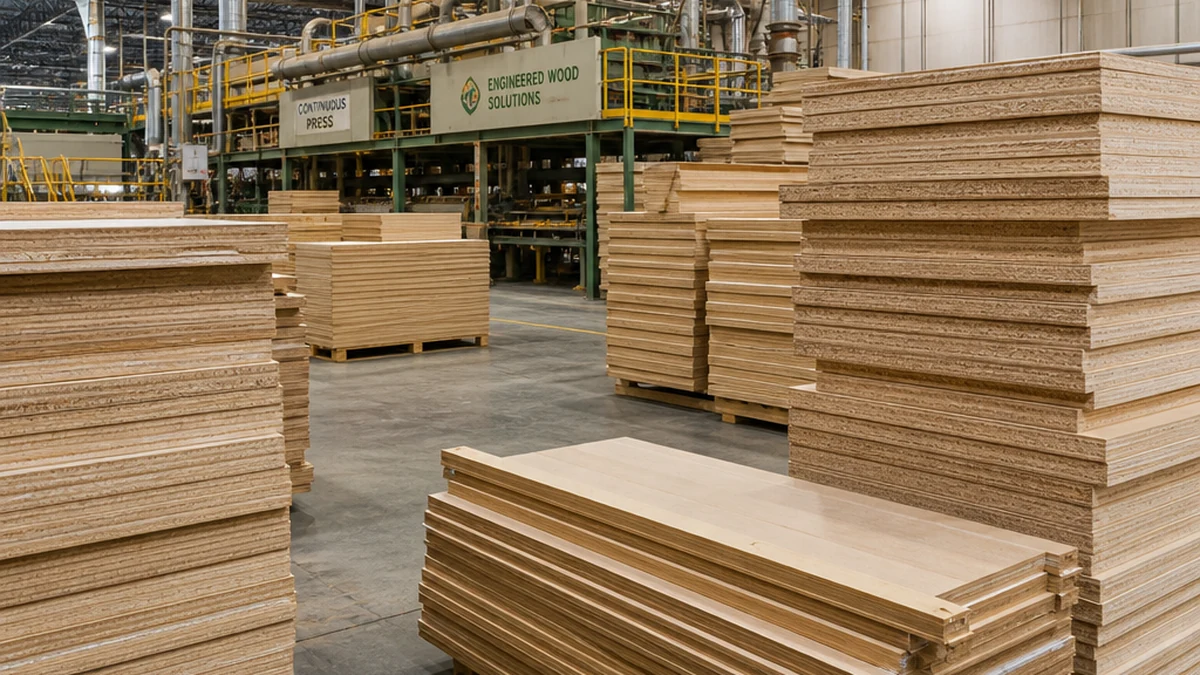
The European wood-based panel sector is experiencing a notable resurgence, with Germany reporting a substantial 22.6% increase in particleboard and similar wood-based panels production in September 2026 compared to the same month in 2025. This significant uptick, which also represents a 17.6% rise from August 2026 output, as reported by Lesprom Network, underscores a critical shift in European manufacturing momentum. For C-suite leaders, sawmill owners, timber importers, and panel manufacturers operating within the international wood market developments, this surge in Germany, a bellwether for continental industrial activity, necessitates a rigorous re-evaluation of supply chain strategies, raw material procurement, and market forecasts for late 2026 and into 2027.
- Core Shift: German particleboard and wood-based panel production escalated by 22.6% year-over-year in September 2026, indicating robust demand recovery and inventory replenishment across Europe.
- Market Impact: Increased demand for wood chips, sawdust, and other sawmill residues is exerting upward pressure on European raw material prices, potentially influencing global timber and lumber price benchmarks for industrial wood fiber.
- 2026/2027 Outlook: Panel manufacturers must secure long-term residue supply contracts, while sawmills can anticipate enhanced monetization opportunities for by-products, with a projected 5-8% increase in European residue prices by Q2 2027.
- Strategic Imperative: Procurement directors should model scenarios for tightened residue availability and explore diversified sourcing, including potential imports, to mitigate supply chain risks through mid-2027.
German Panel Production Surge: A European Demand Indicator for Late 2026
The 22.6% year-on-year increase in German particleboard and wood-based panel output for September 2026 is not an isolated statistical anomaly; it reflects a broader, albeit cautious, recovery in key end-use sectors across the European Union. Analysis suggests this surge is primarily driven by a combination of factors: a rebound in residential and commercial construction projects that had been deferred in early 2026, a sustained uptick in furniture manufacturing for both domestic consumption and export, and strategic inventory rebuilding by distributors anticipating stronger consumer spending into 2027. The sequential 17.6% month-over-month growth from August to September further solidifies the narrative of an accelerating production cycle, indicating that manufacturers are responding proactively to renewed order books rather than merely clearing backlogs.
This robust performance in Germany, Europe’s largest economy and a significant consumer of wood-based panels, sends a clear signal to the entire global timber industry. It suggests that the demand-side pressures, which had softened considerably in late 2025 and early 2026, are now firming up. This has immediate implications for raw material suppliers, particularly sawmills generating residues, and for other panel producers who might face increased competition for fiber inputs. The German market’s vitality often acts as a leading indicator for broader European industrial health, making this data point crucial for strategic planning across the continent.
European Wood-Based Panel Production & Raw Material Costs: 2025 Actuals vs. 2026/2027 Projections
To contextualize Germany’s performance, a comparative analysis of key metrics across the European wood-based panel sector reveals evolving market dynamics. The following table provides a snapshot of production volumes and critical raw material costs, comparing 2025 actuals with 2026 estimates and 2027 projections, offering a forward-looking perspective for strategic decision-making.
| Metric | 2025 Actuals | 2026 Estimates | 2027 Projections |
|---|---|---|---|
| German Particleboard Production (million m³) | 6.85 | 7.40 (+8.0%) | 7.75 (+4.7%) |
| EU27 Wood-Based Panel Consumption (million m³) | 48.20 | 50.50 (+4.8%) | 52.10 (+3.2%) |
| European Sawmill Residue Prices (€/BDMT, delivered) | €78.50 | €83.00 (+5.7%) | €87.50 (+5.4%) |
| Baltic Spruce Sawlog Prices (€/m³, roadside) | €92.10 | €95.80 (+4.0%) | €98.50 (+2.8%) |
| North American OSB Production (million m³) | 21.50 | 22.10 (+2.8%) | 22.80 (+3.2%) |
The table illustrates a clear upward trend in both production and raw material costs across Europe. The projected increases for 2027 in sawmill residue prices, driven by heightened demand from the panel sector and competition from bioenergy, highlight a critical challenge for procurement teams. While North American OSB production also shows growth, the European market’s specific dynamics, particularly concerning residue availability, warrant distinct strategic considerations for the global timber industry.
Cascading Effects: European Sawmill Residue Supply and Logistics for Panel Manufacturers in 2027
The surge in German particleboard production directly translates into an amplified demand for wood fiber raw materials, primarily sawmill residues such as chips, sawdust, and planer shavings. This increased pull on the supply chain is already creating ripple effects across the European market. Sawmills, which are the primary generators of these residues, are finding themselves in a stronger negotiating position, leading to the observed and projected increases in residue prices. This dynamic is further complicated by the persistent demand from the bioenergy sector, which often competes for similar wood fiber streams, particularly in regions with robust renewable energy mandates.
Logistics present another significant challenge. The efficient transportation of bulky, low-value wood residues over long distances is inherently costly. As demand intensifies, regional imbalances in supply and demand become more pronounced. Panel manufacturers in areas with limited local sawmill capacity may face escalating freight costs, eroding margins. This could necessitate a re-evaluation of sourcing radii and potentially lead to increased reliance on imports of wood chips or other fiber sources from outside the immediate European market, impacting global timber industry trade flows. The efficiency of rail and barge networks will be critical in mitigating these logistical pressures, especially as road transport costs remain elevated due to fuel prices and driver shortages.
Navigating the European Panel Market: Strategic Procurement and Investment for C-Suite Leaders Through Mid-2027
For C-suite leaders in the global timber industry, particularly those involved in panel manufacturing and raw material supply, the current market conditions demand agile and forward-thinking strategies. Panel producers must prioritize securing long-term supply agreements for wood residues, potentially exploring direct partnerships or even minority investments in sawmill operations to ensure consistent fiber access. Diversification of raw material inputs, including the increased utilization of recycled wood or alternative agricultural fibers where technically feasible, should also be on the agenda. Investment in advanced sorting and processing technologies for mixed wood waste streams could unlock new supply avenues and enhance resource efficiency, as highlighted in recent engineered wood and panel sector news.
Sawmill owners, on the other hand, are presented with an opportunity to optimize the monetization of their by-products. Implementing advanced residue management systems, exploring pellet production for energy markets, or even investing in co-located panel manufacturing facilities could enhance profitability and reduce waste. For timber importers and exporters, understanding these European dynamics is crucial for anticipating shifts in global wood fiber trade. A strong European demand for residues could divert supply from other markets, influencing pricing and availability for panel producers worldwide. Strategic hedging against raw material price volatility and currency fluctuations will be paramount for maintaining competitive advantage through mid-2027.
Frequently Asked Questions
What is driving the German particleboard production surge?
The surge is primarily driven by a recovery in European construction and furniture manufacturing sectors, coupled with strategic inventory rebuilding by distributors. Deferred projects from early 2026 are now moving forward, and manufacturers are responding to renewed order books, signaling a positive shift in market demand for wood-based panels.
How will this impact raw material availability for other European panel producers?
Increased German production will intensify competition for sawmill residues (wood chips, sawdust) across Europe. This is expected to lead to tighter supply, upward pressure on residue prices, and potentially longer lead times for deliveries. Panel producers in other European countries may need to expand their sourcing networks or consider alternative fiber inputs.
What strategic actions should C-suite leaders consider in late 2026/early 2027?
C-suite leaders should focus on securing long-term raw material supply contracts, exploring diversification of fiber sources (e.g., recycled wood), and optimizing logistics to mitigate rising transportation costs. Sawmill owners should evaluate opportunities for enhanced residue monetization, while panel manufacturers might consider vertical integration or strategic partnerships to ensure supply stability and manage cost volatility.

