

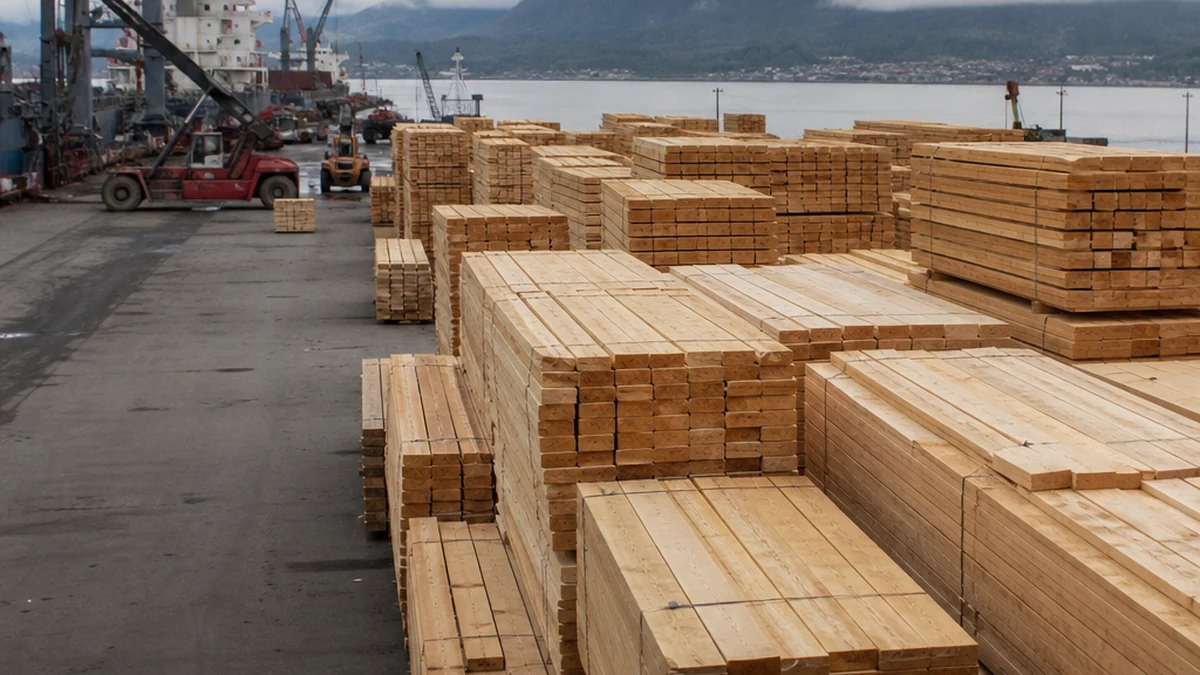
The Canadian timber industry, a cornerstone of global softwood lumber supply, is grappling with an unprecedented crisis. Widespread and intense wildfires across British Columbia, Alberta, and Quebec have forced the closure of numerous sawmills, disrupted critical transportation networks, and significantly curtailed log harvesting. This immediate supply shock in North America is not merely a regional issue; it is rapidly propagating through international markets, driving up global prices and compelling a strategic re-evaluation across the entire timber value chain.
- Over 1.8 million hectares of commercial timberland have been impacted across British Columbia and Alberta, leading to an estimated 18% reduction in Q3 Canadian softwood lumber output.
- The composite price for Western Spruce-Pine-Fir (SPF) lumber has surged by 32% in the past six weeks, directly eroding profit margins for U.S. homebuilders and European importers.
- Leading sawmill groups and procurement agencies are advising clients to factor in sustained elevated pricing and potential supply volatility through Q4 2026, with full market stabilization not anticipated until mid-2027.
BC & Alberta’s Timber Crisis: Unpacking the North American Softwood Market Shock
Canada accounts for approximately 15% of global softwood lumber production and is the primary supplier to the United States, making any significant disruption inherently impactful. The current wildfire season, marked by its early onset and extreme intensity, has directly impacted major timber-producing regions. Sawmills in affected areas have been forced to cease operations due to evacuation orders, direct fire threats, and compromised access to raw materials and transportation infrastructure. This has led to an immediate and substantial reduction in available lumber volumes.
The financial ramifications are already evident. North American lumber futures, particularly for Spruce-Pine-Fir (SPF), have seen sharp increases. The Random Lengths Framing Lumber Composite Index, a key industry benchmark, has registered significant upward movement, reflecting the tightening supply. This surge is not solely a function of reduced output; it also incorporates escalating operational costs for mills that remain active. These include higher insurance premiums, increased logistical expenses due to re-routed shipments and delays, and potential future labor shortages as communities recover. For many sawmills, particularly those already operating on tight margins due to fluctuating demand and persistent trade duties, these compounding pressures represent a critical challenge to profitability and sustained operation.
Beyond 2021: Wildfire Impact vs. Prior Supply Shocks in Softwood Futures
The impact of the Canadian wildfires is unevenly distributed but creates a ripple effect across various markets. The following table illustrates the projected shifts in pricing and supply for key softwood lumber products across different regions, highlighting the disproportionate impact on Canadian output and the subsequent pressure on other markets.
| Region | Primary Product | Q2 2023 Avg. Price (USD/MBF) | Q3 2023 Forecasted Price (USD/MBF) | Estimated Supply Reduction (%) | Operational Margin Impact (%) |
|---|---|---|---|---|---|
| Western Canada | SPF 2×4 #2&Btr | $450 – $500 | $580 – $650 | 15% – 25% | -10% to -15% (due to costs) |
| US South | SYP 2×4 #2 | $420 – $470 | $500 – $560 | 0% (Increased Demand) | +5% to +10% (due to prices) |
| Scandinavia/Central Europe | Spruce/Fir C24 | $480 – $530 | $520 – $580 | Minimal Direct | +2% to +5% (due to global prices) |
| Eastern Canada | SPF 2×4 #2&Btr | $460 – $510 | $590 – $670 | 5% – 10% | -5% to -8% (due to costs) |
Note: Prices are illustrative and subject to market volatility. Supply reduction for Western/Eastern Canada reflects direct wildfire impact. Operational Margin Impact reflects net effect of price changes and increased costs.
From Forest Floor to Global Market: Unraveling the Supply Chain Bottlenecks
The immediate impact on raw material availability is severe. Log harvesting has been halted in vast areas, leading to a critical shortage of sawlogs for operational mills. This scarcity is driving up stumpage costs in unaffected regions, as mills compete for a dwindling supply. The long-term implications for forest health and future log availability in burned areas are also a significant concern, potentially leading to reduced Annual Allowable Cuts (AAC) in the coming years.
Logistics have become a major bottleneck. Key rail lines and highways, vital for transporting logs to mills and finished lumber to markets, have been closed or severely restricted. This has resulted in extended lead times, increased freight costs, and a complex re-routing of shipments. For international buyers, this translates to higher landed costs and unpredictable delivery schedules. The existing trade policy landscape, particularly the enduring US duties on Canadian softwood lumber (averaging around 8%), exacerbates the situation. These duties already add a significant cost burden to Canadian exports, and the current scarcity amplifies this financial pressure on US importers, making alternative sourcing even more attractive.
Resilience & Rebuilding: Long-Term Strategies for North American Timber Operations
For Canadian sawmills, the immediate focus is on recovery and rebuilding. This crisis will necessitate significant investment in fire mitigation strategies, re-evaluation of forest management practices, and potentially accelerate consolidation within the industry as smaller, less resilient operations struggle to recover. The long-term outlook for Canadian timber supply will be shaped by regeneration efforts and climate change adaptation strategies.
Importers and distributors globally are now facing heightened procurement costs and supply uncertainty. This is driving a renewed push for diversification of sourcing. Buyers are increasingly looking towards the US South, Scandinavia, Central Europe, and even South America to fill the void left by reduced Canadian output. This shift in demand dynamics will inevitably push up global prices across these alternative regions, even if their direct exposure to the Canadian wildfires is minimal. Panel producers, including those manufacturing OSB, plywood, and particleboard, will also face increased competition for available log supply, potentially impacting their raw material costs and production capacities. The overarching implication is a sustained period of elevated global prices for softwood lumber and related products, as the market adjusts to a significantly constrained North American supply.
For a deeper dive into market trends, refer to our latest TimberInsider Market Analysis. Furthermore, understanding the broader policy landscape is crucial; explore our TimberInsider Policy Brief on Trade Duties for more context.
Frequently Asked Questions
1. How long will the Canadian wildfire impact on global prices last?
- The immediate volatility and upward price pressure are expected to persist through Q3 and Q4 2023. The long-term duration depends on the extent of forest damage, the pace of sawmill recovery, and the severity of future fire seasons. Full market stabilization could take several quarters, if not years, for affected regions to fully restore production capacity.
2. What are the primary alternative sourcing options for buyers traditionally reliant on Canadian lumber?
- Buyers are increasingly exploring options from the US South (Southern Yellow Pine), Scandinavia (Spruce/Pine), Central Europe (Spruce/Fir), and potentially South America (e.g., Radiata Pine from Chile/Brazil). However, these regions have finite capacities and increased demand will inevitably lead to higher prices and longer lead times.
3. What are the long-term implications for Canadian timber supply and forest management?
- The wildfires will likely lead to a re-evaluation of sustainable forest management practices, increased investment in fire prevention and mitigation technologies, and potentially a reduction in the Annual Allowable Cut (AAC) in heavily impacted areas. There will be a heightened focus on climate change adaptation strategies to build more resilient forest ecosystems.

