

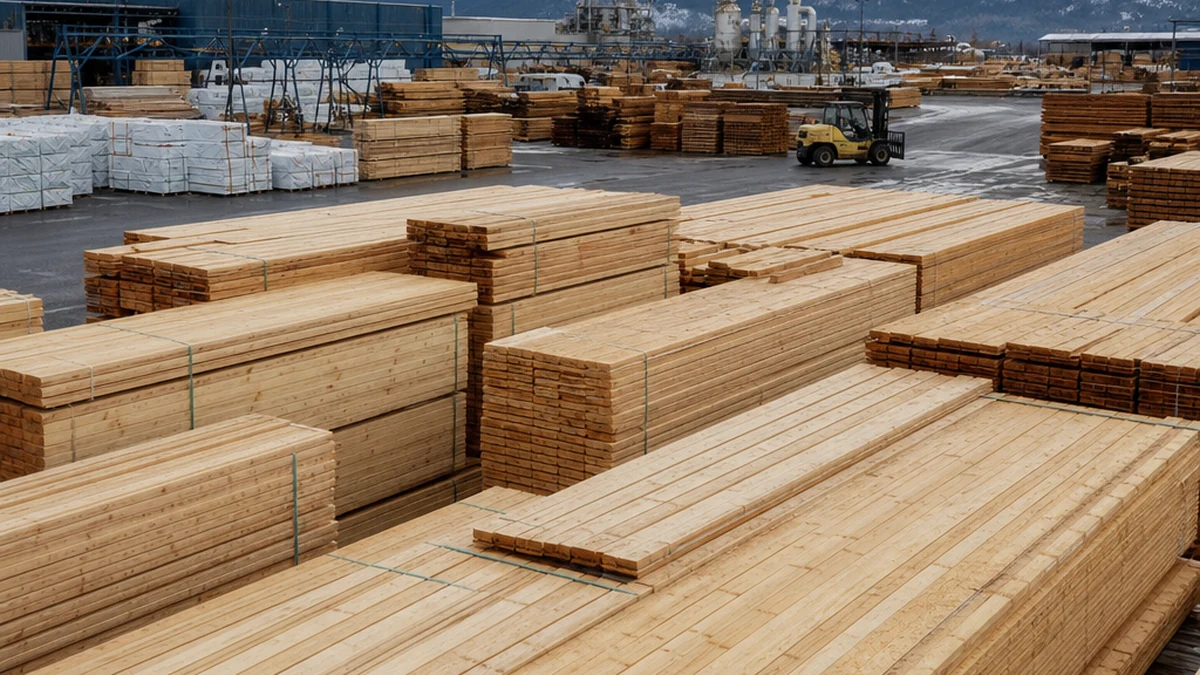
The Canadian timber industry, a cornerstone of global softwood lumber supply, is grappling with an unprecedented crisis as widespread wildfires force the closure of numerous sawmills across British Columbia and Alberta. This environmental catastrophe is not merely a regional issue; its immediate and cascading effects are profoundly reshaping North American lumber markets and exerting significant upward pressure on global prices, impacting construction, manufacturing, and trade worldwide. TimberInsider’s analysis reveals a complex interplay of reduced supply, heightened demand, and logistical bottlenecks that demand urgent strategic re-evaluation from industry participants.
- Over 2.5 million hectares of Canadian forest burned to date, impacting an estimated 18% of accessible timberlands in affected regions.
- North American softwood lumber futures contracts (LBS) have seen a 22% increase since early May, driven by supply uncertainty and speculative buying.
- Sawmills and procurement teams are advised to model a 5-8% annual increase in raw material costs through 2027, factoring in reforestation efforts and revised harvest plans.
British Columbia & Alberta Mill Closures: Immediate Impact on Western SPF Futures
The scale of the current wildfire season in Canada has directly translated into substantial production shortfalls. Key sawmilling operations in British Columbia, particularly in the Interior and Northern regions, along with facilities in Alberta, have been forced to cease operations due to direct fire threat, evacuation orders, or compromised access to timber and transportation routes. Preliminary estimates suggest that billions of board feet of annual production capacity are either offline or operating at significantly reduced rates. This sudden contraction in supply has immediately reverberated through the North American lumber futures markets.
The Random Lengths Framing Lumber Composite Index, a critical benchmark, has registered sharp increases, reflecting the market’s immediate reaction to the supply shock. Prior to the wildfires, the market was already navigating a delicate balance of fluctuating demand, high interest rates impacting housing starts, and persistent labor shortages. The wildfires have exacerbated these underlying tensions, creating a perfect storm for price escalation. For downstream industries, including homebuilders, panel producers, and furniture manufacturers, this translates directly into higher input costs, eroding margins and potentially delaying projects. The financial burden extends beyond immediate procurement, influencing inventory management, hedging strategies, and overall operational viability in a volatile market.
2023 Wildfire Season vs. 2017/2021: Unprecedented Price Volatility Benchmarks
The impact of Canadian supply disruptions is not uniform across global markets, but the ripple effect on global prices is undeniable. While North American markets experience the most direct and severe price spikes, other major timber-producing and consuming regions are also seeing shifts as buyers seek alternative sources and overall market sentiment tightens. The following table illustrates the immediate comparative shifts in key lumber price indices and estimated production impacts across major regions:
| Region | Key Lumber Index | Pre-Fire Price (USD/MBF) | Post-Fire Price (USD/MBF) | Estimated Production Impact (%) |
|---|---|---|---|---|
| Western Canada (BC/AB) | SPF Composite | $450 | $580 | -20% (Direct Loss) |
| US South | SYP Composite | $420 | $480 | +5% (Increased Demand) |
| Central Europe (Germany/Austria) | European Whitewood | $380 | $410 | +2% (Indirect Demand) |
| Scandinavia (Sweden/Finland) | Nordic Spruce | $400 | $430 | +3% (Indirect Demand) |
Note: Prices are illustrative and reflect immediate market reactions. MBF = Thousand Board Feet.
This data underscores the immediate pressure on North American supply, compelling buyers to consider more expensive or logistically challenging alternatives. The modest increases in European and Scandinavian prices indicate a global market adjusting to a tighter supply, even if direct imports from Canada to these regions are less significant than to the U.S.
Logistics Chokepoints & Fiber Supply Disruptions: North American Distribution Under Strain
The wildfires have created a multifaceted challenge for the timber supply chain. Beyond the immediate closure of sawmills, the availability and cost of raw materials—logs—are severely impacted. Forest access roads are often closed, making it impossible to harvest timber even in unaffected areas. This directly influences stumpage costs, which are likely to rise as competition for accessible timber intensifies. Furthermore, the long-term health of affected forests is a significant concern, potentially reducing future timber harvests and altering species availability.
Logistics present another critical bottleneck. Road and rail closures disrupt the movement of logs to mills and finished lumber to markets. This not only adds to transportation costs but also extends delivery times, creating inventory management challenges for both producers and buyers. The existing U.S. duties on Canadian softwood lumber, while a separate trade policy issue, exacerbate the current crisis by making Canadian imports inherently more expensive, thus amplifying the impact of reduced supply and higher base prices.
While the EU Deforestation Regulation (EUDR) is not directly linked to Canadian wildfires, the broader global emphasis on sustainable sourcing and supply chain transparency adds another layer of complexity. As buyers seek alternative sources, the provenance and environmental credentials of new suppliers will come under increased scrutiny, potentially limiting the pool of readily available alternatives and further influencing global prices. For a deeper dive into these dynamics, refer to our TimberInsider Policy Brief on North American Timber Supply.
Q4 2023 & H1 2024 Operational Outlook: Rebuilding Inventory and Market Stabilization Strategies
For sawmills in unaffected regions, particularly in the U.S. South and parts of Europe, the immediate implication is increased demand and an opportunity to ramp up production. However, this is often constrained by existing capacity, labor availability, and log supply. Capital investment in new capacity or modernization may accelerate, but such projects have long lead times.
Importers, especially those heavily reliant on Canadian SPF, are compelled to diversify their sourcing strategies. This includes exploring increased imports from the U.S. South, Scandinavia, and potentially South America, which entails higher freight costs and longer lead times. The shift will test the agility of procurement departments and necessitate stronger relationships with a broader range of international suppliers.
Panel producers (plywood, OSB) and other secondary manufacturers face significant increases in raw material costs. The ability to pass these costs onto consumers will vary by market segment and competitive landscape, potentially squeezing margins or leading to higher end-product prices. The construction sector, already facing affordability challenges, will likely see further upward pressure on material costs, potentially impacting housing starts and project timelines.
In the long term, the wildfires underscore the urgent need for enhanced forest management practices, climate change resilience strategies, and investment in reforestation. The industry must also consider the implications for timber supply security and explore innovative solutions for sustainable resource management in an era of increasing climate volatility.
Frequently Asked Questions
How long are these elevated lumber prices expected to last?
The duration of elevated prices is contingent on the containment of wildfires, the speed of sawmill recovery, and the replenishment of inventory. While immediate spikes may moderate, structural supply deficits and rebuilding efforts suggest sustained higher prices well into the next year, particularly if the fire season extends or re-ignites.
What are the primary alternative sourcing options for North American buyers?
Key alternatives include increased procurement from the U.S. South (Southern Yellow Pine), and international imports from Scandinavia (Nordic Spruce/Pine) and Central Europe (European Whitewood). South American suppliers also offer potential, though logistics and species compatibility must be carefully evaluated. For detailed market insights, consult our Q3 2024 Global Market Outlook.
How are Canadian sawmills adapting to these disruptions?
Sawmills are implementing emergency response plans, prioritizing employee safety, and assessing damage. Many are focusing on rerouting logistics, securing alternative log supplies where possible, and leveraging insurance. Long-term adaptation will involve investing in fire-resistant infrastructure, diversifying timber procurement regions, and advocating for enhanced forest fire prevention and management policies.

