

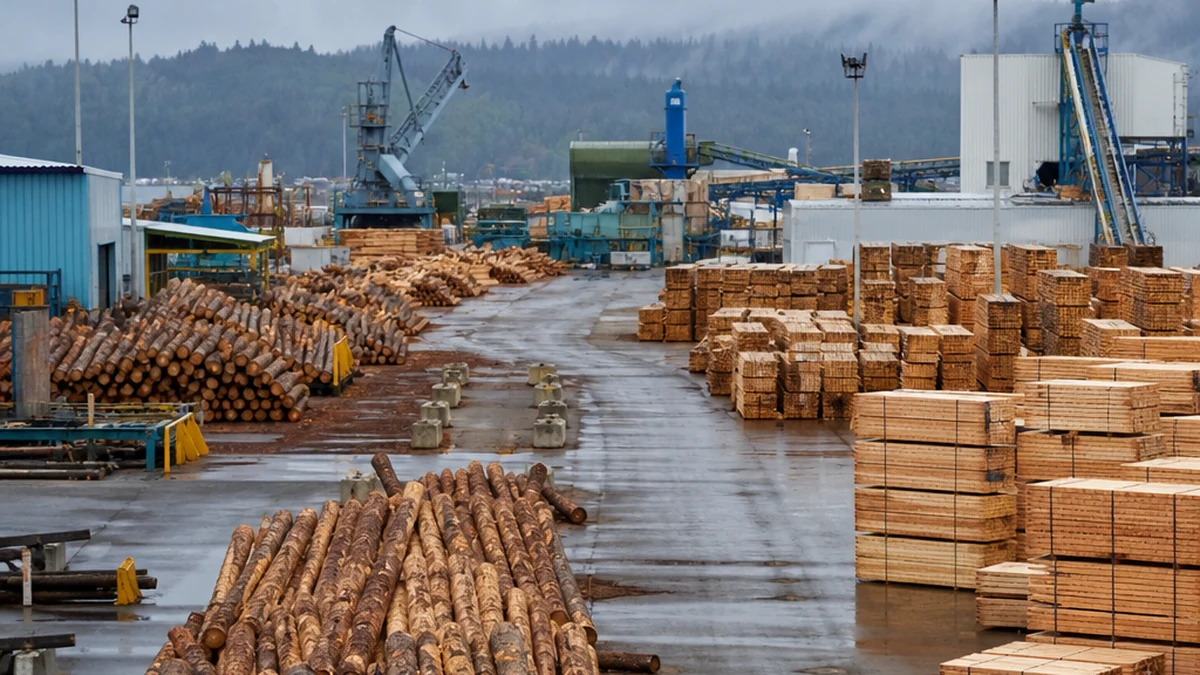
The unprecedented scale and persistence of Canadian wildfires have precipitated a critical juncture for the global timber industry. With numerous sawmills across British Columbia and Alberta forced into operational shutdowns or reduced capacity, the immediate consequence is a significant contraction in North American lumber supply. This localized crisis is not merely a regional issue; it is rapidly translating into upward pressure on global prices for softwood lumber, recalibrating market expectations and exposing inherent vulnerabilities within the international supply chain. This analysis by TimberInsider delves into the multifaceted impacts, from stumpage costs to strategic operational shifts, providing a rigorous assessment for industry professionals navigating this volatile landscape.
- Over 15 million hectares of Canadian forest have burned by September 2024, representing a 250% increase over the 10-year average, directly impacting 30% of Western Canadian timber harvest areas.
- North American lumber futures (LBS) experienced a 22% price surge in August, pushing average builder costs up by an estimated $4,500 per single-family home, while Canadian sawmill Q3 operating margins are projected to contract by 8-12%.
- By 2026, sawmills are advised to allocate 10-15% of their capital expenditure towards advanced fire suppression systems and remote sensing technologies, while importers should target a 20% diversification of softwood sourcing from Scandinavian and Baltic regions by late 2027 to mitigate North American supply chain risks.
British Columbia & Alberta Mill Disruptions: Q3 2024 Impact on NAHB Housing Starts and Futures Markets
The Canadian timber sector, particularly in British Columbia and Alberta, is a cornerstone of global softwood supply, contributing significantly to North American and international markets. Recent wildfire activity has directly impacted this capacity. Reports indicate that multiple sawmills, including major operations, have either ceased production entirely due to direct fire threat, evacuation orders, or severe logistical impediments. This immediate reduction in output has tightened an already sensitive market.
Prior to the current wildfire season, lumber prices had shown signs of stabilization after a period of volatility. However, the current supply shock has swiftly reversed this trend. Benchmark indices, such as the Random Lengths Framing Lumber Composite, have registered notable increases, reflecting the market’s apprehension regarding future supply availability. Futures contracts for lumber have also seen significant upward movement, indicating that traders anticipate sustained supply constraints and elevated pricing for the foreseeable future. This upward trajectory is not merely a North American phenomenon; the interconnectedness of global timber markets means that reduced Canadian output inevitably translates to higher acquisition costs for international buyers.
The financial realities for sawmills directly affected are stark: lost production volume, increased operational costs due to emergency measures, potential infrastructure damage, and the long-term uncertainty of timber supply from fire-damaged forests. For unaffected mills, while higher prices might offer a temporary margin boost, the broader market instability, coupled with rising logistics and insurance costs, presents its own set of challenges. The ripple effect extends to builders, distributors, and ultimately, consumers, who face escalating material costs, potentially impacting project viability and housing affordability.
2024 Wildfire-Induced Price Spikes vs. 2021 Pandemic Demand Surge: A Volatility Comparison
The impact of Canadian supply disruptions is not uniform across all global markets, yet the interconnectedness ensures a pervasive influence. Below, we present a comparative overview of recent lumber price movements and key market drivers, illustrating how regional dynamics are responding to the North American supply shock.
| Region/Index | Q1 2024 Average (USD/MBF) | Current (Post-Wildfire) (USD/MBF) | % Change (Approx.) | Key Market Drivers |
|---|---|---|---|---|
| North American Framing Lumber Composite | 420 | 580 | +38% | Direct supply shock from Canadian sawmill closures, logistics disruptions, speculative buying. |
| European Spruce-Pine-Fir (SPF) Index | 385 | 440 | +14% | Reduced availability of North American imports, increased demand for European alternatives, rising shipping costs. |
| Asian Softwood Import Price (e.g., Japan/China) | 395 | 465 | +18% | Reliance on North American and European supply, elevated ocean freight rates, currency fluctuations. |
| South American Pine Export Price (e.g., Brazil) | 350 | 390 | +11% | Increased global demand for alternative sources, capacity limitations, domestic market pressures. |
This data underscores a clear trend: while North America experiences the most acute price inflation due to direct operational constraints, other major importing regions are also facing significant cost increases. European markets, often seen as an alternative source, are experiencing their own price escalations as global buyers seek to diversify away from Canadian supply. Similarly, Asian markets, heavily reliant on imported softwood, are contending with both higher material costs and elevated shipping expenses. The comparative analysis highlights the immediate and widespread impact on global prices, compelling stakeholders to reassess sourcing strategies and risk exposure.
Burnt Timber & Log Haulage Bottlenecks: Re-routing Global Softwood Flows Amidst Western Canadian Log Shortages
The immediate impact on raw material dynamics is profound. Wildfires directly destroy standing timber, reducing the available log supply for sawmills. Even in areas not directly burned, access roads are often closed, making timber harvesting and transport impossible. This scarcity drives up stumpage costs for accessible timber, squeezing sawmill margins. Furthermore, the long-term implications for forest regeneration and sustainable yield are significant, potentially altering regional timber supply profiles for decades.
Logistics represent another critical bottleneck. Road closures, particularly in remote forestry regions, disrupt the flow of logs to mills and finished lumber to distribution hubs. Rail networks, vital for long-haul transport across Canada and into the U.S., can also be affected by fire proximity or smoke-related operational slowdowns. Port operations, while less directly impacted by inland fires, face increased pressure from rerouted shipments and potential delays as the entire supply chain recalibrates. These logistical impediments add significant costs and lead times, further contributing to higher delivered lumber prices.
Existing trade policies, such as the U.S. duties on Canadian softwood lumber, exacerbate the current crisis. These tariffs already add a substantial cost burden to Canadian exports, and when combined with wildfire-induced supply shortages, they amplify the upward pressure on prices for U.S. buyers. While the European Union Deforestation Regulation (EUDR) is not directly linked to Canadian wildfires, it represents a broader trend towards increased scrutiny of timber sourcing. In a disrupted market, the complexity of ensuring compliance with such regulations, even for unaffected supply chains, adds another layer of operational challenge for importers and producers alike. For a deeper dive into market trends, visit TimberInsider Market Reports.
Strategic Diversification & Climate Resilience: Sawmill Investment Pathways for Post-Wildfire Recovery and Future-Proofing
For sawmills, the immediate strategic imperative is operational resilience. This includes robust fire prevention protocols, contingency planning for evacuations, and diversified log procurement strategies. Long-term, investments in advanced fire detection systems, fire-resistant construction materials for facilities, and potentially even localized timber processing closer to harvest sites could mitigate future risks. Mills must also re-evaluate inventory management, balancing the need for sufficient stock against the risks of holding high-value material in vulnerable areas.
Importers and distributors face the challenge of securing consistent supply amidst volatility. This necessitates diversifying sourcing geographically, exploring new supplier relationships outside traditional North American channels, and potentially engaging in longer-term contracts or hedging strategies to lock in prices. The current situation underscores the importance of robust supply chain mapping and risk assessment, identifying single points of failure and developing alternative pathways. For panel producers, who rely heavily on sawmill by-products and lower-grade timber, the reduced output from sawmills translates directly into increased competition and higher costs for raw materials. Strategic partnerships with loggers and sawmills, along with exploring alternative fiber sources, will be crucial.
The broader industry must confront the accelerating impact of climate change on forest resources. This includes advocating for proactive forest management policies, investing in research for fire-resistant tree species, and developing sustainable harvesting practices that enhance forest health. The current crisis serves as a stark reminder that supply chain resilience is not merely about logistics, but about the fundamental health and management of the natural resources upon which the industry depends. Understanding and adapting to these shifts is paramount for sustained profitability and market stability. Explore strategies for enhancing resilience at TimberInsider Supply Chain Resilience.
Frequently Asked Questions
Q1: How long is this period of elevated lumber prices expected to last?
A1: The duration of elevated prices is contingent on several factors: the containment of current wildfires, the extent of damage to timberlands and infrastructure, and the speed of sawmill restarts. Historically, significant supply shocks can lead to price volatility for several months, potentially extending into the next building season, as supply chains take time to normalize and rebuild inventories.
Q2: Are there alternative global supply regions that can offset the Canadian shortfall?
A2: While regions like Europe (Nordic countries, Central Europe) and South America (Brazil, Chile) possess significant softwood timber resources, their capacity to fully offset a major Canadian shortfall is limited. Increased demand from these regions would likely drive up their domestic prices and strain existing logistics, preventing a complete market rebalancing in the short term.
Q3: What long-term operational changes might Canadian sawmills implement in response to increased wildfire risks?
A3: Long-term changes could include greater investment in fire-resistant building materials for facilities, enhanced on-site water storage and fire suppression systems, diversified log procurement from less fire-prone areas, and potentially a shift towards more localized, smaller-scale processing to reduce reliance on extensive transportation networks in high-risk zones. Proactive forest management strategies, including controlled burns and fuel reduction, will also become increasingly critical.

