

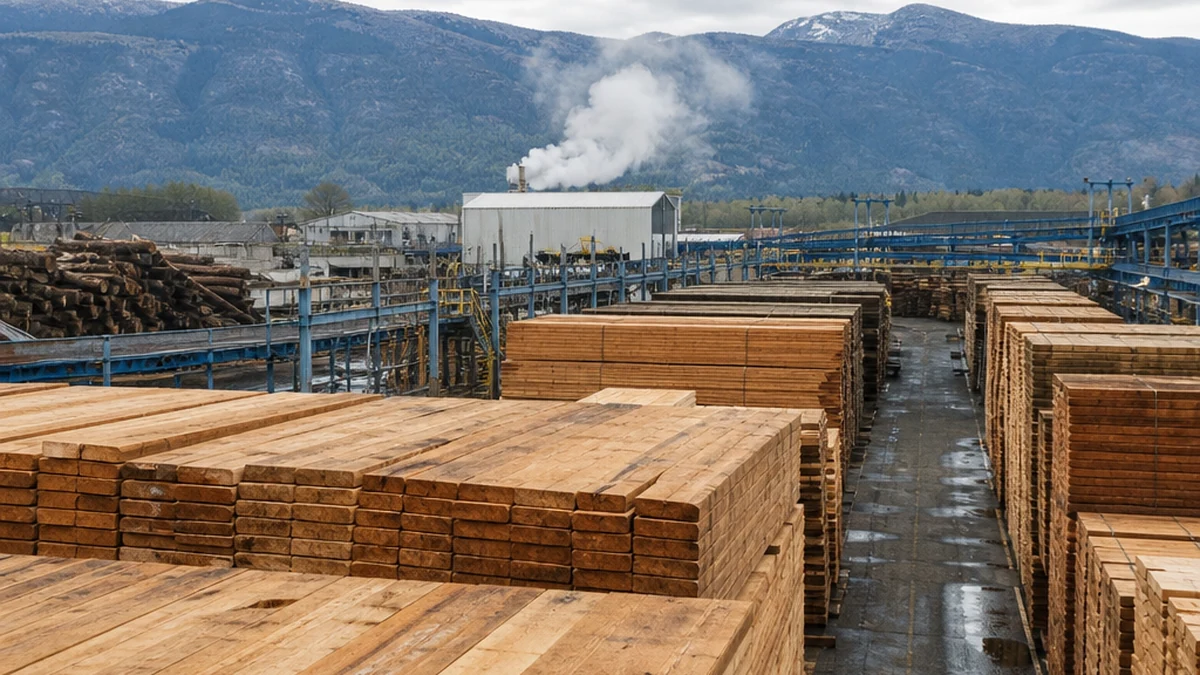
The 2024 Canadian wildfire season has emerged as a critical disruptor to the global timber industry, particularly impacting the vital Western Spruce-Pine-Fir (SPF) supply originating from British Columbia and Alberta. These regions are cornerstones of North American softwood lumber production, supplying a significant portion of the continent’s construction material and influencing international benchmarks. As fires rage, numerous sawmills, particularly those in proximity to affected forest lands or facing evacuation orders, have been forced to cease or significantly curtail operations. This immediate reduction in processing capacity has translated directly into a tightening supply pipeline.
- Early Q3 2024 projections indicate a 15-20% reduction in Western SPF lumber output from British Columbia and Alberta due to wildfire-related mill closures and log transport disruptions.
- The constricted supply has already propelled Western SPF futures contracts for Q4 2024 up by an average of 18%, significantly eroding builder and distributor margins across North America.
- Sawmills and importers are advised to prioritize long-term contract negotiations and explore alternative softwood species, as Western SPF supply normalization is not anticipated before mid-2027.
Market data reflects this acute imbalance. Futures contracts for Western SPF lumber have seen sharp increases, with benchmark prices climbing by double-digit percentages in recent weeks. While not yet reaching the unprecedented peaks of the pandemic-era boom, the current trajectory signals a significant reversal from the more subdued pricing environment observed earlier in the year. This surge is not merely speculative; it is rooted in tangible production losses and logistical bottlenecks. Sawmills that remain operational face escalating costs, including higher insurance premiums, potential re-routing of log deliveries, and increased operational expenditures due to smoke, air quality issues, and workforce availability challenges. For buyers, particularly in the robust U.S. housing market, these price escalations translate into higher material costs, potentially impacting project viability and consumer affordability. The ripple effect extends beyond North America, as global buyers reliant on Canadian SPF for various applications now face a constrained and more expensive supply landscape.
2024 SPF Price Surges: Benchmarking Against Post-Pandemic & Beetle Epidemic Peaks
The immediate impact of the Canadian wildfires is most acutely felt in North American softwood markets, but the interconnectedness of global timber trade ensures broader ramifications. While direct price surges are concentrated in specific product categories like Western SPF, the overall market sentiment and sourcing strategies are shifting, influencing other regional price indices. The following table illustrates the projected short-term price movements across key global softwood lumber benchmarks, reflecting both direct wildfire impacts and indirect market adjustments.
| Region/Product | Q2 2024 Avg. Price Index ($/MBF) | Q3 2024 Forecasted Price Index ($/MBF) | % Change (QoQ) | Key Influencing Factor |
|---|---|---|---|---|
| Western SPF (Canada) | 420 | 515 | +22.6% | Direct sawmill closures, log supply disruption |
| Southern Yellow Pine (US South) | 485 | 530 | +9.3% | Increased demand due to Canadian supply deficit |
| European Spruce (Germany/Sweden) | 380 | 405 | +6.6% | Increased export inquiries, freight cost pressure |
| Baltic Pine (Eastern Europe) | 355 | 370 | +4.2% | Indirect demand shift, limited capacity for surge |
Note: Prices are illustrative and represent composite indices for standard dimension lumber. Actual market prices may vary based on specific grades, dimensions, and regional supply-demand dynamics. Data compiled from TimberInsider market intelligence and industry forecasts.
This data underscores a clear trend: Canadian SPF is experiencing the most dramatic price escalation due to direct supply disruption. However, other regions, particularly the U.S. South and European producers, are seeing significant upward pressure as buyers seek alternative sources. This shift in demand, coupled with existing logistical challenges and production capacities, contributes to a broader, albeit less severe, increase in global prices. For a deeper dive into regional market specifics, refer to our latest Q3 2024 Global Timber Market Report.
Western SPF Supply Chain: Log Availability & Mill Throughput Under Wildfire Pressure
The immediate and long-term implications of the wildfires extend deep into the timber supply chain, beginning at the forest gate. Stumpage costs are poised for significant volatility. While immediate fire-affected areas may see a temporary surge in salvage logging (if feasible and safe), the overall reduction in accessible timberlands and the destruction of standing inventory will inevitably lead to higher raw material costs for sawmills. This is particularly true for mills reliant on specific forest tenures now under threat or inaccessible. The competition for available logs from unaffected areas will intensify, driving up prices for both sawlogs and pulpwood.
Logistics and transportation represent another critical bottleneck. Road and rail closures, often implemented for safety reasons in fire zones, severely impede the movement of logs to mills and finished lumber to distribution hubs. This forces costly detours, extends transit times, and exacerbates existing freight capacity issues. Port operations in key export regions may also face disruptions due to smoke, reduced visibility, or labor availability. The cumulative effect is increased landed costs for lumber, regardless of its origin.
Furthermore, existing trade policies, specifically the U.S. duties on Canadian softwood lumber, add another layer of complexity. While the immediate crisis highlights the critical role of Canadian supply in the North American market, it also underscores the vulnerability of relying heavily on a single major import source. Calls for temporary tariff relief to ease supply constraints may emerge, but any policy adjustments would involve complex negotiations and are unlikely to provide immediate respite. The broader context of global trade, including evolving regulations, contributes to a heightened awareness of supply chain resilience and the need for diversified sourcing strategies among international buyers.
Sawmill & Importer Strategies: Navigating Scarce SPF and Future Procurement Challenges
The current wildfire crisis necessitates immediate tactical responses and long-term strategic re-evaluations across the timber industry value chain.
For sawmills in affected regions, the primary concern is operational continuity and worker safety. Beyond immediate closures, the aftermath will involve assessing timber losses, navigating insurance claims, and potentially investing in enhanced fire prevention and mitigation technologies. Mills in unaffected regions, particularly in the U.S. South and parts of Eastern Canada, may experience increased demand, but their capacity to absorb the full deficit is limited by existing log supply, labor availability, and processing capabilities. This could lead to capital expenditure for expansion in the medium term.
Importers and distributors face significant challenges. Higher acquisition costs for lumber will squeeze margins, requiring careful inventory management and potentially passing on costs to end-users. Diversifying sourcing beyond traditional Canadian channels becomes paramount. This could mean increased reliance on European suppliers (e.g., Sweden, Finland, Germany, Austria) or even South American producers (e.g., Brazil, Chile), though these alternatives come with their own logistical complexities, higher freight costs, and differing product specifications. The crisis reinforces the need for robust supply chain mapping and risk assessment.
Panel producers (plywood, OSB, particleboard) will experience indirect impacts. While their primary raw material is often pulpwood or smaller diameter logs, competition for these resources can intensify if sawmills are forced to use alternative log grades or if overall forest access is restricted. Higher lumber prices can also shift demand towards panel products as a substitute in some applications, though this effect is likely marginal in the short term.
The bioenergy sector, which often relies on sawmill residues and forest thinnings, could see disruptions in feedstock availability from fire-affected mills. Conversely, salvage operations in burnt areas might temporarily increase biomass supply, but this is often offset by logistical challenges and quality concerns.
In the long term, this event will accelerate discussions around sustainable forest management practices, climate change adaptation strategies, and the development of more resilient supply chains. Investment in advanced fire detection, prevention, and rapid response systems will become increasingly critical for forest managers and timberland owners globally. The industry must prepare for a future where climate-induced disruptions are more frequent and severe, requiring proactive measures to safeguard both timber resources and market stability. For further insights on forest management strategies, visit the U.S. Forest Service website.
Frequently Asked Questions
How long are these elevated global prices expected to persist?
The duration of elevated prices is contingent on several factors: the containment and cessation of the wildfire season, the speed of sawmill restarts, and the pace of log supply normalization. Historically, significant supply disruptions can take several months to a year to fully resolve. Expect volatility through Q3 and Q4 2024, with potential stabilization into early 2025, assuming no further major disruptions.
What are the primary alternative sourcing options for North American buyers facing Canadian supply shortages?
Buyers are increasingly looking to the U.S. South for Southern Yellow Pine (SYP) and to European markets (Scandinavia, Germany, Austria) for Spruce and Pine. South American suppliers (Brazil, Chile) also offer softwood options, though these typically involve longer lead times and higher shipping costs. Diversification across multiple regions is a key strategy.
Will the wildfires impact the long-term availability of timber from Canada?
Yes, potentially. While immediate impacts are on current harvest and processing, extensive forest damage can reduce the future timber supply from affected areas for decades, depending on regeneration success. This underscores the importance of sustainable forest management and reforestation efforts to mitigate long-term resource depletion.

