



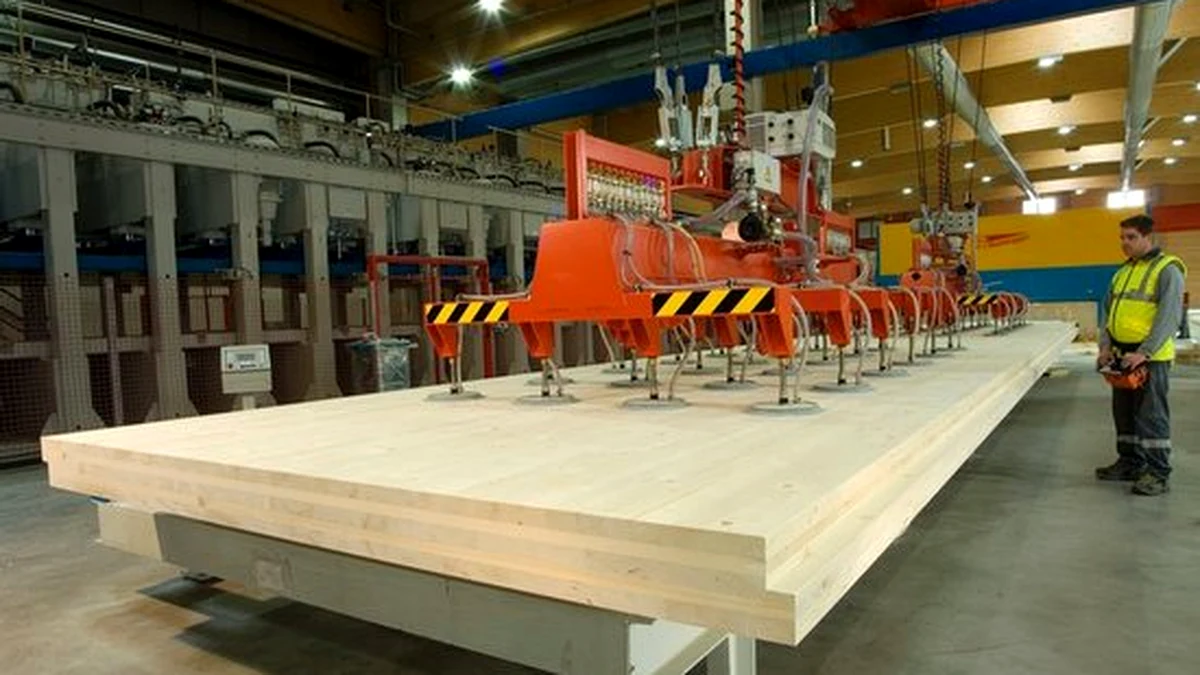


The timber industry is currently navigating a complex confluence of economic headwinds and evolving market dynamics. Against this backdrop, Stora Enso’s confirmation of the permanent closure of its cross-laminated timber (CLT) production unit at Gruvön, Sweden, by the end of 2026, represents more than just a corporate restructuring; it is a significant indicator of the current pressures facing the global clt sector.
This decision, affecting approximately 80 positions, follows a period of intense negotiation and strategic review. While Stora Enso maintains its commitment to other wood products and bio-based solutions, the divestment from a relatively nascent, high-potential segment like CLT at a key European site warrants a rigorous examination of the underlying market realities and their broader implications for producers, suppliers, and investors across the timber value chain.
Market Context & Financial Realities
The initial enthusiasm surrounding CLT and mass timber construction as a sustainable, efficient alternative to traditional construction materials fueled substantial investment and capacity expansion across Europe and North America over the past decade. Projections of rapid growth in urban development and a strong push for decarbonization positioned CLT as a future-proof product. However, the operational realities of the past 18-24 months have presented formidable challenges.
European CLT producers, in particular, have grappled with a significant imbalance between supply and demand. Aggressive capacity build-out, often incentivized by green building policies, has outpaced the actual uptake in construction projects. This oversupply scenario has exerted downward pressure on selling prices, eroding margins that were already thin due to escalating input costs. Data from Q3 and Q4 2023 indicated a softening of average selling prices for CLT across key European markets, with some regions experiencing declines of 10-15% year-on-year.
Compounding this pricing pressure are the persistent high costs of energy, particularly in Northern Europe, and increased labor expenses. The energy-intensive nature of timber drying and adhesive curing in CLT production means that volatile energy markets directly impact profitability. Furthermore, the broader slowdown in residential and commercial construction, driven by rising interest rates and inflationary pressures, has curtailed demand for new projects, leaving producers with underutilized capacity and increased inventory holding costs. Stora Enso’s strategic review likely concluded that the Gruvön unit, despite its technological capabilities, could not achieve the necessary profitability targets within this challenging financial landscape.
Comparative Industry Data
To contextualize the Gruvön closure, an examination of regional market dynamics reveals a varied landscape of operational performance and pricing power. The following table provides estimated comparative data for key global CLT production regions, highlighting the disparities in capacity, pricing, and operational margins that influence strategic decisions.
| Region | Estimated Annual CLT Production Capacity (m³) | Average Q4 2023 CLT Selling Price (€/m³) | Estimated Operational Margin (%) |
|---|---|---|---|
| Nordic Europe | 180,000 | 680 | 4-6% |
| Central Europe | 750,000 | 650 | 7-9% |
| North America | 250,000 | 720 | 8-10% |
| Asia-Pacific | 100,000 | 700 | 6-8% |
Note: Figures are illustrative estimates based on industry reports and market intelligence for Q4 2023.
The data suggests that Nordic Europe, despite its strong forestry base, faces particular challenges, potentially due to higher energy costs, specific labor market conditions, and a more mature, competitive domestic market compared to emerging regions. Central Europe benefits from a larger, more integrated supply chain and greater economies of scale. North America, while having lower overall capacity, often commands higher selling prices due to strong demand growth and a less saturated market, contributing to healthier operational margins. The Gruvön closure aligns with the lower end of the operational margin spectrum observed in Nordic Europe, indicating a struggle for sustained profitability in that specific regional context.
Supply Chain & Raw Material Dynamics
The profitability of CLT production is intrinsically linked to the cost and availability of high-quality raw materials, primarily sawlogs and sawnwood. Gruvön, located in Sweden, operates within a highly competitive raw material market. Stumpage costs for suitable spruce and pine sawlogs have seen significant fluctuations, driven by demand from traditional sawmills, pulp and paper industries, and bioenergy sectors. While Sweden boasts abundant forest resources, the cost of acquiring and transporting logs to the mill gate can be substantial, especially for specific quality requirements for CLT lamellae.
Logistics costs, encompassing road and rail transport, have also been impacted by elevated fuel prices and labor shortages, adding another layer of expense. Furthermore, the impending implementation of the EU Deforestation Regulation (EUDR) is poised to introduce new compliance burdens and potential supply chain adjustments, although its direct impact on intra-EU sourcing for established players like Stora Enso might be less immediate than for imports from third countries. Nevertheless, the regulatory landscape adds complexity and potential for increased administrative costs.
The competition for raw materials is a critical factor. Sawmills producing standard lumber often compete directly with CLT producers for the same log grades. When lumber markets are robust, sawmills can outbid CLT manufacturers for logs, pushing up input costs for the latter. This dynamic, coupled with the capital-intensive nature of CLT production, makes it challenging to absorb raw material price volatility without passing costs onto a price-sensitive construction market.
Strategic Outlook & Operational Implications
Stora Enso’s decision at Gruvön is a clear signal of strategic rationalization within the mass timber sector. For other CLT producers, particularly those in Europe, this move may prompt a re-evaluation of their own operational efficiencies, market positioning, and investment strategies. It could lead to further consolidation in the industry, as smaller, less efficient players struggle to compete, or a shift towards more specialized, higher-value CLT applications where margins are more resilient.
For sawmills, the closure means a slight reduction in demand for specific grades of sawnwood used in CLT, potentially easing some pressure on raw material prices in the immediate vicinity of Gruvön. However, the overall demand for high-quality softwood lumber remains strong, driven by other construction segments and export markets. Importers and panel producers will be closely watching for any shifts in European supply-demand balances. A reduction in domestic CLT production could, in theory, create opportunities for imports from North America or other regions, though logistics costs remain a significant barrier.
Stora Enso’s broader strategy, as outlined on their corporate website, emphasizes a focus on renewable packaging, building solutions, and biomaterials. The Gruvön closure suggests a more disciplined approach to capital allocation, prioritizing segments with clearer pathways to sustained profitability and market leadership. This does not necessarily indicate a retreat from mass timber entirely, but rather a more selective engagement with the sector, potentially through partnerships or investments in more strategically aligned geographies or product lines.
The global clt market is not in decline, but it is maturing. The initial phase of rapid expansion is giving way


