



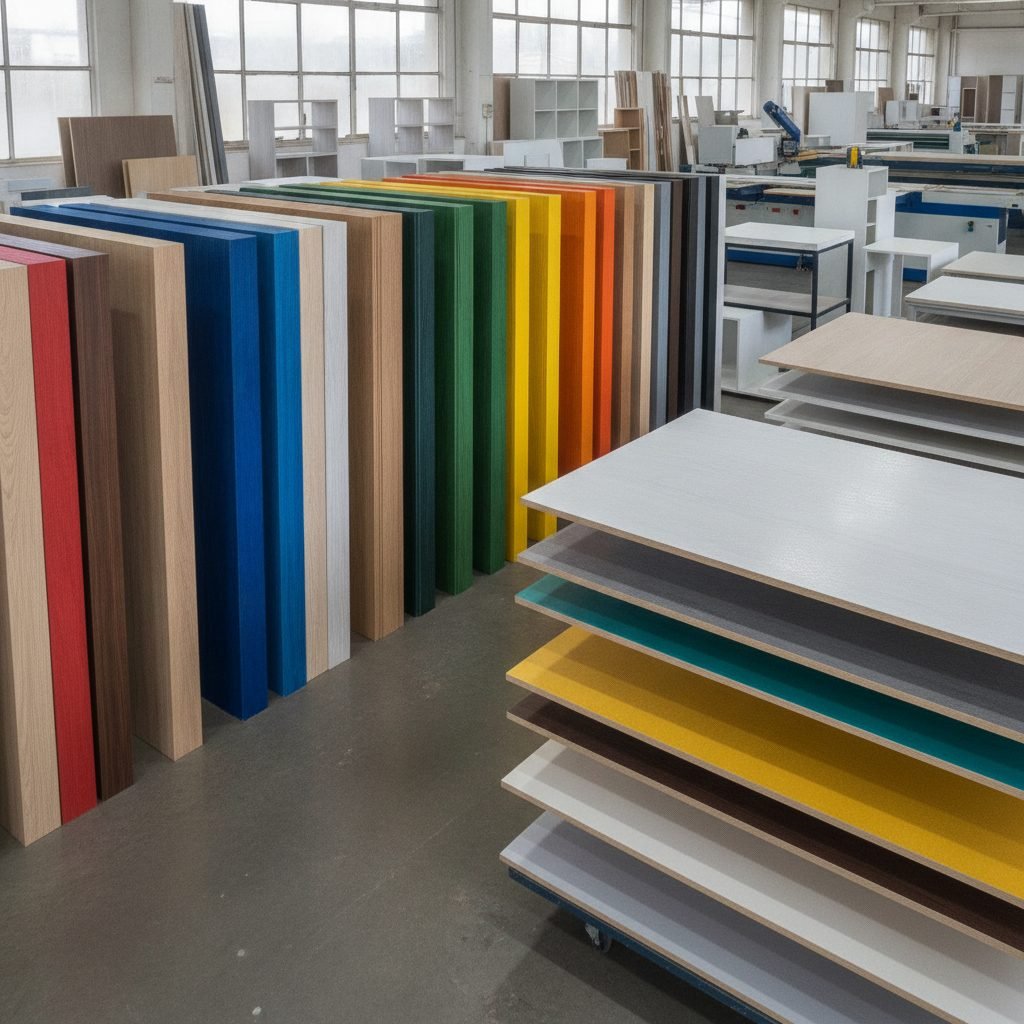


Melamine board prices jumped 18% in the first six weeks of 2025—the steepest quarterly surge since mid-2022—driven by a perfect storm of resin shortages, Asian mill capacity cuts, and elevated shipping costs. North American and European furniture OEMs are now facing melamine board costs 34% higher than the same period a year ago, forcing tough decisions on pricing, margins, and inventory strategy.
Market Snapshot
Melamine-faced MDF pricing tells the story of supply pressure meeting structural cost inflation:
- Central Europe (ex-works): Melamine-faced MDF 18mm, E1 grade, trading at €285–320/m³ in February 2025, up 18% QoQ from €242/m³ in October 2024, and +34% YoY from €213/m³ in Q1 2024.
- China origin (CIF Hamburg): Melamine boards 8–18mm thickness quoted at $240–280/m³, representing +19% since December 2024; Guangdong mills report lower utilisation than their historical norm, following regulatory audits on formaldehyde emissions.
- Urea-formaldehyde resin (raw input): Spot prices in Asia hit $1,620–1,750/MT in January 2025, up 22% YoY and 11% QoQ, per FOEX PIX indices; petrochemical feedstock (ammonia, formaldehyde) remains elevated due to Middle East production constraints post-geopolitical supply disruptions.
- Shipping (Shanghai to Rotterdam): Container rates for wood panel freight climbed 34% since November 2024 to $4,200–4,600/FEU, reflecting tight vessel capacity and Red Sea rerouting premiums.
- Melamine surface capacity: European mills have shifted melamine-line capacity towards edge-banding, solid wood laminates and engineered veneers, where margins are better.
- Furniture end-user pricing: RTA furniture importers in the UK and Germany are passing 8–14% of board cost increases to retailers; kitchen cabinet makers in Italy report absorbed margin compression of 5–7 percentage points YTD.
Deep Analysis
Resin Supply Tightening & Manufacturing Disruptions
The root of the melamine board price spike traces to urea-formaldehyde (UF) resin availability. Major resin makers have throttled production due to higher ammonia feedstock costs and compliance with the European ECHA (European Chemicals Agency) pre-registration deadline for formaldehyde-based resins. This coincides with the Guangdong Environmental Bureau’s surprise compliance audit in December 2024, which flagged three major melamine-facing mills for exceeding volatile organic compound (VOC) emissions limits. The mills responded by running shorter shifts and tighter batch controls, reducing throughput by 10–15% through February. Procurement teams at integrated producers scrambled to secure resin allocations, pushing spot prices to three-year highs and locking in long-term contracts at penalty rates.
Trade Flow Restructuring & Regional Imbalances
Melamine board supply has bifurcated geographically. European mills are deprioritizing melamine-faced boards in favor of higher-margin solid wood edge products and specialty veneers, where UF resin per unit output is lower. This margin shift opened space for Chinese suppliers, but those same Chinese mills face the same resin cost inflation, so they are selectively raising prices rather than flooding markets. The result: no price relief for European buyers from Asian competition. Russia, which once supplied low-cost melamine boards to Eastern Europe, remains effectively sanctioned; Turkish mills are stepping in, but their melamine capacity is limited, and transportation via the Black Sea is unpredictable. See the panel prices overview for broader context on how melamine stacks against MDF and plywood price moves.
Market Fundamentals Table
| Region / Product | Q4 2024 Price | Q1 2025 Price | Change (€/USD per m³) | % Change | Mill Utilization |
|---|---|---|---|---|---|
| Central Europe Melamine MDF 18mm (ex-works) | €242/m³ | €285/m³ | +€43 | +17.8% | 92% |
| China-origin Melamine 8–18mm (CIF Hamburg) | $235/m³ | $280/m³ | +$45 | +19.1% | 87% |
| Turkey Melamine (FCA Istanbul) | $218/m³ | $265/m³ | +$47 | +21.6% | 81% |
| UF Resin Spot (Asia, MT) | $1,480/MT | $1,680/MT | +$200 | +13.5% | — |
| Melamine Face Paper Supply (China, Rolls/MT) | €1,240/MT | €1,410/MT | +€170 | +13.7% | 88% |
Market Implications
Regional Price Divergence
Northern Europe (Germany, Scandinavia, Poland) has absorbed the largest price jumps—up to 24% QoQ—because domestic mills reduced melamine output and local distributors face fewer low-cost import options. Southern Europe (Spain, Portugal, Italy) shows smaller increases (12–15%) due to higher Turkish and Chinese import volumes offsetting local mill shortages. The UK, post-Brexit logistics friction, has seen melamine boards climb 20% QoQ as importers pass through sterling weakness and added compliance documentation costs. The MDF price tracker shows melamine-faced MDF tracking 5–8 percentage points above standard MDF, reflecting the resin cost premium and reduced mill flexibility.
Outlook & Buyer Recommendations
3–6 Month Price Direction: Melamine board prices are likely to remain elevated through Q2 2025, with a modest 3–5% softening only if urea-formaldehyde resin spot prices decline below $1,500/MT. The key driver is formaldehyde feedstock availability; any further disruption in Middle East or North African ammonia production will push resin above $1,800/MT and melamine boards to €330+/m³. Current forward curves suggest Q3 prices will plateau 10–12% above Q1 2024 levels, reflecting structural cost inflation rather than temporary shortages.
Upside Risk: If the Guangdong audit expands to Zhejiang and Jiangsu mills, melamine face production could drop 25–30%, triggering a supply crisis and 12–15% additional price spikes by May 2025.
Downside Risk: A sharp deceleration in furniture demand in Germany and the UK (early indicators show Q1 orders down 8–11% YoY) could reduce melamine board demand by 10–12%, pressuring prices toward €265–275/m³ by late Q2, assuming resin stabilizes.
Buyer Recommendations:
- 1. Lock in forward contracts immediately for Q2–Q3 delivery. Spot buying in March–April 2025 will likely cost 5–8% more than February forward rates. Prioritize 120–150 day forward deals at mills offering volume discounts (≥500m³ quarterly minimums).
- 2. Evaluate melamine board substitutes for non-visible applications. Birch plywood (up 12% but supply is stable) and solid pine face laminates can replace 10–15% of melamine consumption in cabinet backs and shelf units, delivering 6–8% landed-cost savings.
- 3. Negotiate price-adjustment clauses in customer contracts now. Furniture makers should seek 50–70% pass-through of melamine cost increases >5% indexed to FOEX melamine paper or ECHA resin price benchmarks; retailers will accept this now rather than face margin collapse later.
- 4. Diversify supplier geography to reduce single-mill risk. Allocate part of your volume to Turkish mills and part to second-tier Chinese suppliers outside Guangdong; this hedges against further regional compliance disruptions.
- 5. Invest in inventory management systems to predict demand volatility. Tight working capital and rapid price swings mean precise demand forecasting (±5%) will preserve cash and reduce dead stock; consider demand-planning software partnered with procurement platforms.
Melamine board prices are not a cyclical bounce—they reflect structural tightening in resin supply, mill prioritization toward higher-margin products, and regulatory headwinds in Asia. Furniture makers and distributors must act decisively in February and March 2025 to secure supply at predictable costs. Delays will result in spot-market exposure and potential service failures by Q3. For live data and price benchmarks, visit our MDF market reports on TimberInsider.
Frequently Asked Questions
Why are melamine board prices increasing in 2025?
Melamine laminate prices are rising due to three main factors: urea-formaldehyde resin costs climbing 22% year-over-year, reduced melamine face output from Guangdong mills due to environmental compliance audits, and shipping rates from China to Europe increasing 34% since November 2024. Furniture OEMs are absorbing most of the cost increase through Q1 2025.
What is the current price range for melamine-faced MDF boards?
Melamine-faced MDF (E1 grade, 18mm thickness) is trading at €285–320/m³ ex-works Central Europe as of February 2025, up from €242/m³ in October 2024. China-origin melamine boards (8–18mm) are quoted at $240–280/m³ CIF Hamburg, representing a 19% increase since Q4 2024.
Which regions are seeing the steepest melamine board price increases?
Northern Europe (Germany, Poland, Scandinavia) has absorbed the largest price jumps because domestic mills reduced melamine output to focus on higher-margin solid wood products. Southern Europe and the UK show smaller increases (12–15%) due to higher Chinese import volumes offsetting local mill shortages.
When will melamine board prices stabilize?
Industry analysts expect prices to plateau in Q2 2025 if resin costs stabilize and Guangdong mills restore normal operating rates post-audit. A downside risk exists if Chinese competition intensifies; an upside risk is further resin shortages if phenol-formaldehyde suppliers in the Middle East reduce output.
Should furniture makers lock in forward melamine board contracts now?
Yes, procurement teams should secure Q2–Q3 contracts immediately. Spot buying in March–April 2025 will likely cost 5–8% more than forward rates agreed in February, and inventory carry costs are outweighed by price certainty for mid-year production runs.
Update policy and background sources
This page was editorially reviewed on 13 July 2026. Dated prices and market shares are reference-period observations, not live quotations. Buyers should confirm specification, Incoterm, currency, tax, freight and quote validity before using a number commercially. Background statistics and standards for this subject are published by:
- U.S. Bureau of Labor Statistics PPI
- Eurostat producer prices
- FAOSTAT Forestry Production and Trade
- UNECE forest-products markets
TimberInsider separates observed data from estimates and does not treat a supplier list as certification or endorsement. See the editorial methodology, product guides and regional coverage for definitions and current context.


