



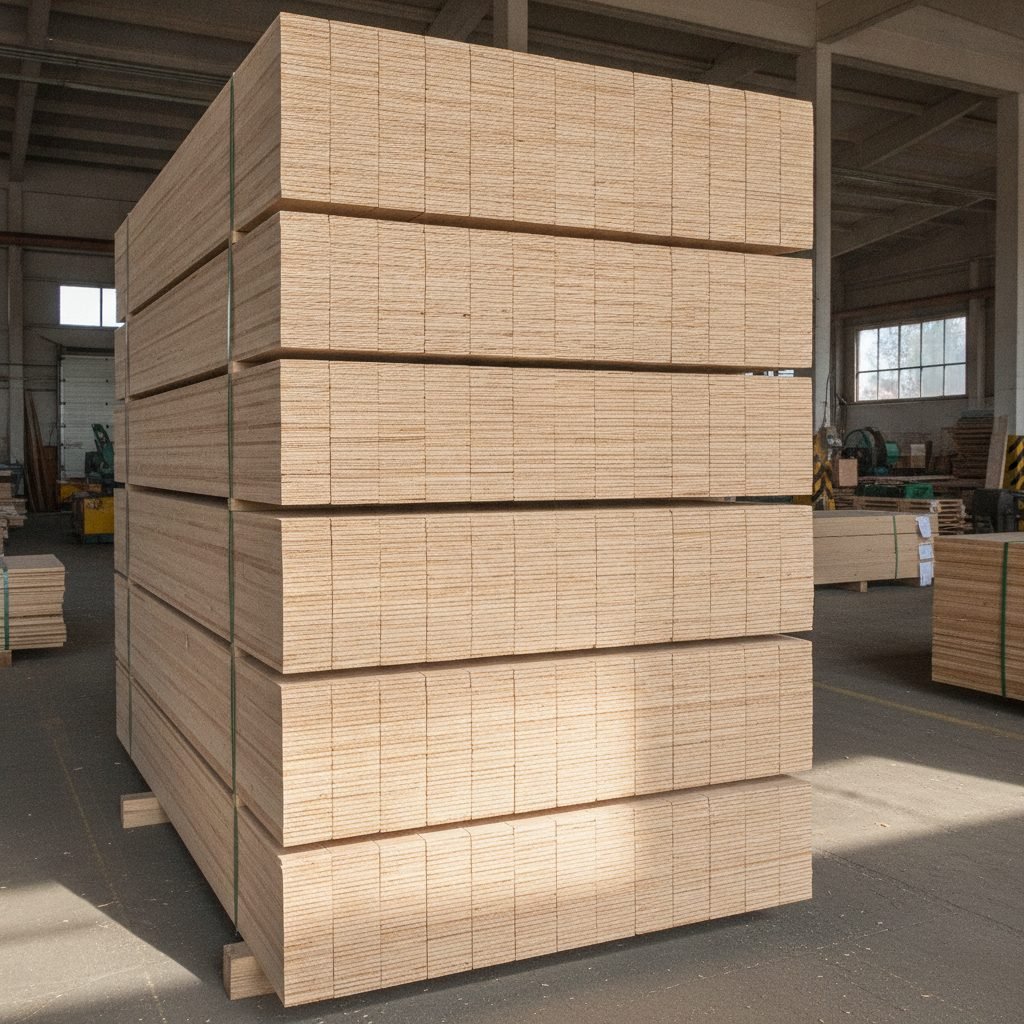


Tropical plywood supply has entered a structural tightening in early 2025, driven by a perfect storm of Indonesian mill cutbacks, Philippine log export restrictions, and surging demand from India and Southeast Asian construction sectors. Prices have risen 18–22% year-on-year across major product lines, with no relief in sight through Q2. Buyers across Asia and export markets now face both higher costs and longer lead times — making supplier diversification and forward contracting critical for the next 18 months. For the latest pricing and market movements, consult our plywood price tracker.
Market Snapshot: Tropical Plywood Prices and Supply Shifts
- Indonesian meranti plywood (3-ply, 12 mm, domestic grade): USD 310–335/m³ ex-Surabaya, up 22% year-on-year and up 8% quarter-on-quarter. Output from top mills including Rimbunan Hijau and Bina Karya slid 10% in Q4 2024 versus Q4 2023 due to log scarcity.
- Philippine lauan plywood (3-ply, 12 mm, A-grade): USD 285–305/m³ ex-Manila, up 18% YoY and up 5% QoQ. The Philippine government’s November 2024 log export quota revision cut allowable hardwood log exports by 6%, forcing mills to rely on higher-cost plantation sources and imported peeler logs from Mozambique.
- Malaysian meranti (WBP grade, 18 mm, Jelu-Tongkap mill): EUR 380–410/m² CIF Rotterdam, up 16% YoY. Reduced Sarawak log allocation under new state forestry rules has pushed lead times to 10–12 weeks (versus 6–8 weeks in 2023).
- Indian demand surge: Plywood imports into India rose 14% YoY in the first quarter of 2025 (estimated 185,000 m³), with furniture OEMs and residential construction absorbing premiums up to 35% over 2024 base prices.
- Global inventory signals: ITTO reported tropical plywood stocks in major Asian ports (Singapore, Bangkok, Ho Chi Minh City) down 12% from year-end 2024, signaling buyer front-loading and low trading-house buffers. FOEX PIX Asian Plywood Index rose 9.2% in January 2025.
- Certification premium: FSC-certified tropical plywood commands a 6–8% premium over non-certified material, reflecting buyer sustainability mandates and limited certified supply from Indonesia and Malaysia.
Deep Analysis: Log Scarcity, Regulatory Headwinds, and Asian Demand Realignment
Indonesian Log Shortage and Mill Rationalization
Indonesia’s plywood mills — accounting for 60% of global tropical plywood production — have faced a fundamental squeeze in raw material availability since H2 2024. The Ministry of Environment and Forestry tightened annual allowable cut (AAC) allocations in six major logging districts across Kalimantan and Sumatra, reducing estimated hardwood log supply by 5–7 million m³ in 2025 versus 2024 baselines. Simultaneously, domestic plywood mills have prioritized veneer production (higher margin) over commodity plywood, diverting peeler logs away from plywood-grade inventory. Mills including Rimbunan Hijau, Bina Karya, and Duta Jaya have reduced plywood capacity utilization to 65–72% (from prior-year 80–85%), creating a de facto output cut of 8–12% across the industry. This rationalization is partly strategic — mills are holding back capacity to preserve margins rather than flood the market — but also supply-constrained.
Philippine Regulatory Squeeze and High-Cost Alternatives
The Philippines, the world’s second-largest tropical plywood exporter, encountered new export headwinds in late 2024. The Department of Environment and Natural Resources reduced the 2025 log export quota from 900,000 m³ to 850,000 m³, a 5.6% cut aimed at protecting domestic lumber mills. However, this forced the plywood sector to source more peeler logs from overseas: mills now import Grade A peeler logs from Mozambique (USD 180–200/m³ CIF Manila, up from USD 160–175 in 2023) and from plantation sources in Papua New Guinea. Higher landed log costs translate directly to a 7–9% cost-of-goods increase, which mills pass to export buyers within 4–8 weeks. Major exporters including Sundown Timber and Namarai have already signaled Q2 price increases of USD 15–20/m³ versus Q1 levels.
Trade Flows and Regional Price Divergence
Tropical plywood trade flows in 2025 reveal a critical shift toward Asia-internal consumption. India has emerged as the marginal buyer, absorbing incremental supply and pulling lauan and meranti northward from their traditional Bangkok re-export hub. In 2024, India imported 185,000+ m³ of tropical plywood (up 14% YoY), primarily lauan from the Philippines and meranti from Indonesia. Vietnamese plywood mills, facing intense domestic competition, have begun sourcing Indonesian and Malaysian meranti to blend with domestic softwood for export-grade panels — creating secondary demand pressure. Export-bound shipments to Europe and North America remain stable but are now routed via longer supply chains: rather than direct ex-Manila or ex-Surabaya, buyers are pulling from trading-house inventory in Singapore or Bangkok, incurring additional handling and financing costs. This geographic arbitrage has widened the CIF Rotterdam premium to EUR 410–440/m² for certified tropical plywood, versus USD 335/m³ ex-Surabaya — a margin that locks in shipping and trading-house margin but also reflects scarcity markup.
| Producer Region / Mill | Primary Product | Price (USD/m³ ex-mill or per unit) | YoY Change (%) | Capacity Utilization (%) | Log Cost Trend |
|---|---|---|---|---|---|
| Indonesia (Rimbunan Hijau, Bina Karya) | 3-ply meranti, 12–18 mm | 310–335/m³ ex-Surabaya | +22% | 68% | Up 18% (AAC quota cuts) |
| Philippines (Sundown, Namarai) | 3-ply lauan, 12 mm | 285–305/m³ ex-Manila | +18% | 72% | Up 16% (imported peeler logs) |
| Malaysia (Jelu-Tongkap, Datuk) | WBP meranti, 18 mm | EUR 380–410/m² CIF Rotterdam | +16% | 70% | Up 12% (Sarawak AAC reduction) |
| Papua New Guinea (Agro Pacific) | 3-ply plantation hardwood | USD 210–240/m³ FOB Lae | +8% | 85% | Stable (high plantation supply) |
| Vietnam (re-export hubs) | Blended softwood–tropical laminates | USD 165–190/m³ FOB HCMC | +6% | 78% | Mixed (local + imported meranti) |
Market Implications: Three Buyer Segments Under Pressure
Indian Furniture OEMs and Contract Manufacturers: Suppliers to international brands (IKEA, Natuzzi, Ashley) operating from Tamil Nadu, Karnataka, and Andhra Pradesh have absorbed the first wave of tropical plywood cost increases. Average input costs for 12 mm lauan plywood rose from INR 16,500–17,200 per m³ (USD 198–207) in Q4 2024 to INR 19,100–20,300 per m³ (USD 230–244) in Q1 2025 — a 15–18% jump in one quarter. Manufacturers locked into fixed-price export contracts (common with Western retail partners for 6–12 month lead times) have seen margin compression of 200–350 basis points. Only those with escalation clauses or quarterly repricing have maintained profitability.
Southeast Asian Construction and Residential Building Sectors: Vietnam, Thailand, and Indonesia’s residential construction and DIY segments rely on tropical plywood for formwork, interior partitioning, and furniture-grade applications. Rising prices have triggered a shift toward substitutes: concrete formwork systems (reducing plywood demand for concrete casting) and locally milled softwood panels (lower cost but inferior durability). In Vietnam, plywood consumption for residential construction rose only 2% YoY in 2024 — far below the 8–10% growth seen in 2022–2023 — suggesting price-induced substitution. Regional builders are extending project timelines to spread input costs, which delays new housing starts and indirectly dampens tropical log demand (a reinforcing cycle for prices). Regional price divergence is acute: plywood suitable for residential in Vietnam (3-ply lauan or blended softwood) trades at USD 210–240/m³, while equivalent material in India fetches USD 280–310/m³ — a 25–30% premium that reflects both demand intensity and longer supply chains.
Export-Bound Plywood Distributors and Trading Houses: Wholesalers and distributors supplying European and North American retailers (B&Q, Home Depot, Lowe’s) have faced margin compression as transport costs and working-capital financing have risen alongside plywood prices. Typical trading-house markups of 8–12% are now being squeezed to 5–7% as competition intensifies and retail buyers resist price pass-throughs. Major distributors including Singapore-based Wah Seong and Malaysia-based Kaliwood are managing this by focusing on higher-margin certified (FSC) tropical plywood and bundling logistics services to justify price premiums. One distributor remarked:
Outlook and Buyer Recommendations: 3–6 Month Horizon
Price Direction: Tropical plywood prices are expected to remain firm through Q2 2025 (USD 300–320/m³ for lauan ex-Manila; EUR 400–420/m² CIF Rotterdam for Malaysian meranti), with potential 5–8% relief in H2 2025 contingent on a single critical driver: above-average monsoon rainfall in Indonesia and Malaysia (June–September). Monsoon rains historically boost log supply availability by 15–20% (as water transport in Kalimantan and Sarawak becomes viable), which would ease mill input constraints and allow utilization to rebound to 75–80%. Without strong monsoon conditions, prices could spike another 8–12% by year-end.
Upside Risk Scenario: Indian demand accelerates unexpectedly (construction projects advance ahead of monsoon schedules, or Chinese competitors reduce competition, pulling more buyers toward Indian suppliers). In this case, tropical plywood could trade USD 340–360/m³ ex-mill by Q3, benefiting mills but pressuring end-use manufacturers globally.
Downside Risk Scenario: Chinese property market stabilizes faster than expected, and Chinese plywood mills (currently running 60–65% utilization) ramp output of softwood plywood alternatives (birch-faced or mixed-hardwood). This diverts Indian buyers back to cheaper Chinese imports, releasing pent-up tropical plywood supply and pushing prices toward USD 280–290/m³ by Q3.
Buyer Recommendations:
- Secure 1,000+ m³ forward contracts for Q2–Q3 2025 now: Lock in current pricing (USD 300–310/m³ for lauan) with trusted suppliers (Sundown Timber, Rimbunan Hijau, or certified Malaysian mills) via purchase agreements with quarterly volume minimums. This limits exposure to further 5–8% price escalation in H2 2025.
- Diversify supplier geography: Balance Philippine lauan (cost-effective, 10–12 week lead time) with Malaysian meranti (premium grade, 12–14 week lead time) and PNG plantation hardwood (lower cost, lower grade, 8–10 week lead time). No single region is immune to supply shocks; geographic diversification reduces single-source risk.
- Prioritize FSC or PEFC-certified suppliers: Certified tropical plywood commands a 6–8% premium but reduces re-export and reputational risk, particularly for international retail customers. Certification also signals supply stability, as certified mills typically maintain stricter SLAs.
- Implement quarterly repricing mechanisms in customer contracts: If you are a distributor or secondary buyer, shift pricing risk downstream by incorporating quarterly price adjustments tied to published indexes (ITTO tropical plywood index, FOEX PIX Asian Plywood). This protects margins while maintaining customer transparency.
- Evaluate softwood plywood blends for non-structural applications: For applications where tropical hardwood aesthetics are not mandated (industrial formwork, concrete backing, non-visible partitioning), pilot softwood plywood blends or mixed-hardwood alternatives (birch-faced plywood). These are 15–20% cheaper and available on shorter lead times from Vietnam and local mills.
The tropical plywood market in 2025 is no longer a buyer’s market. Structural supply constraints in Indonesia, the Philippines, and Malaysia — combined with surging demand from India and Southeast Asia — have shifted pricing power to mills and exporters. Buyers who secure forward contracts and diversify suppliers over the next 4–6 weeks will lock in manageable cost positions; those who wait face 8–12% additional cost exposure by Q3. For live data and price benchmarks, visit our plywood prices tracker on TimberInsider.
Frequently Asked Questions
Why is tropical plywood supply constrained in 2025?
Indonesian plywood mills — which control 60% of global tropical plywood capacity — reduced production by 8–12% due to log shortages from stricter forest regulations, higher harvest costs, and competition from domestic veneer mills. Simultaneous demand recovery from construction in India, Vietnam, and Japan has created a structural supply deficit.
What are current tropical plywood prices by product and region?
3-ply lauan (Philippine) ranges USD 285–305/m³ ex-Manila (up 18% YoY); Indonesian meranti ranges USD 310–335/m³ ex-Surabaya (up 22% YoY); Malaysian WBP (Jelu-Tongkap mill) quotes EUR 380–410/m² CIF Rotterdam (up 16% YoY). Prices vary by thickness, grade, and certification (PEFC vs. FSC).
Which countries are most affected by tropical plywood price increases?
India and Vietnam are most exposed — both import 200,000+ m³ annually and lack domestic alternatives. India’s furniture and construction sectors absorb 35–40% cost increases. Japan and South Korea are more insulated due to longer-term supplier contracts locked in 2024.
What is the 3–6 month price outlook for tropical plywood?
Prices are expected to hold firm through Q2 2025 (USD 290–320/m³) before potential 5–8% relief in H2 2025 if monsoon rains boost log availability in Indonesia and Malaysia. Upside risk: Indian demand surge pushes prices to USD 340+/m³; downside: Chinese construction slowdown releases dormant inventory.
How do I evaluate tropical plywood suppliers for supply security?
Verify annual contract commitments (minimum 1,000 m³/quarter recommended), certification status (PEFC/FSC reduces re-export risk), mill location (Java/Sumatra mills more stable than Kalimantan), and payment terms (L/C preferred over 30-day terms in volatile markets). Cross-reference supplier mills against UNECE and ITTO production reports.
Update policy and background sources
This page was editorially reviewed on 13 July 2026. Dated prices and market shares are reference-period observations, not live quotations. Buyers should confirm specification, Incoterm, currency, tax, freight and quote validity before using a number commercially. Background statistics and standards for this subject are published by:
TimberInsider separates observed data from estimates and does not treat a supplier list as certification or endorsement. See the editorial methodology, product guides and regional coverage for definitions and current context.


