





Updated July 13, 2026. MDF and plywood are not interchangeable panel products. MDF offers a smooth, uniform surface and predictable machining for many interior components. Plywood uses cross-laminated wood veneers and is available in structural and appearance grades with different bond classifications. The better choice depends on load, moisture, fastening, finish, machining and compliance requirements.
For related specifications and pricing, see TimberInsider’s MDF sheet-price guide, plywood price methodology, particleboard versus MDF and plywood grades guide.
MDF and plywood at a glance
| Decision factor | MDF | Plywood |
|---|---|---|
| Construction | Wood fibres bonded into a uniform panel | Cross-laminated wood veneers |
| Surface | Smooth and consistent | Varies by veneer grade and overlay |
| Structural use | Use only when the specified product and design allow it | Structural grades available under PS 1/PS 2 and other standards |
| Machining | Well suited to routing and detailed profiles | Edges can expose veneer layers; fastener performance depends on grade and orientation |
| Moisture | Standard MDF is for dry interiors; MR and exterior products are separate specifications | Bond classification and grade determine permitted exposure |
| Weight and strength | Product-specific; often dense and heavy | Generally strong for its weight, but values are grade-specific |
How the panels are made
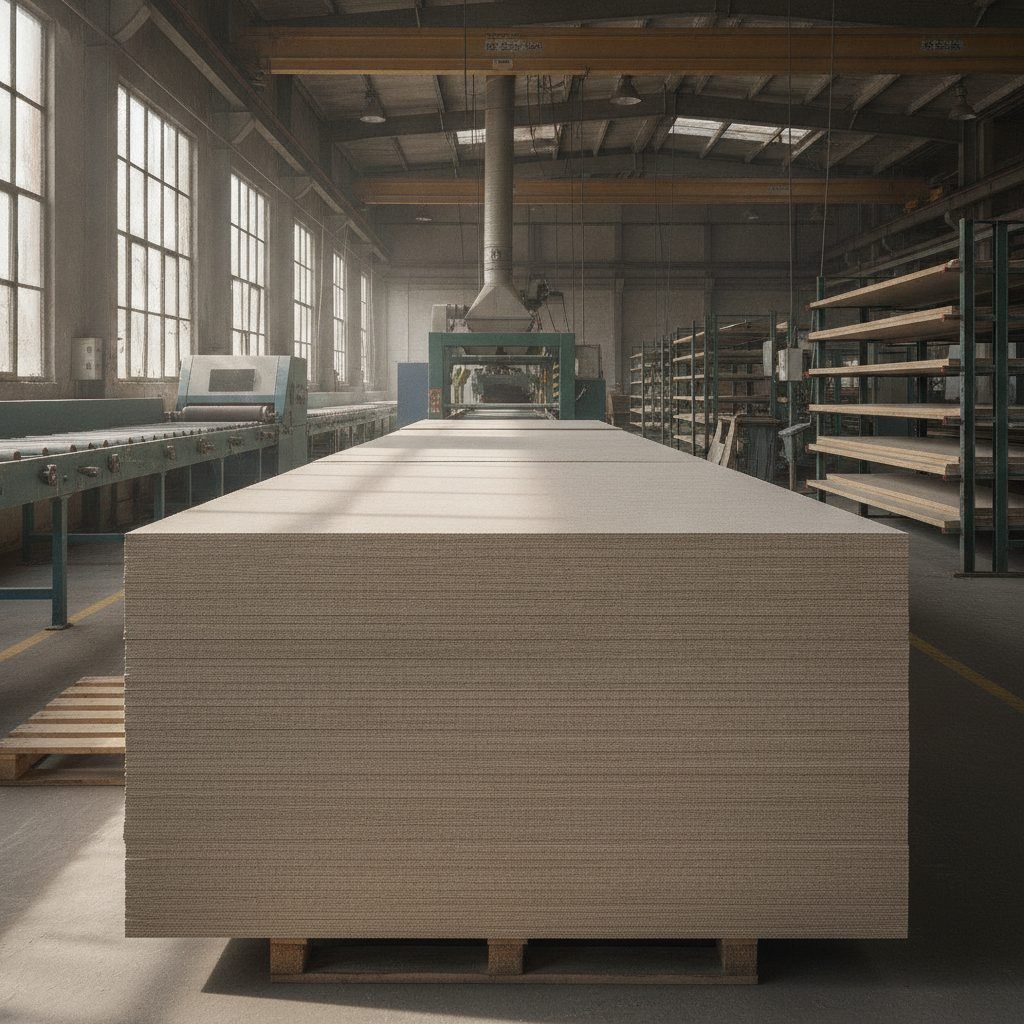
MDF is manufactured from refined wood fibres combined with resin and pressed under heat. The uniform structure supports smooth faces, tight tolerances and detailed machining. The Composite Panel Association notes that ANSI A208.2 classifies MDF by physical and mechanical properties, grades, dimensional tolerances and formaldehyde limits.
Plywood is manufactured from thin veneers arranged with adjacent grain directions crossed and bonded under heat and pressure. APA describes this cross-laminated construction as contributing dimensional stability and a high strength-to-weight ratio. Species, veneer grade, layup, adhesive bond and standard all affect performance.
Strength and structural applications
“Which is stronger?” is incomplete without a load case and product mark. Structural plywood can carry published span ratings and design capacities for sheathing, subflooring and other building uses. APA’s Panel Design Specification addresses panels made under PS 1 and PS 2.
Generic MDF should not be substituted into a structural assembly because it looks similar in thickness. MDF products can have published bending and internal-bond properties, but design must follow the relevant standard, manufacturer data and project requirements.
Fasteners and edge performance
Plywood’s veneer construction often provides useful screw holding, including near edges when the correct grade, fastener and spacing are used. Splitting, face damage and voids remain possible.
MDF machines consistently but its edge is not the same as solid wood or plywood. Pilot holes, suitable screws, correct edge distance and controlled torque help reduce splitting or pull-out. Confirm manufacturer guidance for load-bearing hardware rather than using a universal rule.
Surface finish and machining
MDF is often preferred for painted doors, mouldings, routed profiles and laminated interior components because it has no veneer grain and presents a smooth surface. Cut edges usually need sealing and preparation before painting.
Plywood is preferred when real wood appearance, impact resistance or structural performance matters. Face grades range from finish-quality veneers to economical sheathing. Medium- and high-density overlays provide different finishing surfaces for specialized uses.
Moisture resistance is specification-specific
Standard MDF can swell and lose dimensional stability when repeatedly wetted. Moisture-resistant MDF is designed for intermittent humidity in interior environments, but it is not automatically waterproof or exterior-rated.
For plywood, “Exposure 1” refers to a glue bond suitable for normal construction delays; APA states it is not intended for permanent weather exposure. “Exterior” is a bond classification, not a guarantee that every face, edge and assembly can be left unprotected indefinitely.
Formaldehyde and documentation
EPA’s TSCA Title VI rule regulates hardwood plywood, MDF, thin MDF and particleboard sold or imported in the United States. EPA lists limits of 0.11 ppm for MDF, 0.13 ppm for thin MDF and 0.05 ppm for hardwood plywood, with testing, certification, labelling and recordkeeping requirements.
Buyers should request the applicable product standard, emissions declaration, third-party certification where required and chain-of-custody documents if specified. Marketing labels alone are insufficient.
Application guide
- Painted cabinet doors and routed panels: MDF often provides the smoother substrate.
- Structural wall, roof or floor sheathing: use rated structural plywood or another approved structural panel.
- Visible wood grain: select an appropriate plywood face grade.
- Interior shelving: check span, load, support spacing, edge treatment and fasteners for either product.
- Humid interior joinery: specify a documented moisture-resistant product and seal it as required.
- Exterior exposure: use a product and assembly explicitly approved for that exposure.
Total-cost comparison
Compare delivered panel price together with cutting yield, machining time, tool wear, finishing labour, hardware, rejects and service life. A cheaper sheet can cost more after waste and rework. Normalize thickness, dimensions, grade, surface and delivery terms before comparing quotes.
Buyer checklist
- Define the load, environment and finish.
- Specify the governing product standard and grade.
- Confirm thickness tolerance, density or span rating as applicable.
- Verify moisture and emissions documentation.
- Test machining, fasteners and finish on the actual supplied panel.
- Compare total installed cost rather than sheet price alone.
Frequently asked questions
Is plywood always stronger than MDF?
No universal statement covers every grade and load case, but rated structural plywood is available for building applications where generic interior MDF is not an approved substitute.
Which panel is better for painting?
MDF often offers a smoother, more uniform painted surface, provided faces and edges are prepared correctly.
Can MDF be used in a bathroom?
Use a documented moisture-resistant interior grade, follow manufacturer sealing instructions and prevent direct or prolonged wetting.
Does Exposure 1 plywood mean exterior plywood?
No. Exposure 1 is not intended for permanent exposure to weather.
Which is cheaper?
Prices vary by region, grade, thickness, finish and terms. Compare specification-matched delivered cost and processing yield.
Sources and methodology
- Composite Panel Association — MDF properties and ANSI A208.2
- APA — Plywood basics and applications
- APA — Panel trademark, standards and bond classifications
- USDA Forest Products Laboratory — Wood Handbook
- U.S. EPA — Composite wood formaldehyde standards
Performance statements are product- and standard-specific. See TimberInsider’s sources and methodology policy.


