



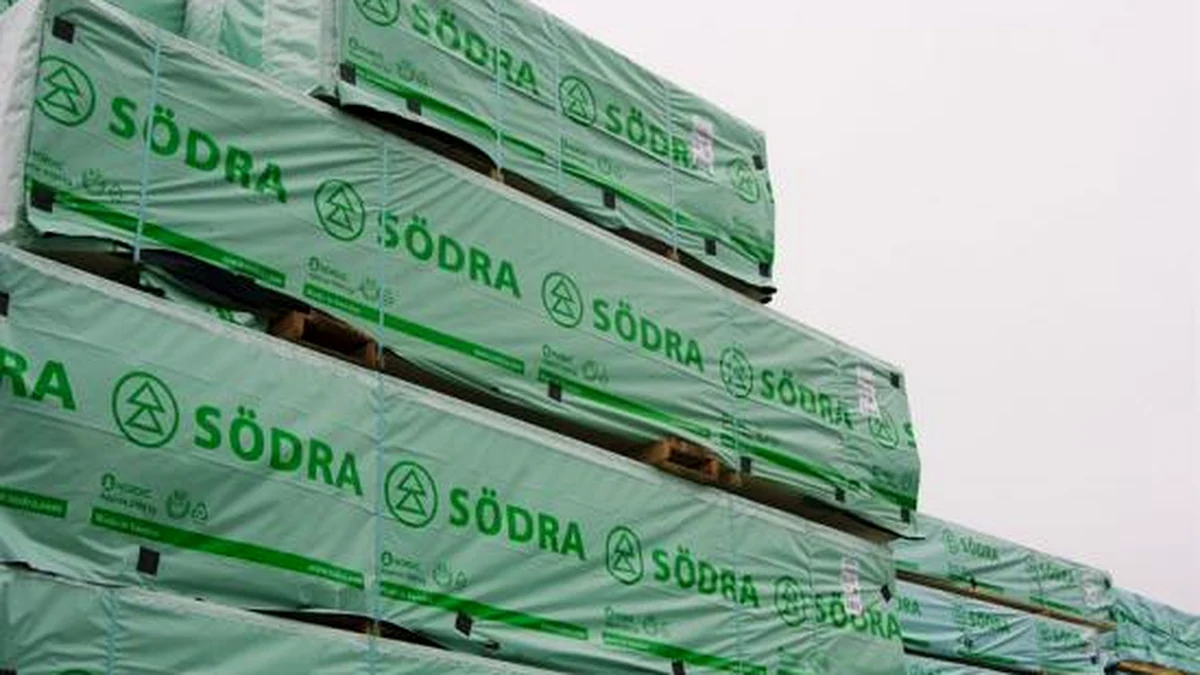


The third quarter of 2026 has delivered a stark financial reality to the European timber sector, epitomized by Södra’s latest performance. The Swedish forestry cooperative reported a staggering SEK 256 million (EUR 23.0 million) loss in its sawn timber business, more than double the deficit from the same period a year prior. This significant downturn is a direct consequence of a confluence of factors: persistently lower selling prices for sawn timber, reduced delivery volumes, and an unrelenting upward trajectory in raw-material costs. This situation is not an isolated incident but rather a potent indicator of the systemic pressures currently reshaping the profitability landscape for sawmills operating within a highly sensitive global market.
Market Context & Financial Realities
The Q3 2026 results from Södra highlight a critical imbalance in the market. Demand for sawn timber, particularly in key construction and DIY sectors, has softened considerably across Europe and North America. This subdued demand environment has exerted downward pressure on selling prices, forcing producers to accept lower margins or, as in Södra’s case, operate at a loss. Concurrently, the cost of sawlogs, the primary raw material, has continued its upward climb. This divergence creates an unsustainable squeeze on sawmill profitability.
Several factors contribute to this pricing dilemma. High inflation rates, rising interest rates, and geopolitical uncertainties have dampened consumer confidence and slowed construction activity. Inventory levels, which swelled during the post-pandemic boom, are still being recalibrated, leading to cautious purchasing by distributors and end-users. The impact on global prices for softwood lumber has been pronounced, with benchmark indices showing significant declines from their 2021-2022 peaks. For instance, while specific European indices have shown some regional variation, the overall trend reflects a market struggling to find equilibrium amidst oversupply in certain grades and reduced purchasing power.
Comparative Industry Data
Södra’s experience is reflective of broader trends, though the magnitude of losses can vary by region and operational efficiency. The following table illustrates a hypothetical comparison of key performance indicators for sawmills across different regions, highlighting the common challenges faced in Q3 2026 compared to Q3 2025:
| Region/Segment | Q3 2025 Avg. Sawn Timber Price Change (YoY) | Q3 2026 Avg. Sawn Timber Price Change (YoY) | Q3 2026 Avg. Log Cost Change (YoY) | Q3 2026 Estimated Operating Margin Change (YoY) |
|---|---|---|---|---|
| Nordic Sawmills (e.g., Södra) | +5% | -12% | +8% | -15% to -25% |
| Central European Sawmills | +3% | -9% | +6% | -10% to -18% |
| North American Softwood Producers | +7% | -15% | +10% | -20% to -30% |
| Baltic Sawmills | +4% | -10% | +7% | -12% to -20% |
Note: Figures are illustrative and represent generalized market trends, not specific company data beyond Södra’s reported losses.
This comparative data underscores a universal challenge: while sawn timber prices have retreated significantly from their peaks, raw material costs have remained stubbornly high or continued to increase. This disparity is particularly acute in regions like the Nordics, where competition for logs from pulp and bioenergy sectors is intense, further driving up stumpage prices and impacting the competitiveness of sawn timber producers on the global stage.
Supply Chain & Raw Material Dynamics
The escalating cost of raw materials is a multifaceted issue. In Sweden, for example, stumpage prices have been driven up by strong demand from the pulp and paper industry, which often competes directly for the same log assortments. Additionally, the bioenergy sector, bolstered by renewable energy mandates, provides another significant demand pull for wood fiber, further tightening log availability and pushing prices higher. This internal competition creates a floor for log prices that often does not correlate with the downward trend in sawn timber global prices.
Logistics costs, including transportation and energy, also remain elevated. Diesel prices, despite some fluctuations, are still higher than pre-pandemic levels, impacting the cost of bringing logs from forest to mill and finished products to market. Furthermore, evolving trade policies and regulations, such as the European Union Deforestation Regulation (EUDR), are beginning to introduce new compliance costs and potential supply chain adjustments. While the direct impact on Q3 2026 log prices might be nascent, the long-term implications for sourcing and cost structures are significant, potentially adding further pressure on raw material procurement.
Strategic Outlook & Operational Implications
The current market environment necessitates a critical re-evaluation of operational strategies for sawmills, importers, and panel producers alike. For sawmills, the immediate focus must be on optimizing operational efficiency, reducing waste, and potentially diversifying product portfolios to include higher-value-added items that are less susceptible to commodity price swings. Consolidation within the industry may accelerate as smaller, less capitalized sawmills struggle to absorb sustained losses.
Importers face the challenge of navigating volatile global prices and ensuring competitive landed costs. This requires sophisticated hedging strategies, agile inventory management, and strong relationships with suppliers who can offer consistent quality and pricing. For panel producers, the situation presents a mixed bag. While lower sawn timber prices might reduce competition for certain log grades, the overall upward pressure on raw material costs from other sectors (pulp, bioenergy) could still impact their input costs. The long-term outlook for timber demand remains robust, driven by sustainable construction trends and the imperative for bio-based materials, but the path to profitability in the near-to-medium term is fraught with challenges.
Companies must prioritize financial resilience, invest in advanced processing technologies to maximize yield from every log, and explore new market segments or export opportunities that offer better margins. The ability to adapt quickly to shifting market dynamics, particularly in managing raw material procurement and sales strategies, will be paramount for survival and growth.
Frequently Asked Questions (FAQ)
- Q: What are the primary drivers of current softwood lumber price volatility?
A: Softwood lumber price volatility is primarily driven by a combination of fluctuating demand from the construction and DIY sectors, inventory levels across the supply chain, energy costs impacting production and logistics, and the interplay of raw material costs, all influenced by broader macroeconomic conditions and global prices. - Q: How are European sawmills adapting to rising raw material costs?
A: European sawmills are adapting by focusing on operational efficiencies, investing in automation to reduce labor costs, optimizing log utilization, exploring alternative log sourcing strategies, and diversifying into higher-value products to improve margins. Some are also integrating further into the value chain or consolidating. - Q: What is the long-term outlook for timber demand given these challenges?
A: Despite current headwinds, the long-term outlook for timber demand remains positive, driven by sustainable building trends, the increasing preference for renewable materials over carbon-intensive alternatives, and population growth. However, profitability will depend on the industry’s ability to manage cost pressures and adapt to evolving market structures.


