



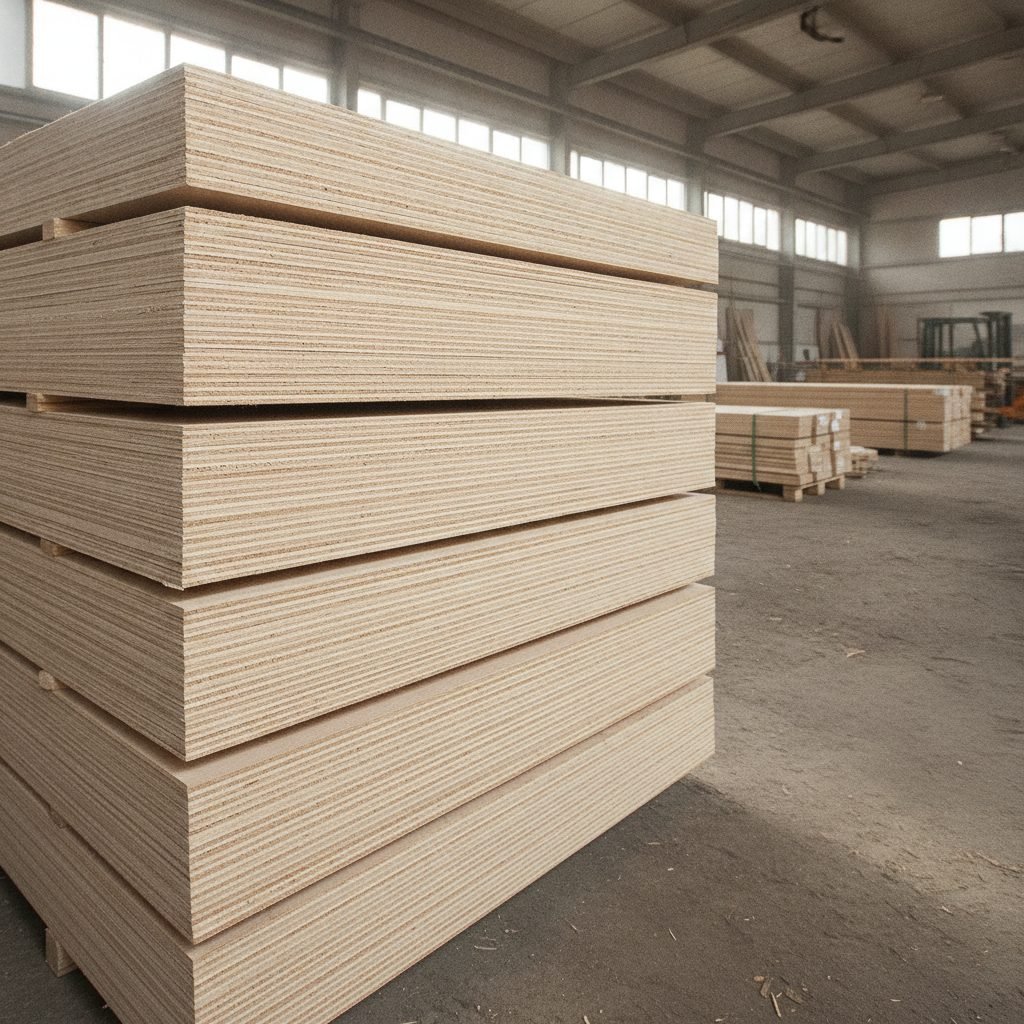


China dominates global plywood manufacturing, producing approximately 35-40% of the world’s plywood and establishing itself as the industry’s undisputed leader. The country’s plywood manufacturers range from large, export-focused mills to smaller domestic producers, collectively supplying construction, furniture, and packaging industries across six continents. Understanding China’s plywood manufacturing landscape is essential for importers, distributors, and industry professionals seeking reliable sourcing options. For current pricing data, consult our plywood price tracker.
The Chinese Plywood Manufacturing Landscape
China’s plywood industry represents a significant portion of the nation’s wood panel sector, which contributes billions of dollars annually to the economy. The industry emerged as a major global force during the 1990s and 2000s as manufacturers invested heavily in automation and capacity expansion. Today, Chinese plywood manufacturers operate in a highly competitive environment where scale, efficiency, and compliance with international standards determine market success.
The industry encompasses three primary manufacturer categories: large integrated mills with capacities exceeding 200,000 cubic meters annually; mid-size producers operating 50,000-150,000 cubic meters; and smaller regional mills serving domestic markets. Large manufacturers typically maintain vertically integrated operations including veneer processing, drying facilities, and gluing systems.
According to data from the FAO and UNECE, China’s plywood production capacity continued expanding through 2023, with newer mills incorporating advanced environmental controls and automation technologies. The industry employs hundreds of thousands of workers across multiple regions and supports substantial upstream and downstream economic activity.
Major Manufacturing Regions and Production Centers
China’s plywood manufacturing concentrates in specific geographic clusters that offer advantages including raw material access, transportation infrastructure, and established supplier networks.
Linyi, Shandong Province
Linyi represents the undisputed center of Chinese plywood manufacturing, accounting for approximately 30% of national production. The region hosts hundreds of manufacturing facilities ranging from small workshops to mega-mills producing over 300,000 cubic meters annually. Linyi’s dominance stems from its proximity to timber import ports, established relationships with raw material suppliers, and decades of accumulated manufacturing expertise.
The Linyi cluster benefits from well-developed infrastructure including specialized trucking companies, warehousing facilities, and distribution networks. Major manufacturers in the region include companies operating multiple production lines with advanced adhesive systems and pressing equipment. The concentration of producers creates competitive pricing pressure while enabling economies of scale.
Anhui and Jiangsu Provinces
Anhui hosts significant plywood manufacturing capacity, with mills concentrated around cities like Bozhou and Fuyang. These producers focus on both export markets and domestic consumption, producing panels for construction, furniture, and packaging applications. Anhui manufacturers typically emphasize cost efficiency and high-volume production.
Jiangsu Province contains additional major manufacturing centers, particularly in regions bordering Anhui. These mills often target mid-to-premium market segments and maintain higher quality standards than some inland competitors. Jiangsu producers frequently hold multiple international certifications and supply branded furniture manufacturers.
Guangdong and Coastal Regions
Guangdong’s plywood manufacturers focus on export markets and premium product segments. Proximity to major ports facilitates shipping to Southeast Asia, Europe, and North America. Several Guangdong mills specialize in decorative veneered panels and engineered products commanding higher margins than commodity plywood.
Production Capacity, Output, and Product Range
China’s total plywood production capacity approaches 100 million cubic meters annually, though actual output varies based on market demand and export restrictions. The industry produces diverse product types serving distinct market segments.
| Manufacturer Category | Typical Annual Capacity (m³) | Primary Product Focus | Export Orientation | Quality Standard |
|---|---|---|---|---|
| Mega-mills (Top 10) | 200,000–350,000 | Structural, decorative, engineered | 60–80% exports | ISO, FSC, PEFC certifications |
| Large producers (11–50) | 100,000–200,000 | Mixed commodity and specialty | 40–70% exports | ISO 9001, selective certifications |
| Mid-size mills (51–200) | 50,000–100,000 | Construction, furniture panels | 20–50% exports | Basic standards, selective compliance |
| Regional producers (200+) | 10,000–50,000 | Domestic-focused commodity | 5–20% exports | Domestic standards emphasis |
| Specialist mills (decorative) | 30,000–80,000 | Veneered, engineered panels | 70–90% exports | Premium certifications, brand-specific |
The plywood products manufactured in China include softwood plywood for construction, hardwood decorative panels for furniture applications, and specialized engineered panels. Eucalyptus plywood comprises a significant volume, leveraging tropical timber sourcing from Southeast Asia and Africa. Birch plywood production serves premium furniture and commercial segments.
Quality Standards, Certifications, and Market Compliance
Chinese plywood manufacturers operate under evolving quality and environmental standards that increasingly align with international requirements. Leading manufacturers maintain FSC, PEFC, and ISO certifications essential for accessing premium market segments and major branded retailers.
International Certification Landscape
Premium Chinese manufacturers pursue forest stewardship certifications, with FSC and PEFC certifications now relatively common among large export-focused mills. These certifications require documented chain-of-custody tracking and sustainable sourcing practices. Approximately 30-40% of major Chinese manufacturers maintain at least one recognized forest certification.
ISO 9001 quality management certification remains standard among manufacturers exporting to developed markets. Compliance with European CE marking requirements and North American standards including CARB formaldehyde emission limits has become mandatory for most export-oriented producers.
Adhesive and Formaldehyde Standards
Chinese manufacturers increasingly utilize low-formaldehyde and formaldehyde-free adhesive systems to meet strict import market requirements. CARB Phase 2 compliance (limiting formaldehyde emissions to 0.05 ppm) now applies to most manufacturers targeting North American retail channels. European markets typically enforce equivalent or stricter limits through EN 13986 and EN 120 standards.
Variation in Quality Compliance
Quality control practices vary significantly across Chinese manufacturers. Mega-mills and export-focused producers maintain rigorous testing procedures and modern laboratory equipment. Smaller domestic-focused mills may have minimal quality testing infrastructure. Buyers must verify specific certifications and conduct quality inspections rather than assuming uniform standards across the industry.
Export Markets, Trade Dynamics, and Market Position
Chinese plywood manufacturers supply global markets through complex trade channels involving direct exports, trading companies, and distribution networks. Understanding export patterns reveals how Chinese production shapes global panel prices and market supply.
Primary export destinations include Southeast Asia, Europe, and North America. Southeast Asian markets absorb substantial volumes for furniture manufacturing, particularly in Vietnam, Indonesia, and Thailand. European markets emphasize certified, compliant products, while North American importers focus on quality consistency and regulatory adherence.
UN Comtrade data indicates China’s plywood exports exceeded 15 million cubic meters annually in recent years, representing roughly 70% of total global plywood trade. Price competitiveness, logistics efficiency, and production capacity provide sustained competitive advantages despite rising labor costs and environmental compliance expenses.
Trade tensions and tariff policies significantly impact Chinese plywood export economics. Tariff fluctuations on imports to major consuming countries periodically reshape supply chains and pricing dynamics. Manufacturers maintain flexibility to redirect volumes between markets based on tariff environments and demand signals.
Raw Material Sourcing and Sustainability Considerations
Chinese plywood manufacturers source timber from domestic forests, Southeast Asian suppliers, and African countries. Eucalyptus represents the dominant raw material, sourced primarily from plantations in Southeast Asia and increasingly from African operations. Tropical hardwoods supplement production for premium veneered panels.
Sustainability concerns regarding timber sourcing, forest degradation, and labor practices receive increasing scrutiny from environmental organizations and importing countries. Certified manufacturers must maintain documented sourcing chains demonstrating legal and sustainable timber acquisition. This creates cost pressures and operational complexity for compliant producers.
The industry faces mounting pressure to transition toward plantation-sourced timber and reduce tropical hardwood consumption. Leading manufacturers increasingly market eucalyptus and plantation-based products as sustainability responses, though criticisms regarding water usage and monoculture impacts persist.
Technology, Innovation, and Future Directions
Chinese plywood manufacturers continue investing in automation, adhesive innovation, and environmental control systems. Modern mills feature advanced hot-pressing equipment, automated sorting, and moisture control technologies improving efficiency and product consistency.
Innovation focuses on reduced-formaldehyde systems, engineered composite products, and manufacturing efficiency. Some manufacturers experiment with alternative adhesives, including soy-based systems and formaldehyde-free technologies responding to market demands for ultra-low-emission products.
Environmental compliance technologies including air quality monitoring, emissions capture, and waste reduction systems represent significant capital investments. Manufacturers achieving advanced compliance position themselves advantageously as environmental regulations tighten globally.
Industry Outlook and Strategic Considerations
China’s plywood manufacturing industry faces a paradox: enormous production capacity and cost advantages coexist with rising operational costs, environmental pressures, and consolidation trends. Industry consolidation continues as smaller mills exit and larger producers expand capacity and geographic reach.
Pricing volatility reflects raw material cost fluctuations, energy expenses, and exchange rate impacts. Buyers sourcing from Chinese manufacturers should evaluate supplier stability, quality consistency, and regulatory compliance rather than assuming all producers maintain equivalent standards.
Supply chain diversification strategies increasingly interest companies overly dependent on single sourcing regions. However, China’s combined advantages in production scale, infrastructure, and cost efficiency ensure its continued dominance in global plywood supply.
For importers and distributors, successful engagement with Chinese manufacturers requires understanding regional specializations, verifying certifications independently, conducting quality audits, and maintaining diversified supplier relationships. Industry professionals should monitor regulatory developments in consuming markets, as these directly impact manufacturing requirements and costs.
The intersection of China’s manufacturing capabilities with global demand for certified, compliant, sustainably-sourced plywood ensures the industry’s continued significance. Manufacturers balancing cost efficiency with environmental responsibility and quality standards achieve optimal market positioning for long-term partnerships.
For live data, visit our plywood tracker on TimberInsider. Learn more about wood construction applications and market trends shaping the global industry.
Frequently Asked Questions
Who are the largest plywood manufacturers in China?
China hosts numerous large-scale plywood manufacturers including Linyi-based producers, Anhui mills, and Jiangsu facilities. Major companies operate across multiple production sites with capacities ranging from 50,000 to over 300,000 cubic meters annually. Many are vertically integrated, controlling veneer sourcing and distribution.
What grades of plywood do Chinese manufacturers produce?
Chinese plywood manufacturers produce a full range from structural grades (used in construction) to decorative veneered panels for furniture and interior applications. Products include birch plywood, eucalyptus plywood, and mixed hardwood panels. Quality varies significantly between premium export-grade and domestic-market products.
How does China’s plywood manufacturing compare internationally?
China leads global plywood production with approximately 35-40% of worldwide output. Production efficiency and cost competitiveness give Chinese manufacturers significant market share, though quality consistency and sustainability practices vary. The industry faces increasing environmental regulations and labor standards scrutiny.
What certifications do Chinese plywood manufacturers hold?
Leading manufacturers pursue FSC, PEFC, and ISO certifications for export compliance. Many comply with European and North American standards including CE marking and CARB formaldehyde limits. Certification levels vary; premium producers maintain multiple certifications while smaller mills may have limited credentials.
Where are Chinese plywood manufacturers concentrated?
Primary manufacturing hubs include Linyi (Shandong Province), Anhui, Jiangsu, and Guangdong. Linyi alone accounts for roughly 30% of China’s total plywood output. These regions benefit from proximity to timber ports, established supply chains, and infrastructure supporting large-scale production.
Verification sources and update policy
This page was editorially reviewed on 13 July 2026. Dated prices and market shares are reference-period observations, not live quotations. Buyers should confirm specification, Incoterm, currency, tax, freight and quote validity before using a number commercially. Market statements are cross-checked against the following primary statistical, regulatory or standards resources:
- FAOSTAT Forestry Production and Trade
- UN Comtrade
- Eurostat international trade in goods
- UNECE forest-products markets
TimberInsider separates observed data from estimates and does not treat a supplier list as certification or endorsement. See the editorial methodology, product guides and regional coverage for definitions and current context.


