



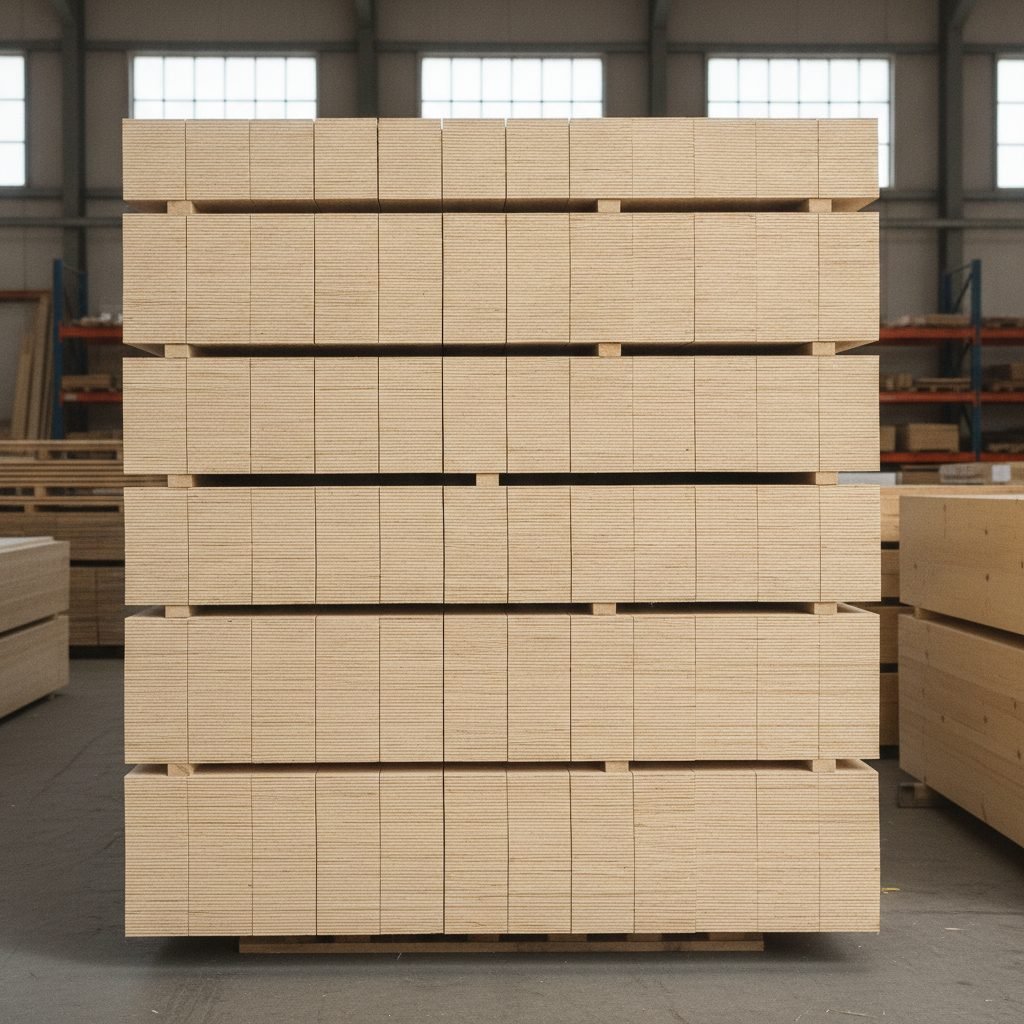


European birch plywood prices entered Q3 2025 in retreat, falling 11% from their Q1 peak—yet remain stubbornly 7% above year-ago levels, pinning buyers in a frustrating middle ground. The reason: while global softwood oversupply has finally cooled European price inflammation, the vanished Russian and Belarusian birch log pipeline continues to constrict supplies, keeping Baltic and Nordic mills tight and holding pricing power. For OEMs and distributors tracking the plywood price tracker, understanding the regional and grade-specific divergences—and the coming winter supply crunch—is critical to Q4 2025 procurement strategy.
Market Snapshot
Birch plywood pricing across Europe reveals a tale of two halves: declining from record highs, but still elevated by historical standards:
- Baltic ex-mill 9mm A/B birch plywood: €620 per m³ in September 2025, down from €695 in January but up 7% vs. September 2024 (€580).
- CIF Hamburg 12mm B/BB birch (standard 2.44×1.22m sheet): €705 per m³, reflecting a 5–8% importer margin over Baltic mill price plus Baltic freight spike (€45–55 per m³ container rate, up 12% since June due to Suez congestion).
- FCA Central Europe (Polish & Czech distribution hubs): €710–750 per m³ for 9mm A/B, 3–4% premium to Baltic origin, reflecting regional warehousing and logistics costs for serving furniture hubs in Poland and Czechia.
- Year-to-date supply: FOEX PIX Baltic Plywood Index shows 2.3 million m³ of birch plywood cleared from Baltic mills Jan–Aug 2025, tracking 8% below 2024’s pace.
- Log cost pressure: EU Timber Trend data shows birch veneer logs (4–6 cm top diameter) in the Baltics trading at €185–210 per m³ (up 14% YoY), consuming 65–70% of mill COGS for birch plywood producers versus 55–60% pre-2022.
- Regional divergence: Scandinavian (Swedish, Norwegian) birch plywood averages 4–6% above Baltic pricing due to log scarcity and energy-cost premiums; Polish birch-core plywood blends undercut pure Baltic birch by 8–12% but capture only 22% of ‘premium’ furniture OEM orders.
Deep Analysis
The Vanishing Russian Birch Pipeline & Log Scarcity Dynamics
The EU’s June 2022 ban on Russian and Belarusian forest imports—originally billed as a temporary sanctions measure—has calcified into structural supply reality. Russia and Belarus historically supplied 55–60% of European birch plywood log volume. Three years on, no offsetting sources have emerged. Nordic log harvests have stabilized at 2019 levels, but Scandinavian birch acreage is shrinking (Sweden lost 1.2% of birch volume in 2024 per FAO data), while newly licensed suppliers in the Baltics operate at lower yield per hectare. This structural deficit props log prices above €185 per m³, crowding out lower-tier mill capacity and forcing secondary manufacturers to blend in softwood cores—a costly compromise that dilutes margin. The supply crunch will deepen in Q4 as Baltic winters compress cutting seasons and heating demand for plywood drying drives energy costs up 8–15% vs. summer.
Trade Flows & Regional Pricing Tiers
European birch plywood now operates in three distinct trade zones. Baltic primary markets (Latvia, Lithuania, Estonia) see mill-gate pricing of €590–630 per m³ 9mm A/B, with the larger Baltic mills competing on volume while Nordic-log mills capture the premium quality segment at €640–680. Western European distribution (Germany, France, BeNeLux) imports 55% via CIF Hamburg and absorbs 3–4 weeks transit plus 8–12% importer margins, landing birch at €705–760 per m³ in-stock. Southern and Eastern corridors (Poland, Czechia, Italy furniture hubs) source 70% direct from Baltic mills with lower transport cost but higher working-capital intensity, pricing between Baltic mill and Western landed cost. Cross-border arbitrage is minimal (2–3% max) due to high transport friction—containerized birch plywood costs €45–55 per m³ to move Copenhagen-to-Rotterdam, offsetting any price gap. This regional fragmentation means procurement strategy is highly localized: furniture OEMs in Bavaria source from Hamburg stocks; Italian makers bypass wholesalers and buy 40-foot containers direct from Baltic mills; Polish converters split orders between Baltic mill purchases and domestic inventory to hedge risk.
| Origin & Grade | Thickness | Q3 2025 Price (€/m³) | QoQ Change (%) | YoY vs Q3 2024 (%) |
|---|---|---|---|---|
| Baltic Ex-Mill, 9mm A/B | 9 mm | €620 | -5.4% | +6.9% |
| Baltic Ex-Mill, 12mm B/BB | 12 mm | €585 | -6.1% | +8.1% |
| CIF Hamburg, 9mm A/B | 9 mm | €705 | -4.2% | +7.2% |
| FCA Central Europe (Polish hub), 9mm A/B | 9 mm | €730 | -3.8% | +6.5% |
| Scandinavian (Sweden/Norway), 9mm A+/B+ | 9 mm | €670 | -4.6% | +5.8% |
| Polish Birch-Core (softwood veneer blend), 12mm | 12 mm | €510 | -7.2% | +9.3% |
Demand Rebalancing: Furniture, Construction & Certification Premiums
European furniture OEMs—the end-destination for 65–70% of birch plywood—are finally showing elasticity after three years of absorbed cost inflation. Q2 2025 orders from major Italian and German makers dropped 4–5% vs. Q2 2024 as producers shifted designs toward lower-cost substrates (MDF, particleboard) and softwood frames. This demand softening, combined with competitor inventory build (distributors restocked 12–15% above normal in May–June, fearing further price spikes), has given mills less pricing leverage and triggered the Q3 retreat. Simultaneously, the panel prices overview shows MDF and softwood plywood pricing sliding 8–12% through 2025, widening the birch premium spread and making value-engineering away from birch more attractive for cost-conscious OEMs. One offsetting factor: EU timber legality (EUTR/FLEGT) and emerging carbon-footprint certifications favor certified birch from the Baltics and Scandinavia, sustaining a 3–5% quality premium for FSC-certified or PEFC-certified A-grade birch. Premium furniture brands (Natuzzi, B&B Italia, Herman Miller EU) are willing to pay €650–700 per m³ for certified birch; mass-market makers are not, creating bifurcated demand and wider grade dispersion in pricing.
Market Implications
Impact Across Three Buyer Segments
Furniture OEMs (65–70% of demand): The 11% Q3 pullback has eased acute pressure but does not reverse year-on-year cost inflation; a €620 per m³ price is still 7% above Sept. 2024. Italian and German makers have locked in 60–70% of Q4 requirements at €610–640 to secure allocation and limit Q4 exposure. Margin recovery is stalled; most OEMs are running 0–3% EBITDA on hardwood seating and casegoods. Substitution to MDF frames and particle-core panels is accelerating, with volume shifts visible in purchasing data (one major German sofa maker confirmed a 15% reduction in birch plywood consumption YoY by moving to hardwood-faced MDF).
Construction & Prefab (15–18% of demand): Birch plywood penetration in European residential prefab construction is climbing (Nordic and German systems favor birch for OSB replacement in roof sheathing and wall bracing). Q3 2025 prices of €610–650 per m³ are acceptable for prefab mills targeting mid-to-high-end builds; lower-cost standardized housing projects remain locked to OSB and softwood plywood. No major price elasticity here; construction demand is insensitive to plywood cost within the €100–150 per m³ swing.
Distribution & Retail (12–15% of demand): Wholesalers and independent merchants have reduced working inventory after Q1–Q2 stockpiling; stock-turns have normalized to 45–60 days. The Q3 price decline has compressed distributor margins (some traders are holding €700+ cost basis on inventories now trading at €680–700 market), forcing aggressive clearing and limiting restock appetite into Q4. Distributor working capital for birch plywood is expected to contract 6–8% in 2025 vs. 2024, reducing financial flexibility for small and mid-size panel retailers.
Regional Price Divergence & Structural Drivers
Northern Europe (Scandinavia, Germany, BeNeLux) maintains the highest birch plywood prices (€680–750 for A-grade) because proximity to supply and industrial demand (IKEA, Schänig, Gruendig) push utilization near 95%. Southern Europe (Italy, Spain) trades 5–8% lower as geographic distance reduces supply pressure and softer residential market reduces demand. Central Europe (Poland, Czechia, Slovakia) sees the greatest arbitrage—Polish makers blend cheaper birch-core plywood and capture volume at the expense of pure-veneer mills, creating a 12–15% price tier below premium Baltic birch. France sits as a mid-point: strong demand from Steelcase and other office furniture makers, but less supply proximity than Germany, leading to €700–730 pricing (6–7% above Baltic mill but 2–3% below Northern hub prices). This regional dispersion incentivizes procurement teams to centralize buying through Baltic mill relationships (locking quarterly volume at €610–630) rather than relying on local wholesalers (€720–760), a trend accelerating in 2025.
Outlook & Buyer Recommendations
Q4 2025 & Early 2026 Price Direction: Birch plywood is likely to hold or soften 2–4% further through December as Q4 heating demand (which typically lifts costs) is offset by December seasonal softness in furniture orders. The real inflection point arrives in January–March 2026: if winter conditions are mild, Baltic birch log harvests continue at current pace, and energy costs ease, expect €600–615 per m³ (another 3–5% decline). Conversely, a severe winter or supply shock (mill breakdown, unforeseen log shortage) could spike prices 5–8% toward €650–680. Single key driver: Baltic birch log availability in Q1 2026, which will determine mill throughput and pricing power. Buyers must monitor regional harvest reports and Eurostat timber import data (published monthly with 4-week lag) to anticipate inflection points.
Risk Scenarios:
- Downside (probability 35%): Mild winter, stable energy costs, and competing softwood price weakness push birch plywood to €595–610 per m³ by March 2026. OEMs lock in volumes; distributor inventory turns compress further; regional mills mothball capacity.
- Upside (probability 40%): Log scarcity, heating-season energy surge, or geopolitical disruption (e.g., EU trade friction with Belarus sourcing through third countries) drives prices to €660–680 per m³ by February 2026. OEMs accelerate substitution; certified birch commands additional 5–7% premium.
Buyer Recommendations for Q4 2025 & Beyond:
- Lock quarterly volumes directly with primary mills at €610–630 per m³ 9mm A/B, securing allocation over price optimization. Importer margins and distributor markups now represent 5–8% of landed cost; removing intermediaries saves 2–3% and guarantees stock availability.
- Accelerate certification audits (FSC/PEFC) for primary suppliers. Certified birch commands a 3–5% quality premium and unlocks access to premium OEM contracts; non-certified sourcing risks margin compression as corporate buyers tighten environmental procurement policies.
- Conduct design-phase value engineering to reduce birch plywood usage by 8–12% through hybrid substrate strategies (birch-faced MDF, softwood plywood + hardwood veneer overlays). This hedges birch supply risk and may recover 100–150 basis points in product margin despite higher substrate complexity.
- Build a 4–6 week safety stock buffer for critical SKUs in November–December. Q1 lead times are typically 8–12 weeks from Baltic mills; January supply tightness and February heating-driven cost spikes create procurement risk that inventory investment can mitigate for mid-to-large OEMs.
- Monitor FOEX PIX Baltic Plywood Index and Eurostat timber price releases (monthly) as leading indicators for Q2–Q3 2026 pricing. Early signals of log scarcity (Index trendline, log price acceleration, mill utilization >95%) allow 60–90 day forward hedging via contracts or forward purchasing with distributors.
Closing
European birch plywood pricing in 2025 is entering a stabilization phase—down 11% from Q1 highs but still 7% above year-ago, held aloft by relentless log scarcity and capacity constraints at Baltic and Nordic mills. The vanished Russian and Belarusian supply pipeline is now a permanent structural reality, not a temporary sanctions effect, meaning birch plywood prices are unlikely to return to pre-2022 levels (<€500 per m³). For OEMs and distributors, the strategic imperative is not price negotiation but allocation security: locking quarterly volume commitments with primary mills, consolidating certification credentials, and redesigning products to use less birch while accepting a durably higher cost baseline. Q4 2025 offers a tactical window to secure 2026 allocation before winter supply tightness and heating-season energy spikes reset pricing power in favor of producers. For live data and price benchmarks, visit our plywood prices tracker on TimberInsider.
Frequently Asked Questions
What is the current price range for birch plywood in Europe in 2025?
European birch plywood 9mm A/B grade (standard 2440×1220mm sheets) trades in a range of €580–€680 per m³ ex-mill Baltic ports as of Q3 2025, down 11% from Q1 but up 7% year-over-year versus Q3 2024. Prices vary by thickness, veneer grade and location, with Nordic mills generally above Polish and Lithuanian output.
Why are Russian and Belarusian birch supplies still restricted in Europe?
The EU import ban on Russian and Belarusian forest products (in effect since June 2022) remains unchanged in 2025. This forces European manufacturers to source birch logs from remaining suppliers in the Baltics, Scandinavia, and selective Central European sources, tightening supply and sustaining price floors above pre-ban levels.
Which European birch plywood producers are currently leading the market?
Birch plywood production in Europe is concentrated in the Baltic states and Finland, where the birch resource is. Latvia, Lithuania, Estonia and Finland host the mills that supply most European demand; German and Polish producers mainly convert or blend birch faces onto softwood cores. Capacity by mill is not published consistently, so treat any single market-share figure with caution and verify the specific mill and grade on the FSC or PEFC public database before contracting.
How does birch plywood pricing in Europe compare to other panel types?
Birch plywood typically sells at a 30–45% premium to MDF and 35–50% premium to softwood plywood (spruce) due to superior strength, stability, and aesthetic appeal. In 2025, this spread has widened because birch log scarcity pushes mill costs while softwood oversupply pressures competing products lower.
What factors will drive birch plywood prices in Q4 2025 and early 2026?
Key drivers are Baltic birch log availability (typically tightest Nov–Mar), heating-season energy costs for kilning, downstream demand from furniture makers (seasonal Q4 order surge), and possible tariff changes if EU-China trade negotiations shift. A warm winter would ease log scarcity and create downward pressure; supply disruptions could spark 5–8% upside moves.
Update policy and background sources
This page was editorially reviewed on 13 July 2026. Dated prices and market shares are reference-period observations, not live quotations. Buyers should confirm specification, Incoterm, currency, tax, freight and quote validity before using a number commercially. Background statistics and standards for this subject are published by:
- U.S. Bureau of Labor Statistics PPI
- Eurostat producer prices
- FAOSTAT Forestry Production and Trade
- UNECE forest-products markets
TimberInsider separates observed data from estimates and does not treat a supplier list as certification or endorsement. See the editorial methodology, product guides and regional coverage for definitions and current context.


