



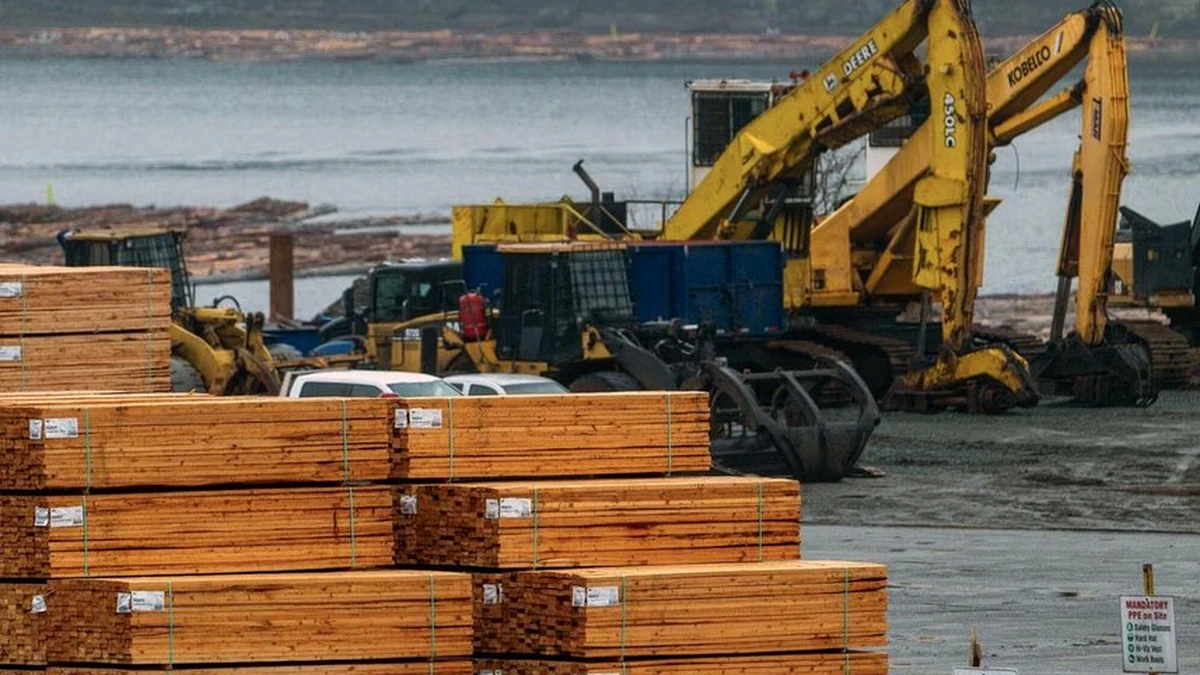


Executive Summary
The transatlantic trade in softwood lumber is undergoing a significant recalibration, with European suppliers experiencing a sharp downturn in shipments to the United States. This contraction, marked by substantially lower export volumes and eroding prices, signals a complex interplay of macroeconomic pressures, shifting demand patterns, and heightened operational costs. For both European sawmills and US importers, this development necessitates a rigorous re-evaluation of supply chain strategies, market diversification, and long-term investment decisions within the broader global lumber landscape.
Market Context & Financial Realities
The latest industry intelligence confirms a pronounced year-on-year decline in European softwood lumber exports to the United States. While August figures indicated a slightly moderated pace of decline compared to earlier months, overall volumes remain well below historical averages. This reduction is not merely a volume issue; it is exacerbated by a significant erosion in export prices, directly impacting the profitability and operational viability of European sawmills.
Several factors converge to explain this market contraction. On the demand side, the United States housing market has faced headwinds from elevated interest rates, which have dampened new construction starts and renovation activity. This has led to a reduction in overall lumber consumption and, critically, a decrease in demand for imported material, particularly from Europe. US distributors and builders, facing tighter margins and uncertain demand, have become more cautious with inventory management, opting for leaner stock levels and just-in-time procurement where possible.
For European producers, the financial reality is stark. Lower export prices to the US market mean reduced netbacks, challenging their ability to cover rising operational costs. Energy prices in Europe, though having stabilized from their 2022 peaks, remain a significant component of production expenses. Furthermore, the competitive landscape within the US market itself has intensified. While Canadian lumber imports continue to face duties, the domestic US Southern Yellow Pine (SYP) sector has demonstrated resilience, offering a more localized and often cost-effective alternative for certain applications, particularly in the Southern and Eastern US.
The species typically exported from Europe to the US, primarily Spruce-Pine-Fir (SPF) and White Fir, often serve framing and structural applications. The slowdown in these segments directly translates to reduced orders for European material, forcing mills to either curtail production, seek alternative markets, or accept lower margins to maintain market share.
Comparative Industry Data
To contextualize the severity of the US market downturn for European exporters, a comparative analysis of export performance across key global destinations reveals a strategic shift. While the US market has contracted sharply, European producers have been compelled to explore and strengthen ties with other regions, albeit often at different price points and logistical complexities.
| Exporting Region | Destination Market | Volume Change (Q3 2022 vs. Q3 2023) | Average Export Price Change (Q3 2022 vs. Q3 2023) | Key Market Drivers |
|---|---|---|---|---|
| EU-27 (Softwood Lumber) | United States | -35% to -45% | -15% to -20% | US housing slowdown, high interest rates, inventory destocking |
| EU-27 (Softwood Lumber) | China | +5% to +10% | -5% to -8% | Gradual recovery in construction, competitive pricing |
| EU-27 (Softwood Lumber) | MENA Region | +10% to +15% | -3% to -5% | Infrastructure projects, stable demand, diversification efforts |
| EU-27 (Softwood Lumber) | Domestic EU Market | -5% to -10% | -8% to -12% | Regional economic slowdown, cautious consumer spending |
| Canada (Softwood Lumber) | United States | -10% to -15% | -10% to -15% | US housing slowdown, ongoing duties, established supply chains |
Note: Figures are illustrative based on observed market trends and industry reports, reflecting significant shifts rather than precise statistical data.
This table highlights the disproportionate impact of the US market downturn on European exporters. While other markets like China and the MENA region show modest growth or smaller declines, they often do not fully compensate for the lost volume and premium pricing previously commanded in the US. The domestic EU market also faces its own challenges, preventing it from absorbing the full surplus capacity.
Supply Chain & Raw Material Dynamics
The current market dynamics are deeply intertwined with underlying supply chain and raw material factors. In Europe, stumpage costs for sawlogs have remained relatively high in many regions, driven by strong demand from other wood-using industries (e.g., pulp and paper, bioenergy) and environmental considerations. This high raw material cost base makes it challenging for sawmills to compete on price in a depressed export market like the US.
Logistics, while less volatile than during the peak of the pandemic, still present complexities. Ocean freight rates, though lower than their peaks, remain a significant cost component for transatlantic shipments. Port efficiency, container availability, and inland transportation costs within both Europe and the US add layers of expense and lead time, further eroding the competitiveness of European lumber.
Trade policy also plays a role. While European lumber does not face the same countervailing and anti-dumping duties as Canadian lumber entering the US, the overall trade environment is one of increasing scrutiny. More critically, the impending EU Deforestation Regulation (EUDR), set to apply from December 2024, is a major concern for European producers. While primarily focused on imports into the EU, it mandates stringent traceability and due diligence requirements for all relevant commodities, including timber, produced within or exported from the EU. This regulation introduces new compliance costs, administrative burdens, and potential market access challenges, influencing strategic decisions on where to allocate production and export efforts. It adds another layer of complexity to the cost of doing business for European mills, potentially making distant, price-sensitive markets less attractive.
Strategic Outlook & Operational Implications
The sharp decline in US-bound shipments has profound strategic and operational implications across the timber industry value chain.
For European Sawmills:
- Market Diversification: Mills are aggressively pursuing new markets in Asia, the Middle East, and North Africa to offset US losses. This requires adapting product specifications, logistics, and sales strategies.
- Production Rationalization: Some sawmills are implementing production cuts, reducing shifts, or temporarily idling lines to align output with reduced demand and prevent further price erosion.
- Value-Added Products: A renewed focus on higher-value, specialized products for domestic or regional markets that can command better margins, rather than competing solely on commodity lumber.
- Efficiency Investments: Accelerated investment in automation, energy efficiency, and waste reduction to lower operational costs and improve competitiveness.
For US Importers & Distributors:
- Sourcing Re-evaluation: Increased reliance on domestic US Southern Yellow Pine (SYP) and Canadian lumber, despite duties, to fill gaps. This could lead to shifts in regional supply patterns.
- Inventory Management: Continued cautious approach to inventory, prioritizing quick turns and minimizing exposure to price volatility.
- Supply Chain Resilience: A re-emphasis on diversifying sourcing origins and building more resilient, less geographically concentrated supply chains to mitigate future disruptions.
For Panel Producers & Other Wood-Using Industries:
While directly impacting lumber, a sustained downturn in sawmill activity could indirectly affect the availability and pricing of sawmill by-products (e.g., chips, sawdust) that are crucial raw materials for panel production (MDF, particleboard) and bioenergy. Any significant curtailment of lumber production could tighten the supply of these secondary raw materials, potentially driving up their costs.
The current situation underscores a broader trend towards regionalization and the re-evaluation of long-distance supply chains. As global lumber markets navigate economic uncertainties and evolving regulatory landscapes, adaptability and strategic foresight will be paramount for sustained success. For more detailed market insights, visit TimberInsider Market Reports.
Frequently Asked Questions (FAQ)
Q1: What are the primary drivers behind the sharp decline in European softwood lumber exports to the US?
The decline is primarily driven by a slowdown in the US housing market due to high interest rates, leading to reduced demand for imported lumber. This is compounded by lower export prices, increased competition from domestic US and Canadian suppliers, and elevated operational costs for European sawmills.
Q2: How are European sawmills adapting to this significant market shift away from the US?
European sawmills are adapting by aggressively diversifying their export markets, particularly towards Asia and the MENA region. They are also implementing production cuts, focusing on higher-value products for domestic and regional markets, and investing in operational efficiencies to reduce costs and maintain competitiveness.
Q3: What does this mean for US lumber prices and availability in the coming months?
The reduction in European imports is likely to increase reliance on domestic US and Canadian lumber supplies. While this could exert upward pressure on prices if demand strengthens, current US housing market conditions suggest overall price stability or modest fluctuations. Availability will depend on the capacity of domestic and Canadian mills to meet demand, potentially leading to regional supply shifts.


