



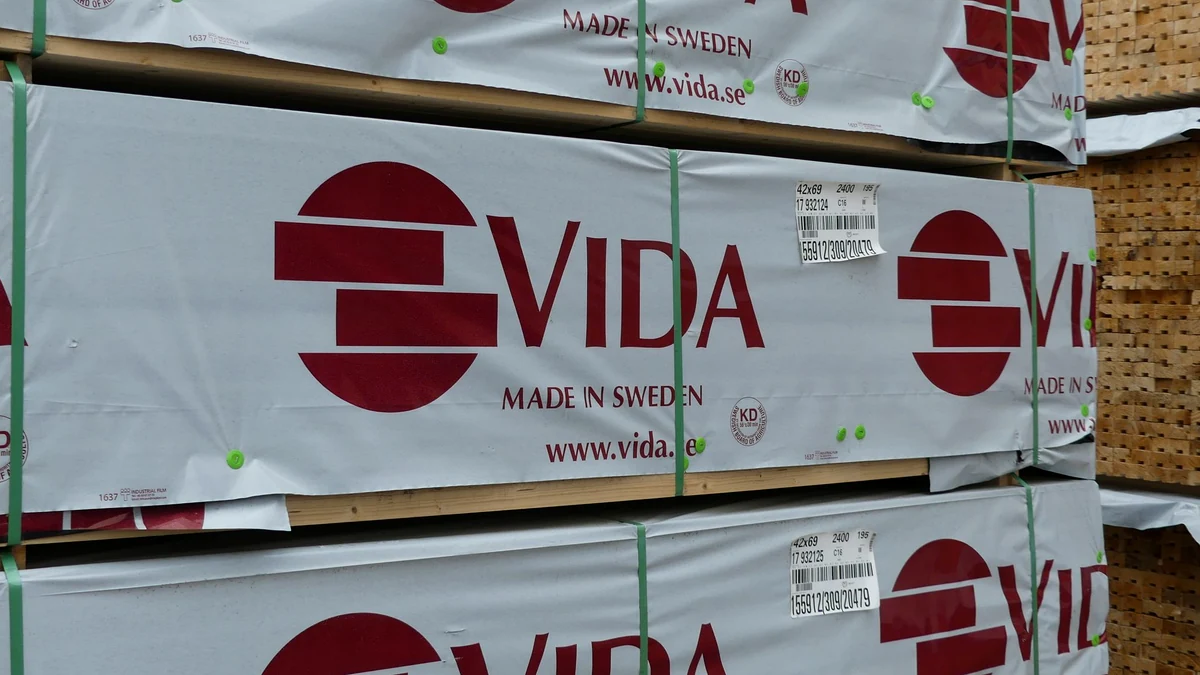


The European softwood lumber market is exhibiting nuanced signals, according to recent intelligence from Vida, a prominent industry player. While pockets of demand improvement are emerging across the continent, particularly within Scandinavia, the broader outlook for a vigorous recovery remains constrained by persistent cost pressures and significant regional weaknesses. This analysis delves into the underlying dynamics shaping the current landscape for global lumber, dissecting the interplay of demand shifts, raw material economics, and strategic implications for the timber industry.
Market Context & Financial Realities
Vida’s assessment points to a nascent improvement in softwood lumber demand in certain European territories. This uptick, though modest, suggests a potential stabilization following prolonged periods of subdued activity. However, this positive momentum is significantly counterbalanced by two critical factors: the continued sluggishness of the British construction sector and the escalating cost of sawlogs, particularly impacting Swedish sawmills. The UK market, historically a key destination for Nordic timber, remains hampered by high interest rates, inflation, and broader economic uncertainties, leading to reduced housing starts and renovation projects. This directly translates to lower order volumes and increased price competition for exporters.
Concurrently, Swedish sawmills are grappling with elevated sawlog costs. These costs are influenced by a confluence of factors including energy prices, labor expenses, and a tightening supply of suitable timber, exacerbated by environmental regulations and competition from the bioenergy sector. The squeeze on margins is palpable, forcing producers to absorb higher input costs or pass them on to buyers in a market that is not yet robust enough to fully support significant price increases. This creates a challenging environment where improved demand in some areas may not translate directly into enhanced profitability for producers facing severe cost inflation.
Comparative Industry Data
To illustrate the regional disparities and cost pressures, the following table provides a snapshot of key indicators across selected European markets and production hubs. Data is indicative, reflecting trends observed in late Q4 2023 and early Q1 2024.
| Region/Market | Softwood Lumber Demand Trend (Q1 2024 vs. Q4 2023) | Sawlog Cost Index (Sweden, Q1 2024, Base Q1 2023 = 100) | Sawmill Operating Margin Pressure (Relative) | Key Market Driver/Constraint |
|---|---|---|---|---|
| Scandinavia (Domestic) | Modest Improvement (+2-4%) | 118 | Moderate to High | Infrastructure projects, renovation activity |
| Central Europe (Germany, France) | Stable to Slight Improvement (+1-3%) | N/A (Region-specific) | Moderate | Industrial demand, stable housing starts |
| United Kingdom | Weak/Declining (-3-5%) | N/A (Import-dependent) | High (for exporters) | Residential construction slowdown, high interest rates |
| Sweden (Export Focus) | Mixed (Dependent on destination) | 118 | High | High sawlog costs, UK market weakness |
Note: Sawlog Cost Index for Sweden reflects significant year-on-year increases, impacting profitability. Demand trends are qualitative assessments based on industry reports and Vida’s statements.
Supply Chain & Raw Material Dynamics
The persistent elevation of sawlog costs is a critical bottleneck for European sawmills, particularly in the Nordic region. Beyond the immediate impact of energy and labor, stumpage prices have been driven up by several factors. Competition for raw material from the pulp and paper sector, as well as the burgeoning bioenergy industry, places upward pressure on log procurement. Furthermore, evolving forest management practices and the implementation of stricter environmental regulations, such as the EU Deforestation Regulation (EUDR), are beginning to influence timber availability and sourcing strategies, potentially adding to compliance costs and logistical complexities.
Logistics, while not as volatile as during peak pandemic disruptions, continue to present challenges. Fuel costs, driver shortages, and port congestion in certain regions can still impede the efficient movement of timber and finished lumber. Trade policies, though relatively stable within the EU, can still create friction at external borders. The cumulative effect of these supply chain pressures means that even with improving demand, the cost base for producing and delivering softwood lumber remains elevated, limiting the potential for significant margin expansion for sawmills.
Strategic Outlook & Operational Implications
For sawmills, the current environment necessitates a dual focus on operational efficiency and strategic market positioning. Those with diversified market access, less reliant on any single export destination like the UK, are better positioned to navigate regional demand fluctuations. Investment in advanced processing technologies to maximize yield from increasingly expensive raw material becomes paramount. Furthermore, exploring opportunities in value-added products or niche markets could offer a buffer against commodity price volatility.
Importers and distributors face the challenge of balancing inventory levels against uncertain demand signals. A cautious approach to procurement, focusing on just-in-time delivery where feasible, may mitigate risks associated with price fluctuations and potential oversupply. Building strong, resilient supply chain partnerships will be crucial for ensuring consistent access to quality timber. Panel producers, while also subject to overall economic conditions, might see some stability in raw material costs if lumber demand doesn’t surge, preventing further upward pressure on log prices.
The overarching message for the global lumber industry is one of cautious optimism tempered by realism. While the worst of the demand slump may be behind us in some areas, a return to the buoyant market conditions of recent years appears distant. Companies must prioritize agility, cost control, and strategic diversification to thrive in this complex and evolving landscape. For further insights into market dynamics, refer to Global Wood Markets Info.
Frequently Asked Questions (FAQ)
- Q: What are the primary drivers of current sawlog cost inflation in Scandinavia?
A: Sawlog cost inflation in Scandinavia is primarily driven by strong competition from the pulp and paper and bioenergy sectors, coupled with rising energy and labor costs, and increasingly stringent environmental regulations impacting timber availability. - Q: How is weak British construction activity impacting broader European lumber markets?
A: Weak British construction activity reduces a significant export market for Nordic and European sawmills, leading to increased competition for sales in other regions, downward pressure on prices, and a surplus of material that must find alternative destinations. - Q: What does ‘unlikely strong recovery’ mean for investment decisions in the timber industry?
A: An ‘unlikely strong recovery’ suggests that major capacity expansions or speculative investments based on rapidly rising demand may be premature. Instead, focus should be on investments in efficiency, technology upgrades, value-added production, and market diversification to enhance resilience and profitability in a more constrained growth environment.


